Responding to a Hurting World: Lessons from the Little Drummer Boy

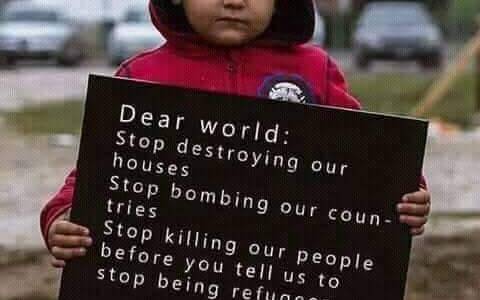
There are so many ways to get involved in a hurting world.  Which is a good thing, because there is SO. MUCH. HURT. in our world.  My heart leans towards people in transition, humans who are suffering, those who are trying to make it out of messes.  Immigrants coming to a new land.  Refugees fleeing war and manmade disasters.  Those who have left home, and in humility come to a new place.  They just need a little help along the way.
IMG_2249

So, what to do about it?  Turn to the wisdom of some classic Christmas lyrics for inspiration… the little musician who gave his all, even though it felt like so little.

Come they told me, pa rum pum pum pum

COME.  The first step is to receive an invitation and just plain show up.  The invitation is there to join something bigger than ourselves.  To be a part of something we can’t fix or solve.  To make it personal.  To just come.
IMG_5884
A new born King to see, pa rum pum pum pum

SEE.  Come and see the things that are happening in the world around us.  Let need, curiosity, pain, and empathy compel us to observe and join the messiness of our world in new ways.  To walk alongside a stranger in a strange land. To enter someone’s story.

Our finest gifts we bring, pa rum pum pum pum

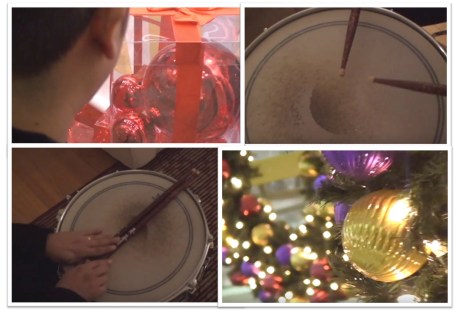
BRING.  Come, see, what’s happening.  Bring what you have.  It may feel small and insignificant, but it is your offering to bring anyways.  Sometimes all I have to offer is myself.  And in a big, scary, complex world what I have feels so insignificant.
Slide2.jpg

To lay before the King, pa rum pum pum pum

LAY IT DOWN.  Let’s lay down our gifts, time, talents, resources as an offering. To show honor.  It may feel insignificant, but showing up has value. Taking time for someone shows they’re worth it.  Honoring another through a life-changing transition, and laying before them what we have expresses incredible value.

…When we come.
IMG_1027

BUTwe all face very real and present excuses, fears, and limitations…

I am a poor boy, too

I’m just one person, with limited talents and resources.  Many say… I’m not a teacher like you.  I would say… I’m not a lawyer like so-and-so, or an activist, or an influencer.  I’m just a ………………. trying to make it in the world (you fill in the blank).

Even our best is so limited.

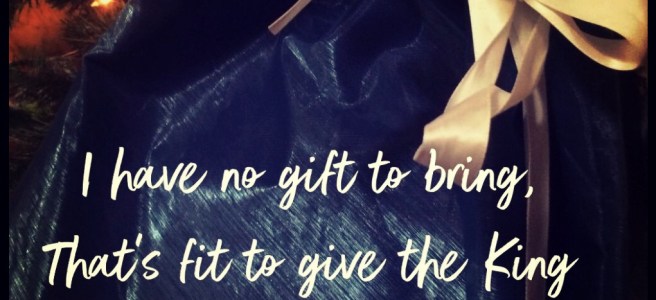
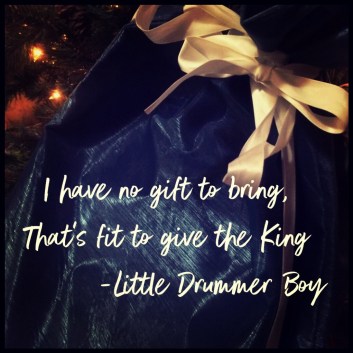
I have no gift to bring, that’s fit to give our King

I have nothing to give that would be of significance.  How can I help?  How can my small offerings possibly make a difference?

Start small.  If we all scooch over just a little in our row, we could make room for one more person to sit down.  What if everyone came, saw the need, and brought their little offerings?  That would be a significant number of insignificant offerings.  Maybe it would change the world.

What could those insignificant offerings look like?

Just come.  Show up for someone you know doing a work you admire in the world.

Just see… just listen.  Ask tough questions, hear difficult stories. Take time to process another perspective or another person’s journey.

Just bring yourself, your unique talents, your small offerings.

  • Maybe you have moments to read to a child.
  • Maybe you can pick up that book you know might challenge your thinking.
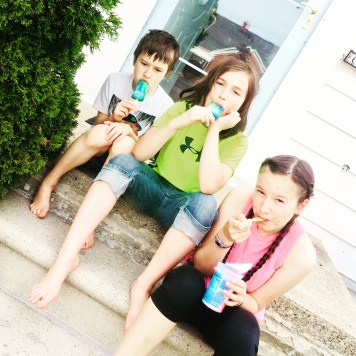
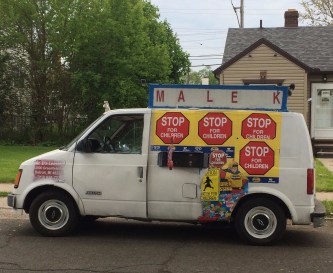
  • Maybe you can frequent a gas station or an ice cream truck where you can get to know a fellow sojourner just trying to make it in the world.
  • Maybe you invite someone new over.
  • Maybe you make that donation.
  • Maybe you share a perspective on social media that might make others think differently.
  • Maybe you start within–identifying a fear, letting go of bitterness, or choosing to forgive.

Who knows how scooching over might look for you.  Who knows what gift you bring, or how it might be fit to honor another?IMG_6942
I played my drum for Him, I played my best for Him,

pa rum pum pum pum, rum pum pum pum, rum pum, pum, pum

Whatever you do, do it wholeheartedly.  Even if it is small and insignificant.  Make it your best offering.IMG_5426
Then He smiled at me, pa rum pum pum pum
Me and my drum.

Relish in that smile.  The smile of helping someone out when they needed it most.  Showing up when it was difficult.  Offering when you felt like you had nothing.  Or maybe you are weary from many offerings that never feel like enough.  Pause.

Receive that joy.

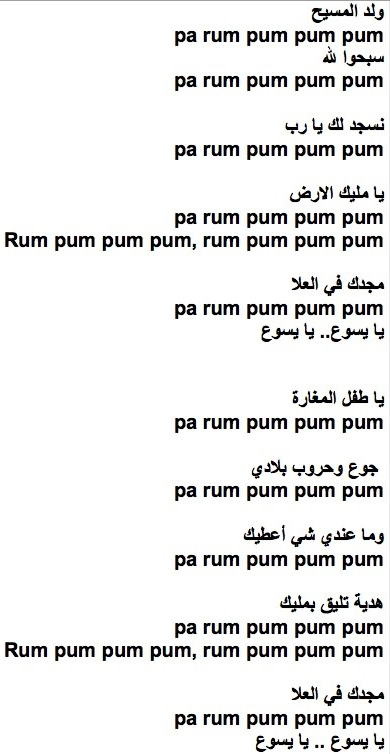
Recently, I heard an Arabic version of The Little Drummer Boy.  It was my invitation to learn some new Arabic words and practice rudimentary reading skills.  What I found was a treasured perspective I wasn’t anticipating.
Drummer Boy Arabic

With the backdrop of endless unrest in Palestine–the homeland of the Messiah and the singer–Vivian Bishara‘s lyrics of worshiping the King but having no worthy gift to bring becomes so real.  Regardless of our politics, war, hunger, and poverty are very real aspects of the world the Messiah came into–and the reason for the season today.  Emmanuel–God with us–in our messy, complex, torn up places.  Let’s come, and see, and lay down our gifts, or our lives, or both. To honor life.

To honor a Life-giving King.

… When we come.IMG_0097


Politics Scare Me: Perspective from an Intimidated Lover of Peace, Mom, & English Language Teacher

img_7266.jpgI love challenging questions within small, safe conversations.  But politics scare me. I’m horrible at citing policies, remembering dates, or interpreting statistics as fast as needed in a heated political discussion. The last thing I want to do is make a strong political stance.  But as a language and culture teacher, a language and culture learner, a mother of three, a cross-cultural neighbor, and a daughter of immigrants, people have been asking my perspective on our current political atmosphere around immigration and the refugee crisis.
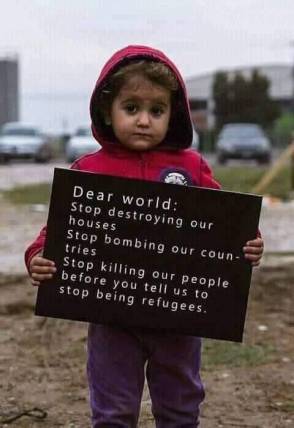
These 4 political observations come from being a lover of peace and equality in my home and in diverse communities.  With an odd number of personalities in our family, peace talks are a daily drill at our house.

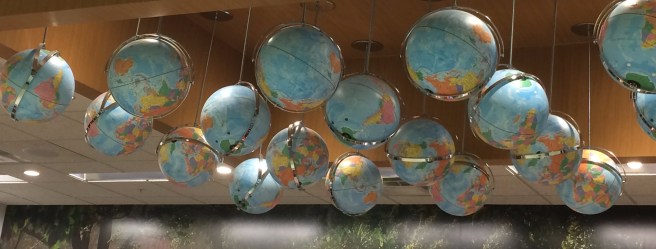
  1. War, and the displacement it causes, is a worldwide problem, not just a U.S. problem.  There are many countries, like Greece and Jordan, maxing out their infrastructures to accommodate the refugees who are pouring in with no other place to go.  Comparatively, it seems that the U.S. has more room, more infrastructure, and more capacity to share the worldwide burden than we are currently.  45404965_2374453955915468_8133840680419065856_n

2. Lately we have been cultivating a national bad attitude of “me first”.  In fear we tend to operate out of scarcity rather than generosity.  As a mom, I work on these issues with my kids EVERY. SINGLE. DAY.  I want my children to learn to get along with others, be kind, and share.  If our country were my kid, I would want to teach her baby steps towards kindness, not away from it. And maybe give her a timeout or two to think about her attitude and choices.

fullsizeoutput_2744

3. As a world leader, our country is positioned to be influential.  Rarely do leaders have a neutral, zero impact.  The U.S. has the power to do good in the world and influence others to follow our lead.  We are also responsible for our negative attitudes and actions.  They do not go without impact.  An insane number of children are dying in Yemen because of a civil war where both sides are receiving help from opposing world powers.  Our country has been contributing to this crisis financially.  After years of innocent people dying, we are just now making better choices about how to help the desperate rather than contribute to their dire circumstances.

close up photo of people holding usa flaglets

4. The best problem-solving of difficult issues comes when people work together. The polar opposite political extremes in our country are intense right now.  Extremes point fingers at them–the other extreme.  But what about the radical, intentional middle places, where we don’t point blame, but rather focus on problem solving, compromise, and caring for others?

Recently, my oldest daughter was rewarded by her grandparents for her excellent academic achievement.  My other two kids were also recognized for their good grades, but her excellence was dually noted in the form of an extra $20 bill, handed to my middle daughter to pass along to her sister.  This could have incited an all-out war at our house.  What to do? 1) pray for discernment in navigating towards a peaceful resolution 2) recognize the complexities and potential hurt each might feel  3) guide each one to consider the other’s perspective 4) give them space and responsibility in arriving at creative solutions together.  Ultimately, my oldest daughter decided to treat the family to FroYo.  Not all family squabbles arrive at peaceful compromises, but we are always learning and striving towards a “we” solution.

IMG_7777.JPG

I realize the world is a messy and complex place, and the last thing I want to do is minimize the work of those who labor towards peace by oversimplifying things.  I would rather run away from politics, especially when things get tense and mean.  I’m not in it to win it.  But I am in it to understand someone else’s point of view.  Sometimes people just need to be heard and want to be understood.  Sometimes hurt people hurt people.  Sometimes they are scared too.  I’ve learned that whatever the issue is, things become much less political as they become more personal–that point where issues have names, faces, stories, and favorite foods.

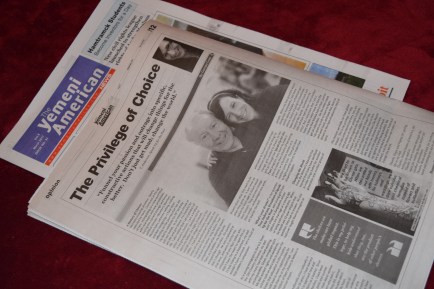
The Privilege of Choice

Funnel your passion and outrage into specific, constructive actions that will change things for the better. Don’t just get mad; change the world.    T. Anderson, Speak Up for the Poor

A History of Choices

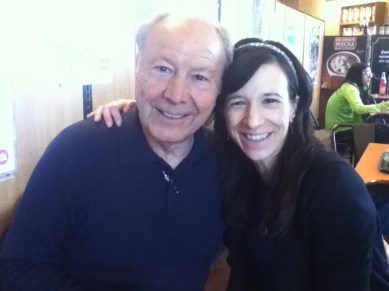
Narrowly escaping abortion. Nearly executed by Nazis. Orphaned at the age of two. Immigrating to a new land filled with new hopes and new possibilities. During this current strange and tense political climate—Women’s Marches, Muslim bans, extreme vetting, trolling, and fear mongering—I have been reflecting on the journey that has led my dad to celebrate his 75th birthday just last month. In a heated climate of pro-life and pro-choice, I’m thankful for life. I also realize that I am a product of other people’s choices. I am a product of my grandparents’ decision not to abort my father, by night, in secret, outside a small village in Greece in the 1940s. I had heard the story countless times of my grandmother’s decision not to eliminate the unexpected pregnancy that was my father, long before I ever comprehended what abortion meant. Then, as a toddler, my dad barely escaped Nazi execution. His parents didn’t though. He was orphaned at that time, and were it not for the compassion of one Nazi soldier who didn’t have the heart to open fire on 13 kids hiding in a basement, my dad wouldn’t have survived. I am a result of that soldier’s compassion.me-and-dad
As a young immigrant to the U.S. from the Old Country of Greece, my dad, with my mom, had that hard working, unconquerable, Greek, immigrant spirit. My dad worked nights and weekends, and he took on extra jobs to pursue the dream that education in this country would lead to more opportunities for his kids than he or my mom had. I am the product of their choice to believe in the American dream.

Living intentionally cross-culturally in a diverse community for 16 years, I have learned that it is best to approach new and complex situations as a learner. Since the Women’s Marches, I have been carefully reading posts and counter posts in Ping-Pong style about women who marched, women who didn’t, women who wished they did, women who were angry, women who didn’t want to get involved… My heart swelled with the pride for some of those who marched. I also understood why some didn’t. From those who chronicled their marches, I learned to value the privileges of choice we have today, because others fought for them in a previous era.

When he would ask 12-year-old girls, “What’s your dream?” they had no answer. No one had ever taught them to imagine an alternative to forced child-marriage.

The Privilege of Dreaming

My kids are privileged with choice. Since they could to talk, my kids have dreamt about what they want to be when they grow up. It was never an option for them not to dream about their futures. They can even change their minds—archaeologist one week, art teacher the next.

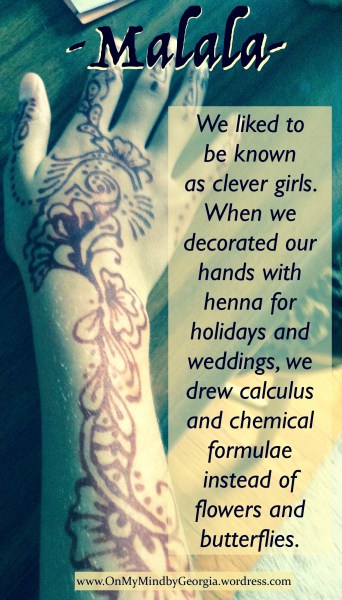
malala-3“What’s your dream?” is the question Troy Anderson, President of Speak Up for the Poor, asks young girls from poor villages in Bangladesh whose options are marriage at a young age, or being sold into prostitution. When he would ask 12-year-old girls that question, they had no answer. No one had ever taught them to imagine an alternative to forced child-marriage. Anderson realized that for things to change, girls needed to dream. As the girls go through the Speak Up for the Poor program, they learn to make a plan to make their dreams of becoming a nurse, or a business owner, or a teacher come true. These girls dare to fight societal norms to realize a better life.
Changing the World

From the Women’s Marches I’ve learned that many have sacrificed to make things better for another generation and another group of people. When my kids grumble about doing their homework, I tell them stories about Malala—a Pakistani girl whose choice of going to school was taken from her. She fought back and inspired the world. Sometimes my kids roll their eyes at me—not another story! But, crazy mom that I am, I want my kids to appreciate their privileges, to work hard for what they believe in, and to have that dare-to-dream-in-the-face-of-adversity kind of spirit.

The choices we make can have global impact. This is my privilege, to help my kids understand that they, too, are the product of other people’s choices. Who could imagine the life-giving impact of one Nazi soldier’s choice back in 1944 in a small Greek village? My kids will hopefully never have to face gunshots on the school bus like Malala did, but they can choose to promote peace on the playground, and stand up against a friend being bullied. We are all connected to a greater historical context, and the choices we make can change the world.

(Published in the Yemeni American News, March, 2017)DSC_0151

What are You Afraid Of?

“You gain strength, courage and confidence by every experience in which you really stop to look fear in the face.” Eleanor Roosevelt

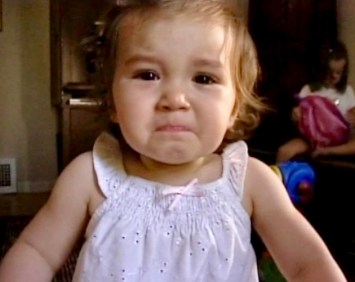
OLYMPUS DIGITAL CAMERAThe best part about cold winter months in Michigan is snuggling under warm blankets, reading and telling stories with my kids. In these moments I often pause just to take it all in, and then thank God for the beauty of such simple yet priceless memories.   Children truly are a treasure and a gift in this life. Recently, I took part in a short, two-question survey on FEAR. The first question was: What is something you are afraid of? A lot of things came to mind…debt, disease, destruction…but if I had to pick just one to write down, I would say that what I fear most regularly is something horrible happening to my children. As a mom, I do all I can to protect my children from harm. I teach them how to be safe, I stay near them in uncertain circumstances, and I try to keep them healthy.

These things were going through my mind as we read the historical account of the birth of Jesus the Messiah together. We got to the dark part of the story where a corrupt leader, King Herod, was feeling threatened by the news of a young Messiah being born. Out of fear, King Herod terrorized the Palestinian town and region he governed, and ordered the mass slaughter of all baby boys under two years old. As we read through the account, my eight-year-old son quickly named our young friend that fit that description. We all agreed that it was horrible to imagine our friends losing their 1½-year-old son to the terror of a corrupt leader.

For days I was troubled by this disturbing account of male infanticide that went on as a result of the Messiah’s birth. The families of those baby boys weren’t celebrating the birth of a promised and foretold anointed one sent from God. Instead, they grieved deep loss around the event that led to mass extermination of baby boys in and around Bethlehem. The story recounts that King Herod was “terrified” at the news of a prophetic Messiah-King entering the world and being revered by foreign Wise Men from the East. He saw this child as a threat to his powerful position of leadership. But the birth of Jesus also stirred a new hope far and wide. The coming of a promised Messiah reminded the world that God Most High is near to His people.

I tried to imagine myself living in a time and place of such need for hope—a world of terror and destruction enacted by powerful people. It didn’t take me long to realize that that is our world. Those are the bleak circumstances facing so many in war-torn Yemen today. According to a recent interview that the Yemeni American News had with the President of the National Association of Yemeni Americans (NAYA), AbdulHakem a. Alsadah, the United Nations estimate 3 million “displaced” Yemeni people.   “There is no international awareness about this crisis,” Alsadah stated. Tears stream down my face when I see pictures of Yemeni children who are near death due to acute malnutrition. My heart breaks as I read stories about Yemeni parents who are forced to make hard decisions about losing their children, either to disease, destruction or starvation. According to a December 2016 article in www.theGuardian.com, one man tells of how he and his other children don’t eat so they can pay for his young daughter’s cancer medication. How does any parent face that kind of fearful reality and not lose hope?

The second question in my survey was:

What do you do when you are afraid?

Fear makes me want to hold my children tighter and never let them out of my sight. It makes me want to turn off the news because I can’t possibly process all the destruction going on in the world—in Yemen, in Syria… But what can I do about it? Fear and ignorance are the easy ways out, at least initially. If I raise my kids in fear, they are set up to react in fear. There’s a reason why the angels who came to announce the birth of the Messiah always started by saying, “Fear Not.” It’s because we do fear. Nevertheless, God Most High sends His chosen ones to a messy world because we need to hear from Him.

“Man can live about forty days without food, about three days without water, about eight minutes without air, but only for one second without hope.” H. Lindsey

It is good to be near God.  His presence brings hope, and hope keeps us alive.  Author Hal Lindsey said that, “Man can live about forty days without food, about three days without water, about eight minutes without air, but only for one second without hope.”  In the worst of our despair, hope anchors our souls. It has to. Otherwise we wouldn’t survive the fear, terror and destruction that surrounds us. Education, compassion, prayer, hope. These are the things we must hold on to when we are afraid.

What is something you’re afraid of? What do you do when you are afraid?

 So, as we really stop to look fear in the face, join me in trying a few of these things:

  • Give thanks for the good things God has done.

  • Tell a story to raise awareness of the crisis going on in Yemen.

  • Hug your children a little tighter.

  • Pray for those who suffer.

  • Give of your resources (time, money, or talents) to help another struggling human being.

  • Educate children about how to process fear.

  • Take a moment to grieve sad and disturbing news when you see it or hear it.

  • Love your neighbor.

  • Look for ways to spread love and kindness, especially when it is easier to spread fear or hate.

  • Hold on to hope as an anchor for your soul.

(Published in the Yemeni American News, February, 2017)