White Noise—A Cry of Repentance

I’m sorry.

Not I’m sorry, but…

Not I’m sorry, in general.


Rather, specifically…

I’m sorry for my ignorance that has perpetuated an unjust status quo.

I’m sorry for my silence when advocacy was needed.

I’m sorry for all the little compromises that left your life more difficult and exhausting.


I’m sorry for my complicity in racism.

  • For my fear of not knowing what to do, and so yielding to inaction.
  • For letting false White conceptions of color blindness go unchallenged.
  • For not understanding how the systems I’m a part of and benefit from have put me in a privileged place at your expense.


I’m sorry for the White sorry buts that add salt to your wounds.

I’m sorry for being dismissive when the problems of society get too scary for me to handle.

I’m sorry for allowing this or that movie about ugly White racism to appease my conscience and make me feel like I get it—when I don’t.

I’m sorry for getting so used to Black bad news that it has become noise in the background of my passive tranquility.

I’m so sorry for reducing your trauma to my White noise.


Deliver me from the guilt of bloodshed, O God, you who are God my Savior, and my tongue will sing of your righteousness. 

Open my lips, Lord, and my mouth will declare your praise. 

You do not delight in sacrifice, or I would bring it; you do not take pleasure in burnt offerings.

My sacrifice, O God, is a broken spirit; a broken and contrite heart you, God, will not despise.  (Psalm 51: 14-17) 

Lord, forgive us for the pride of thinking we’re innocent.

Lord, expose the hypocrisy in our breaking hearts and lead us to repentance.

Lord, forgive me for being an ambassador of peace but not understanding justice.

Lord, forgive me for being so passionate about Your great love for all nations and tribes, races and languages, yet somehow not having eyes to see and ears to hear the trauma and injustice of my Black brothers and sisters.

Lord, forgive us for our White supremacy—for standing too high on a pillar of infection—like an abscess on our nation.  It’s disgusting.

Lance it. Drain it. Then, heal it.

Like a boil that must be opened with all its ugliness to the natural medicines of air and light, injustice must be exposed to the light of human conscience before it can be cured.   MLK Jr.


409EFB9A-63C9-4A7E-9CF4-A471A0EFA365_1_201_a


I see now that racism is a White problem.

I understand now that Black Lives Matter—so much.  I’m sorry I never said so sooner.

I hear your cries of grief.  I’m sorry it took me so long.

I shudder at the images of George Floyd’s murder. And Ahmaud Arbery, and Breonna Taylor.  I’m sorry for your loss.  Your losses.  I’m sorry for the innumerable losses that have gone unseen.

I can know better.

I can be better.

I can do better.

It’s not your responsibility to enlighten me.  But many have taken the time to love me where I’m at and patiently help me get to a better place.  Thank you.

I know I’ll mess up again.  I know racism has had its ugly effect on me.  I know there are still offensive ways in me.

Search me, God, and know my heart; test me and know my anxious thoughts. See if there is any offensive way in me and lead me in the way everlasting. (Psalm 139:23-24)

13D18B8A-5426-4C72-B240-1D2391735475_1_201_a


For context: I am white.  I am a follower of Jesus.  I deeply value the authority of the Bible. I am a church goer.  I work in non-profit contexts.  I have been on an intensive journey of listening, learning, and lamenting since May 8, 2020–what would have been Ahmaud Arbery’s 25th birthday.  

The influencers who have significantly informed my understanding, challenged my beliefs on issues of systemic racism, and shaped how I craft my words are: Dr. MLK Jr.Dr. Robin Diangelo, Dr. Anita Phillips, Jemar Tisby, and Mona Haydar.  And my friends, Befkadu Meshesha and Ian Simkins.

Corona 2020 #3: Rhythms of Quarantine

Sunday, March 29: In harmony with my heart

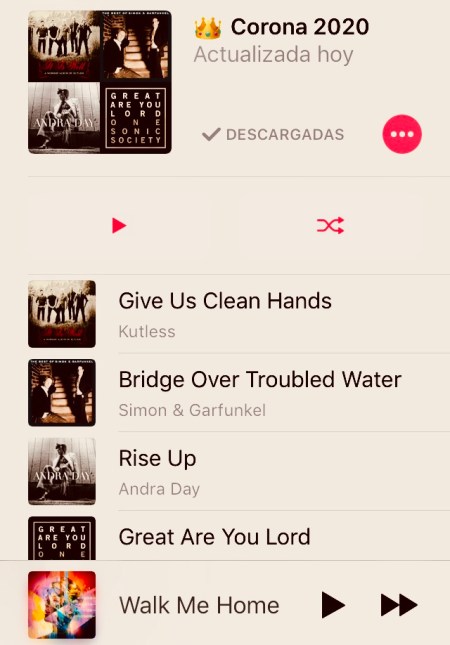
Virtual church at 11-ish.  Pilates and worship.  Coffee with my Sweet.  I’m grateful for his enthusiasm in making my perfect cup.  I have been working on the right lyrics that are in harmony with my heart.  Simon and Garfunkel always have space in my struggles.  But they must be interspersed with strength of the human spirit, and the hope of worship.  My heart is tender towards key words: shelter, isolation, hidden, breath…
7B747C59-B7BA-4675-996B-C301FD411120_1_201_a

Walking makes me feel better, and alone.  The city is quiet and desolate with pockets of families huddled together.

We are defined by our safe people and everyone else.  Who are the people bio-connected to each other? What about those who live alone?  Who are their bio-connected “we”?

Following news out of Detroit.  Things are exponentially worse.  The Henry Ford hospital is where my hematologist of 15 years lives.  My babies were born there.  It is a state of emergency.

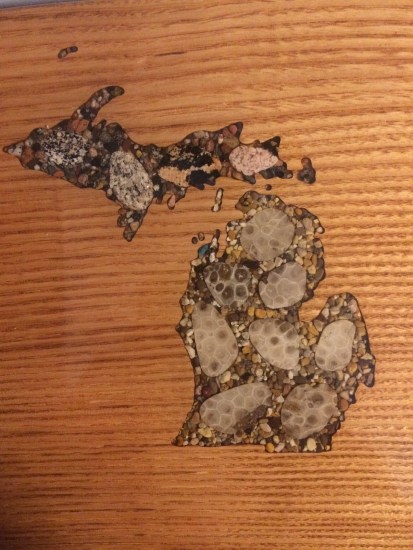
Michigan seems like a dream to me now… I’ve come to look for America… Michigan feels like a dream to me, too, Simon & Garfunkel.
9EEE1842-74E7-4897-8B05-B1C2EB106533

The Value of Closure

I am struggling with closure.  Some things have ended abruptly and I find they wreck me more emotionally than they would at another time.  My resilience is thin.  With tears, it’s best to sleep on it.  If my resilience is thin, others’ is too.  God, help me to see as you see.

Strong for my people.  Rest.  Prayer.  I am ready to take a small courageous step towards healthy closure in uncertainty.  Courage is fear prayed up.  Yup.
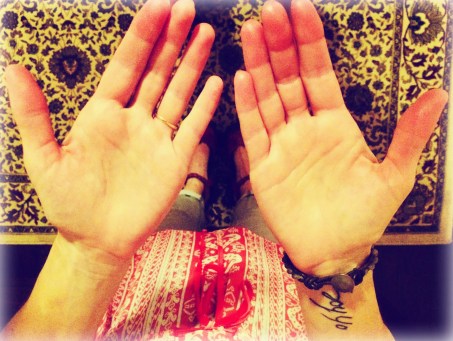
2A2E8CC0-8360-44F6-BC8A-B21FF0C2B778

Monday, March 30: It’s okay not to be okay

Ella is in tears.  She feels socially limited in the middle of her brother and sister.  She has done everything we have thought to do at home by lunchtime.  Aimlessness brings sadness.

She needs her middle school peeps.  I tell her it’s okay to cry.  It’s okay not to be okay.

Magic in the little things—a fixed bike, fresh berries and a can of whipped cream.  Zoe and Ella set off on a park adventure of their own.  Then we make lentil soup.  I see her perk up just a little.

It’s okay not to be okay.

Jamin’s new tetherball arrives from Amazon.  Steve and Jamin head to his school to hook it up to the pole there.  Jamin is that 5th grader—the one who has prayed for school to end since it started.  He is in a happy place.

My walks get longer and more emotional as I listen through my varied lyrics.  I am weak.  I am strong.  It feels like winter and loneliness. I rise up.  I have breath. I shelter in with people I love dearly.

It helps to have purpose and set baby goals… 

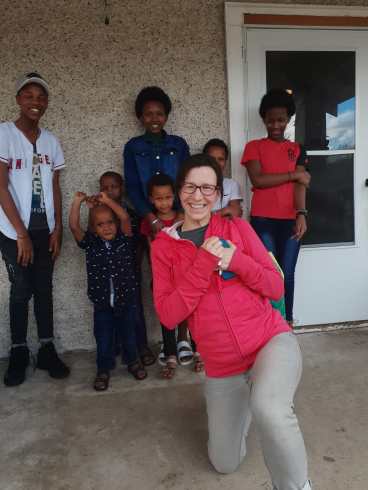
I have a little space in my emotional reserves to follow up my concern for my refugee neighbor friends. I check in and brought Legos for the littles (after running them through the dishwasher). I inadvertently photobombed their cute family pic—at a distance.

Seeing their faces made my heart happy. 😊
DDCEAA60-D70B-41A2-B217-54A0ACB2E934

I walk in the rain and the sunshine. I am oscillating.  Laughing. Crying. Purposefulness.  Aimlessness. Weight of the world. Isolation. Safety. And Fear.


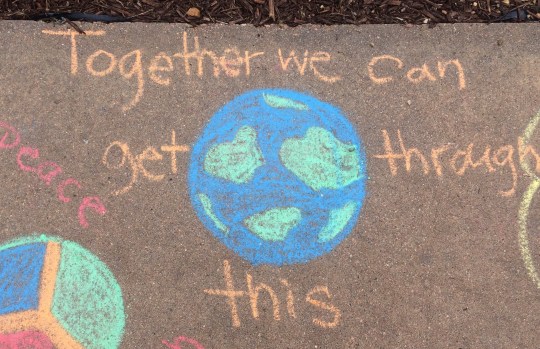
Everyone check in with someone, ok? 
 

3C33C275-65D4-40F4-AF02-16CB5D1C55E4_1_201_a

Celebrating my small mom victories.  My kids seem more settled.  Cake pops made.  Tetherball played.  Lentil soup is perfectly seasoned comfort food—reminiscent of homemade dhal from a past season of life and friendship.

Brother, let me be your shelter

Never leave you all alone

I can be the one you call when you’re low.  NeedtoBreathe

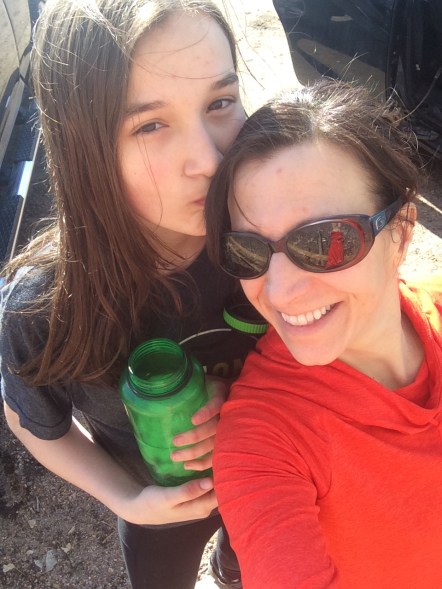
I hug my people.  I have people to touch and kiss.  We pray together anticipating the new day. The new school schedule.  A plan. A purpose. We pray that summer camp won’t be canceled.
30649E05-DC2E-47F5-B365-2E69F4E7C0CB

Tuesday, March 31: Collecting scattered thoughts

Everyone sets an alarm. Online school is starting, and we have family implementation plans in place.  Ella is chattery about her teachers and friends.  Her eyes light up.  Jamin is moaning but following the plan. Zoe persists with vigor in all her endeavors.  Steve’s virtual work continues per usual.  I write 3 new virtual meetings set on my empty calendar.

Time to write. To think. To be alone with my thoughts in my bustling home.  Interruptions are frequent.  Flexibility of this new norm.

Clarity of thought.  Processing negative emotions in healthy ways.  Moving forward.

Deep breath.  I will turn on the news.

Physical goals: Engage my core muscles more often—to that end, wear less leggings and more regular pants.  Walk a little further.  Add a few extra sit ups, crunches, or pushups each time I do some. Baby steps in physical exercise make me feel like I can control something. And move forward in something.

Wednesday, April 1: Tears are my superpower

Aimlessness is real.

Scheduling is helpful.

Technology is frustrating.

Closure…find closure where you can on even the little things, since so many things ended or were put on pause so abruptly.

Zoe and I enjoy the show: Zoey’s Extraordinary Playlist.  Episode 8—Zoey’s Extraordinary Glitch—was so embarrassingly awkward.  The main character can’t stop herself from bursting out in song to express her deep, undealt with emotions.

I courageously show up for my meeting to find closure, and I cry through the second half of it.  I guess I’m still not ok and it’s going to come out somewhere—like Zoey does with song and dance in the show, I do with tears.  Closure on this one thing feels good and right and satisfying.  But I’m still crying.  Awkward, but unapologetic.  Express gratitude.  Everyone’s resilience is thin.  It’s okay not to be okay.

7BFCC5B8-4CB4-4B16-A6FE-EAD02CD4FB64

Rollerblading with my girls is a sweet time on a beautiful day.  Normal, not normal.  Strange, not strange.  No one is out. Everyone is distant on a college campus in spring.  I feel simultaneously content and overwhelmed.  We go about our days distancing, while others can’t breathe. And others die.  How does closure come for loved ones who experience loss?

At the end of the day I’m both relieved and bummed that there were no innovative April Fool’s jokes going on at our house.  Not in a place to create and laugh and bounce back just yet.

Thursday, April 2: Wearing mascara doesn’t prevent tears

Time to face my fledgling teaching plan.  A meeting with my boss.  I teach adults.  Moms like me who show up to my English language class after their kids are settled in school.  I can just barely settle my kids to move forward with a plan of any kind.  I barely have a moment to catch up with my own thoughts and emotions… innovation is measly and uninterrupted minutes to wade through emails and move towards problem-solving are things from that other life realm.

Deep breath.  Grateful for the closure I found yesterday.  Like the strategy for debt snowball—knocking out smaller debts first.

Moving forward.

It’s okay not to be okay.  But it’s not okay to cry in this team meeting with my boss. Maybe mascara will help prevent tears.

I choose Pilates and prayer over fine-tooth-comb reading all the pertinent email strings before my meeting.

Deep breath, again.  In for 3, out for 4.

🎶 And I’ll rise up…

I’ll rise up
In spite of the ache
I’ll rise up
And I’ll do it a thousand times again
For you…
 🎶

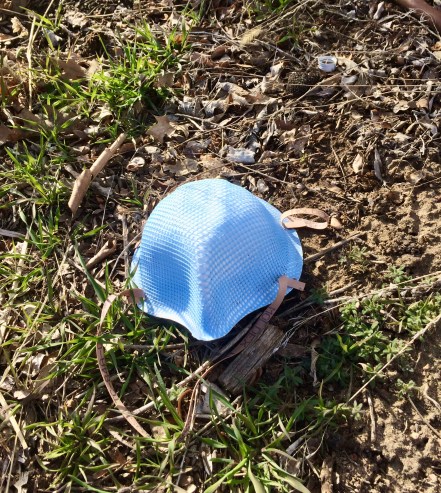
Innovation, momentum, problem-solving and resilience—in short supply.   Like ventilators for patients and masks for healthcare workers.
6DEC9617-430A-4BAD-8BDE-D4D3A7741067_1_201_a

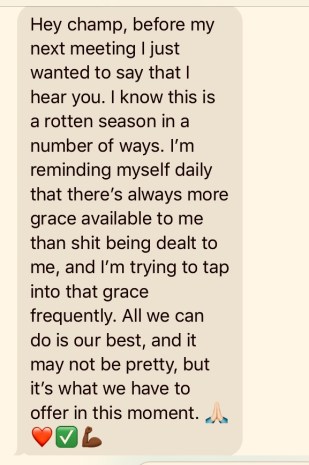
Mascara does not help prevent displaced tears in zoom meetings. But actively turning off video or audio as needed provides a sense of control over the little things.

And having a boss who hears you… doesn’t prevent tears either.
D4143048-A2F7-4C54-B088-D11D00CC272C

It’s cold today.  There is no mustering of motivation to run the track.  No energy to even think about trying to psych myself up for more than a cold, grey walk.

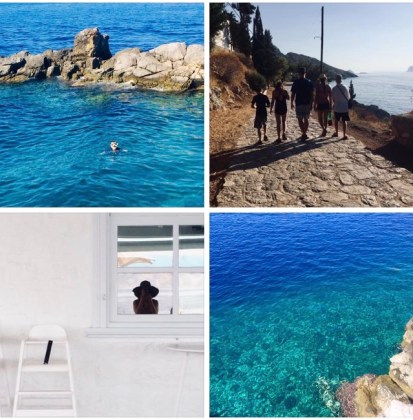
Listening to Simon and Garfunkel and remembering that time when I was on an island. And I missed my boat. And I cried about it… 😭💕🏝

🎶 I am shielded in my armor,
Hiding in my room,
safe within my womb
I touch no one and no one touches me

I am a rock
I am an island
And a rock feels no pain
And an island never cries 🎶

Islands are surrounded by salt water… you would never know if they were crying.
6C228B4A-F7EC-432B-ABF7-E3B90CB4ED3A_1_201_a

Overwhelmed and grateful. I am definitely not an island.
 

CHRONIC HOPE #4: A Potential Risk of Fighting Cancer

“How dare you be so irresponsible with your wife’s health?  Don’t you understand the risks you’re putting her through by getting her pregnant in her condition?”

I watched my husband’s face change from shock to anger as the nurse unleashed her stern lecture on him.

Five years into marriage and four years into my cancer diagnosis, I was nearing my 30th birthday.  We had given up on making long-term life goals.  I let go of the dream of living abroad for language and cultural studies, and I quit graduate school.

But the dream of being a mom got stronger.

My super-effective miracle medication for chronic myeloid leukemia (CML) extended both my quality and quantity of life.  Aside from 3-month check ups, an annual bone marrow biopsy, and my daily meds, I lived a normal life.  But normal life made me hope for normal things, like a family of my own.

Truth: In this world we all face struggles.

My doctor was STUBBORNLY clear: pregnancy was out of the question.  It was too risky to subject a fetus to the potentially hazardous effects of my miracle meds. And it was too risky for me to go off my miracle meds for any reason.

After multiple heart-wrenching conversations, desperate prayers, and seeking counsel from others who had faced life’s storms and held on to hope, my husband and I felt like it was risky NOT to start a family.

Two significant things happened:

  1. We learned that we must calculate our risk and take the first step into the storm; and expect God’s reassuring presence to show up along the way.
  2. My stubborn doctor left. His replacement was willing to treat me as a whole person, instead of just treating my disease.  We needed someone to champion for the fullness of life.

Hope is a function of struggle. 

“Hope is a function of struggle,” affirms Brené Brown, author of Daring Greatly: How the Courage to be Vulnerable Transforms the Way We Live, Love, Parent & Lead.
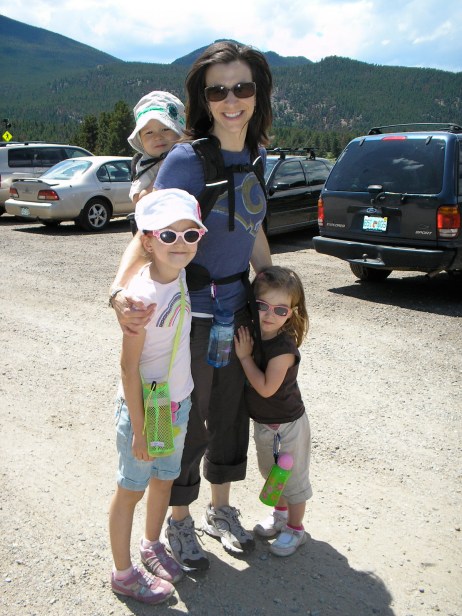
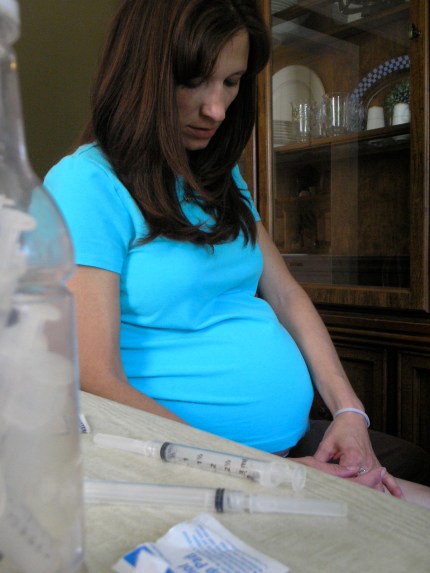
Eighteen months of chemotherapy injections were considered “safe” for growing three wondrous new lives, but they left me feverish and weak.  As I lay limp on the couch, I regularly recalculated our risk.

Giving up a safe miserable life without big dreams, for the opportunity to cultivate new life, changed something in me forever.  Ultimately, wherever beauty and life-giving possibilities exist, they are worth the pursuit.

Brené Brown reminds us that, “the willingness to show up changes us. It makes us a little braver each time.” 

My desire to be a mom dared me to set 9-month goals.  Three times. That led me to reconsider the daunting goal of graduate school to become a Language and Culture Learning Coach—this time as a non-traditional, cancer-fighting, mother of three.
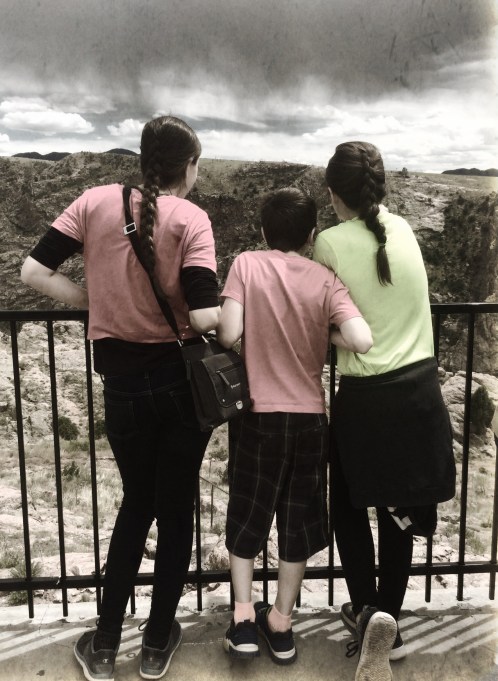
Chronic struggles forged profound hope that pushed me higher and deeper in mind, body, and spiritual potential. And, in setting an example for my miracle children to live courageous lives.

The ongoing challenge is to keep hands open while living courageously—to never close in on the great gifts of life we’ve been given. I’ve been given 20 years to cultivate chronic hope. IMG_4212I find myself in a privileged place to champion others.  My heart is for those who face war, leave home, and migrate across cultural and linguistic barriers in search of the fullness of what life can be.  To these souls I hold out small offerings with open hands.

What are your dreams, forged in struggle?

Who are your champions?

What are the little offerings in your hands?

IMG_0695

This article was published in a series of articles for the Yemeni American News, August, 2019:

Georgia Coats is a Language & Culture Learning Coach, freelance writer, educator, wife, and mother of three who is passionate about healthy mind-body-spirit living.  Chronic Hope is Georgia’s collection of stories, lessons, and life adventures of living alongside chronic leukemia, cancer of the white blood cells, for two decades.  She often shares what’s on her mind at: www.onmymindbygeorgia.wordpress.com


BEAUTY IN THE PATTERNS

IMG_6961

Tears streamed from the corners of my eyes and dripped boldly onto the sterile paper that covered the examination table.   As I lay in fetal position whispering a desperate prayer, I could feel the numbed pressure and intense inner pain of the thick metal needle probing deep into my hipbone.  I had stopped counting bone marrow biopsies after a dozen. They had become routine over the years of chronic leukemia treatments. With a thick layer of gauze under an over-sized Band-Aid, the doctor patched up my tiny yet deep bone wound and sent me on my way.

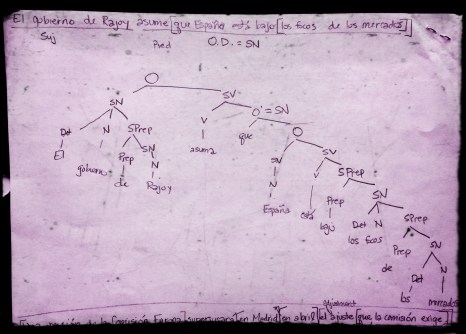
My husband hugged me tight, handed me my coat, and ushered me out the door.  I still had time to make it to my absolutely favorite graduate Spanish linguistics class.  Being an already awkward, over-achieving, non-traditional grad student, I decided limping in late with tearstains and a bandaged backside was still worth it.  I slipped into my front row seat and began to copiously copy the tree diagrams sprawled all over the whiteboards in the room. Syntax. I couldn’t decide if I loved syntax or morphology more.  Good thing I didn’t have to choose—I just love the one I’m with.

IMG_5419

My profesora gave me a sympathetic look and proceeded with her lecture. Compassionately, she had offered that I could take an Incomplete for her class if I needed to during this uncertain time of changing leukemia treatments.  That was unthinkable.  It wasn’t that I needed to “stay busy” during a difficult time, it’s that I needed to be part of something meaningful.

Who knew that la lingüística could provide such purpose?

Within the field of linguistics, the goal is to discover patterns in language.  Once the patterns are discovered, linguists search out evidence found in natural speech to describe the rules and identify the boundaries of such defined patterns.  I find comfort in the certainty of patterns that allow us to explore deep mysteries of minds and cultures.

fullsizeoutput_2b04.jpeg

Did you know that there are universal principles found in all the world’s languages that set human language apart from animal communication?  This is where geeky meets inspirational.

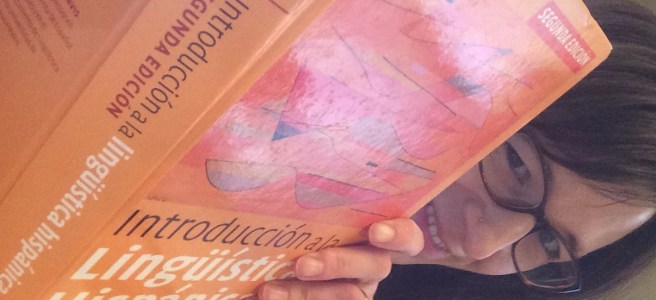
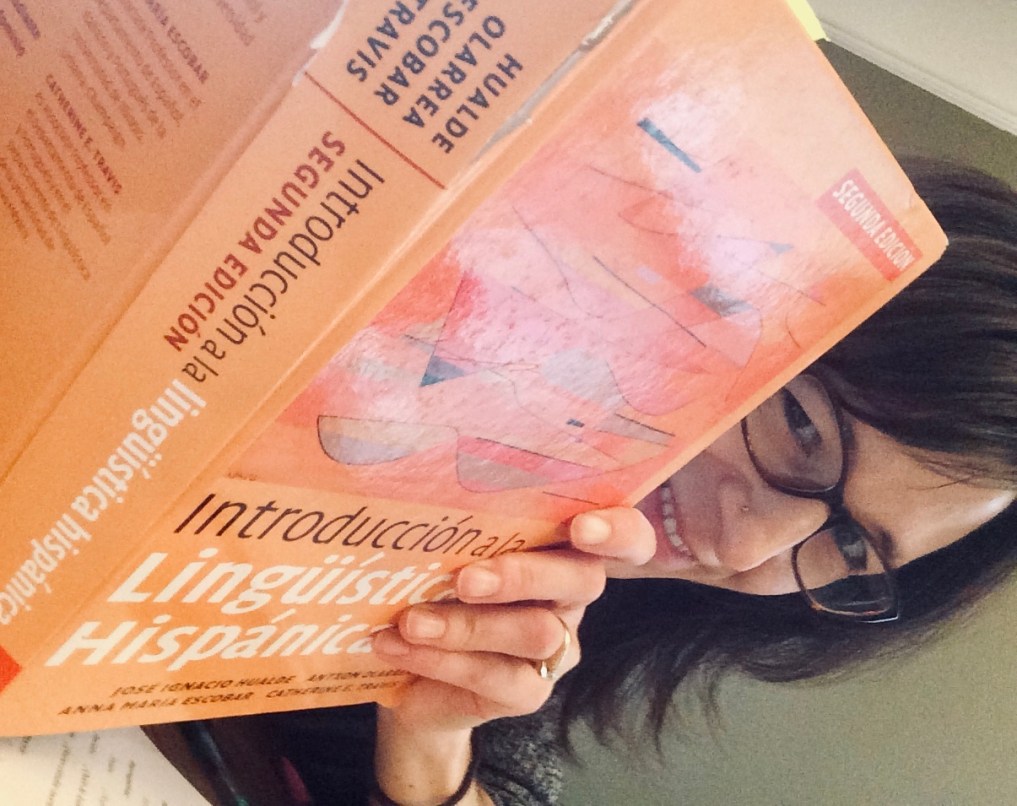
According to my favorite textbook, Introducción a la lingüística hispánica, creativity in a linguistic sense is the ability to take a finite number of items (a set of sounds, letters, morphemes, or words) and to produce an utterance that has never been said before.  We have the power to create.  This creativity allows us to make friend a verb, and to invent novel combinations like un-Google-able and stay-cation.

Prevarication reflects our human ability to fabricate, that is, both to deceive and imagine other possible worlds.

Recursion is how we use a finite number of language structures and patterns to produce infinite possibilities:

This is the house that Jack built.  This is the malt that lay in the house that Jack built.  This is the rat that ate the malt that lay in the house that Jack built.  This is the cat that killed the rat that…

Patterns help our finite human minds fathom infinity.  

We can ponder impossible things.  We can process the past and hope for the future.  Our language capacity allows us to imagine, to weave together a story—whether it is to fabricate a brilliant excuse or invent a fantastical new dimension.

Patterns are discernable and predictable structures that repeat and could potentially go on forever.  They are God’s eternal fingerprint on our temporal world. He set eternity in our hearts and gave us the tools to process and express His everlasting essence.  He has wired us to marvel at divine mystery and to comprehend great and unsearchable things.

In the midst of life’s unknowns, I have learned to cry out to the One who knows me.  To seek the One who penetrates marrow and searches souls. To search for His beauty in patterns.  And not just in language. God has scattered discernable patterns all over this world for us to discover and describe and fathom and imagine.

Meal:

Maybe you have Taco Tuesday.  We have omelets on Fridays.  Embrace the rhythm of routine, but pause to savor it.  Make your favorite omelet, but tweak the ingredients just enough to stir your culinary imagination.  Add smoked Gouda or sundried tomatoes. Top with sautéed mushrooms and onions. Try a side of roasted sweet potatoes drizzled with olive oil.

Song:

I love patterns in music—both the tune and the lyrics.  With hands opened towards heaven, listen, notice, and discover; surrender to His design.

NeedtoBreathe, Multiplied 

Prayer:

Lord, you are infinitely loving.  You set eternity in our hearts that we may comprehend unsearchable things.  I call out to you today. Reveal yourself to me through the patterns in this world.  Transform me out of the rut of life-depleting routine and into the unforced rhythm of your grace.  Thank you, Jesus.

Time:

Take time to play with words and play on words.  Marvel at the morphemes that make un-fathom-able possible.  Listen closely to the whispered words God has for you. Try to keep track of unsearchable things.  Get lost in a pattern and imagine new possible worlds. Share a good word from His Word with a friend. Screen Shot 2019-03-18 at 10.29.52 AMhttps://www.thecommonyear.com/blog/2019/3/16/beauty-in-the-patterns-georgia-coats


What are You Afraid Of?

“You gain strength, courage and confidence by every experience in which you really stop to look fear in the face.” Eleanor Roosevelt

OLYMPUS DIGITAL CAMERAThe best part about cold winter months in Michigan is snuggling under warm blankets, reading and telling stories with my kids. In these moments I often pause just to take it all in, and then thank God for the beauty of such simple yet priceless memories.   Children truly are a treasure and a gift in this life. Recently, I took part in a short, two-question survey on FEAR. The first question was: What is something you are afraid of? A lot of things came to mind…debt, disease, destruction…but if I had to pick just one to write down, I would say that what I fear most regularly is something horrible happening to my children. As a mom, I do all I can to protect my children from harm. I teach them how to be safe, I stay near them in uncertain circumstances, and I try to keep them healthy.
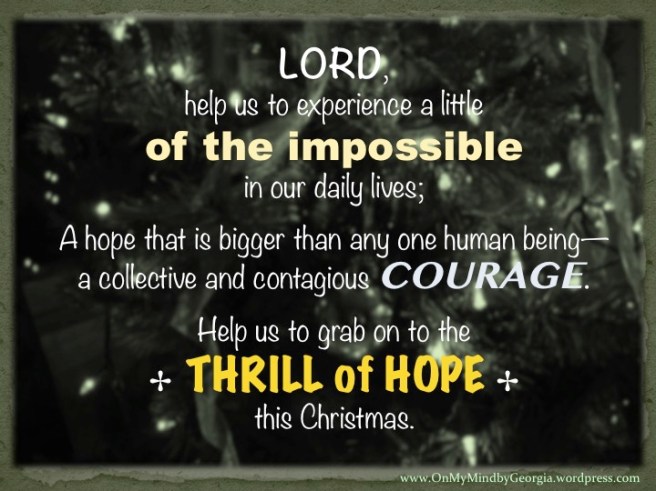
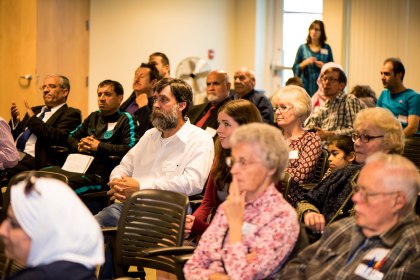
These things were going through my mind as we read the historical account of the birth of Jesus the Messiah together. We got to the dark part of the story where a corrupt leader, King Herod, was feeling threatened by the news of a young Messiah being born. Out of fear, King Herod terrorized the Palestinian town and region he governed, and ordered the mass slaughter of all baby boys under two years old. As we read through the account, my eight-year-old son quickly named our young friend that fit that description. We all agreed that it was horrible to imagine our friends losing their 1½-year-old son to the terror of a corrupt leader.

For days I was troubled by this disturbing account of male infanticide that went on as a result of the Messiah’s birth. The families of those baby boys weren’t celebrating the birth of a promised and foretold anointed one sent from God. Instead, they grieved deep loss around the event that led to mass extermination of baby boys in and around Bethlehem. The story recounts that King Herod was “terrified” at the news of a prophetic Messiah-King entering the world and being revered by foreign Wise Men from the East. He saw this child as a threat to his powerful position of leadership. But the birth of Jesus also stirred a new hope far and wide. The coming of a promised Messiah reminded the world that God Most High is near to His people.

I tried to imagine myself living in a time and place of such need for hope—a world of terror and destruction enacted by powerful people. It didn’t take me long to realize that that is our world. Those are the bleak circumstances facing so many in war-torn Yemen today. According to a recent interview that the Yemeni American News had with the President of the National Association of Yemeni Americans (NAYA), AbdulHakem a. Alsadah, the United Nations estimate 3 million “displaced” Yemeni people.   “There is no international awareness about this crisis,” Alsadah stated. Tears stream down my face when I see pictures of Yemeni children who are near death due to acute malnutrition. My heart breaks as I read stories about Yemeni parents who are forced to make hard decisions about losing their children, either to disease, destruction or starvation. According to a December 2016 article in www.theGuardian.com, one man tells of how he and his other children don’t eat so they can pay for his young daughter’s cancer medication. How does any parent face that kind of fearful reality and not lose hope?

The second question in my survey was:

What do you do when you are afraid?

Fear makes me want to hold my children tighter and never let them out of my sight. It makes me want to turn off the news because I can’t possibly process all the destruction going on in the world—in Yemen, in Syria… But what can I do about it? Fear and ignorance are the easy ways out, at least initially. If I raise my kids in fear, they are set up to react in fear. There’s a reason why the angels who came to announce the birth of the Messiah always started by saying, “Fear Not.” It’s because we do fear. Nevertheless, God Most High sends His chosen ones to a messy world because we need to hear from Him.

“Man can live about forty days without food, about three days without water, about eight minutes without air, but only for one second without hope.” H. Lindsey

It is good to be near God.  His presence brings hope, and hope keeps us alive.  Author Hal Lindsey said that, “Man can live about forty days without food, about three days without water, about eight minutes without air, but only for one second without hope.”  In the worst of our despair, hope anchors our souls. It has to. Otherwise we wouldn’t survive the fear, terror and destruction that surrounds us. Education, compassion, prayer, hope. These are the things we must hold on to when we are afraid.

What is something you’re afraid of? What do you do when you are afraid?

 So, as we really stop to look fear in the face, join me in trying a few of these things:

  • Give thanks for the good things God has done.

  • Tell a story to raise awareness of the crisis going on in Yemen.

  • Hug your children a little tighter.

  • Pray for those who suffer.

  • Give of your resources (time, money, or talents) to help another struggling human being.

  • Educate children about how to process fear.

  • Take a moment to grieve sad and disturbing news when you see it or hear it.

  • Love your neighbor.

  • Look for ways to spread love and kindness, especially when it is easier to spread fear or hate.

  • Hold on to hope as an anchor for your soul.

(Published in the Yemeni American News, February, 2017)

A Thrill of Hope: Adventures in Scooching Over

(Adapted from the Yemeni American News, December, 2016 publication)

“Do not be afraid. I bring you good news that will cause great joy for all the people…” ~Angel of God~

When the world around me seemingly swirls with hatred, anger and fear, and my heart is heavy for the hurting, my coping mechanism is to reminisce on stories of hope. In my profession of language teaching, motivation is a key element for success. Motivation in life, as in language learning, contains two essential ingredients: 1. You have to think you can do something: hope 2. You have to think that it matters: need. In November I was reticent to click send on my article, Scooching Over, because I knew that if I made my thoughts public, my own words would move me to action, and I wasn’t sure I had the capacity to scooch over for a new friend in my daily life. The last thing I want to do in this refugee crisis is talk about doing something and then do nothing. The need was clear: I believed wholeheartedly that my small action to make a difference in one refugee’s life mattered; but I wasn’t sure I could actually do something about it on my own. That’s where hope is bigger than me. It requires me to believe that I can be involved in great and impossible things.

slide2

After taking a moment in my hectic day to pause and pray, I called my New American friend that I have endearingly nicknamed Zuzu. Zuzu and I had connected at the Sabeel Media Event in October, where she had expressed that she needed help finding a preschool for her son. I had already called at least eight preschool locations in her zip code before I got on the phone with Zuzu. I offered to come over the next day, take her to visit a preschool, and teach her some English. To my surprise, she told me NOT to come. She said that she had already found a preschool, that her family was moving to a better location, and that she was currently too busy for me to come visit her. As it turned out, there was no room in her week for me.   She didn’t need my charity to survive, which made me even more determined to get to know this highly motivated woman.

When things settled for Zuzu, I came by to see her new place. In her intermediate English she reported that she had signed up for English classes at the local college, she was studying for her driver’s permit, and she was in walking distance from most of the places she needed to get to each week. She has been in the U.S. since April and is determined to settle her family here. Zuzu’s vision is bigger than she is. Her hope is deep. Her potential is great. Her work is humble. She walks her in-laws to the doctor and her son to preschool; she cooks and cleans for her household of six. At night when everything is quiet, she studies English and listens to audio messages I leave for her to practice each week. Zuzu doesn’t want to live indefinitely off of the kindness of others. On the contrary, she wants to be an agent of care and change and assistance to others. She also would like to go home if she could. But she can’t. So her plan is to bloom where she has currently been transplanted—right here in they Detroit Metro Area, MI, USA.

|Her plan is to bloom where she has currently been transplanted|

 From our visits together I have learned that Zuzu is Syrian Kurdish. Her hope is seen in the languages she wants her kids to know: English of course, so they can thrive in their new community. Kurdish of course, because that is the language of heart and home. Arabic of course, because you can’t live in Syria and not know Arabic. She is preparing her son and daughter to function in this new world, but also to be ready to return to her beloved home country…someday, Inshallah, God-willing.

Sitting on the floor of her upper flat on soft blankets against big couch pillows, sipping warm, sweet instant coffee with milk, my first step in our mini English lessons, was to identify her goals for learning English: 1. Help her mother and father-in-law with their medical prescriptions and paperwork 2. Help her kids learn English. 3. Go to college 4. Talk about travel and places to visit 5. Tell her personal history. Zuzu believes that learning English matters. She also clearly believes she can do it. Unless you’ve ever worked with someone that motivated to learn something, it’s difficult to describe how exhilarating it is. Her need is clear. Her desire is clear. She has hope for her future that is bigger than she is. And I have the privilege of joining her venture.

|Together our hearts break for the displaced people of her country.|

 As a writer, I want to carefully handle the stories entrusted to me. This past week, sipping our coffee, I pulled out the Yemeni American Newspaper and explained to Zuzu that she fullsizeoutput_9e0
had inspired the article I wrote last month. I told her that I follow the teachings of Jesus the Messiah who says we are to love one another. His heart is for the orphans, the widows, and all those in need. As His follower, I offer what little I have with big hope. After all, the good news of great joy this Christmas season is for all people.

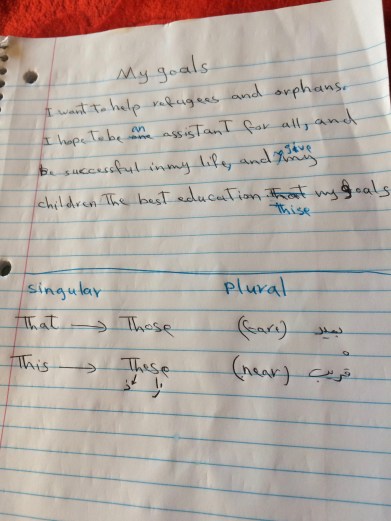
Zuzu shared with me another goal statement she had crafted late one night: I want to help refugees and orphans. I hope to be one assistant for all.  And be successful in my life and my children the best education. That my goals. Clearly, Zuzu and I share a vision of helping those in need. Together our hearts break for the displaced people of her country. I asked Zuzu if I could publically share her beautifully articulated goals because they inspired me, and I think they would inspire others. She agreed.

As Zuzu and I both scooch over each week to make room for each other, we hold on to the thrill of hope. My prayer is that all of us would experience a little of the impossible in our daily lives; that we would together find a hope that is bigger than the determination of any one human being—a collective and contagious courage. My prayer is for many more to get out of harm’s way and be welcomed into a safer place where hope can be nurtured, and that they can experience the good news of great joy that is for all people.

Long lay the world in sin and error pining, 

Till He appeared, and the soul felt its worth.

The thrill of hope, The weary world rejoices…

~O Holy Night~

Scooching Over

(Published in the Yemeni American News, November, 2016)

Give me your tired, your poor, your huddled masses yearning to breathe free.  Emma Lazarus

The Preferred Aisle Seat

I have never been known for my punctuality. In fact, I characteristically run late. Often times it’s because I get lost trying to find places, or maybe it’s because I tend to be on Greek time, which means I’m not technically late; it just allows me a half-hour margin for arrival. At my church there are rows of seats for people to choose from as they enter the place of worship. I’m always grateful when people scoot in towards the middle seats, so that us late arrivers can slip into the aisle seats, unnoticed. I prefer to avoid the awkward attention of navigating my way through a maze of knees and handbags after the service has begun to settle into the middle. Sometimes at abundantly populated special events, the pastor up front will ask everyone to scoot in a little to make room for more people to slip into the aisle seats. I know how it feels to be scooted in for.

Lately, though, I have been on a fairly long stretch of timely arrivals, which means I have my pick of seats at church. Admittedly, I tend to choose a preferred aisle seat.  I like having a bit of space on one end between me and other people that I don’t know so well. I like my space, my preferences, and my little comforts.

Joining the Response to New Americans

Last month I attended a free community event sponsored by Sabeel Media at the local library, discussing the response and the responsibility of the media to share the experiences and needs of refugees. One of the special presenters, Shane Lakatos of the Social Services for the Arab Community (SSFAC) in Toledo, challenged everyone at the event to think about the fear in our own hearts. We fear people we don’t know. And in fear, we tend to think the worst of them. Peter Twele, another special presenter and author of the book, Rubbing Shoulders in Yemen, emphasized that refugee families relocating simply need a friend if they are to successfully assimilate in a new culture. Not only have they left homes, families and jobs, they’ve lost neighborhoods, communities and connections. They need to build a new community of relationships.

So as I stood in the back of the Sabeel Media event, having arrived a little late, I started to think of my own response to the refugees joining my community.

sabeel-g-in-backSo as I stood in the back of the Sabeel Media event, having arrived a little late, I started to think of my own response to the refugees joining my community. I can donate to the cause. I can pray for those who suffer. I can speak out for the needs of these new Americans. I can even volunteer for an event of handing out free backpacks to refugee kids starting school in a new country. As I was pondering my action points, I scanned the room of attendees and my eyes fell on a beautiful young woman dressed in a bright pink sweater with a coordinated floral scarf covering her head. I was surprised to realize that I knew her, and not only that, but that I had been thinking about her. I knew her by name. I had given backpacks to her kids at a volunteer event in September.
Scooching Over, My Point of Decision

I greeted her with quiet kisses so not as to disrupt the program, and continued to listen to the needs amidst the crisis. The needs are dire. The search for hope is essential for new Americans coming into our country. The presenters’ words rang in my ears, of our own fears, and of the refugees’ need for friendship and connection with such limited resources… What was I going to do about it? But what about my crazy American schedule? Do I have room in my life for a needy new friend? Not really. There’s work, prior commitments, grad school, kids, family.

This is a crisis we are all facing. It doesn’t just belong to some people and not others.  We all need to scooch over and make room for one more in our lives.

But this is a crisis we are all facing. It doesn’t just belong to some people and not others. We all need to scoot in, scooch over, squeeze closer together, and make room for one more in our lives. My little bit of comfort in my “preferred aisle seat” isn’t a lot to give up, considering the woman I’m inviting to sit next to me really wants to settle her young family after fleeing devastation and living in temporary housing for over a year. She has her dignity. She doesn’t just want to be helped. She wants to go to school, get a job, help her kids learn English and assimilate into her new community. She’s ready to work hard; she just needs some help doing it. She’s one person, one name, one face. She is just one of the tired and the poor in the huddled masses, yearning to breathe free. She’s one woman I could call a friend. Who knows, I might end up being the needy one in our relationship and discover that my scooting over to fit one more into my life was actually to my benefit. I’ve had that happen before.

Version 2

When I think about all the potential things we perceive a refugee to be: a foreigner among us, a neighbor, an enemy to fear, a widow or an orphan, or someone lost and needy…I can’t help but think of what Jesus the Messiah has to say about all of them. He says to love them. Love your neighbor as yourself. Love your enemy. Look after the widow, the orphan, the lost, the foreigner among you. Jesus the Messiah chose to love me without condition and with a love so compelling that I can’t help but be changed by it. Calling one young woman this week to make time to help her find a preschool for her son, sip some tea, and help her learn English is something I can do. I can be inconvenienced in that way. I can scoot over and make a little room in my world for one more.

Religion that God our Father accepts as pure and faultless is this: to look after orphans and widows in their distress and to keep oneself from being polluted by the world.   St. James

Hijacking Radical

I appreciate the Muslims in my community who motivate me to be more courageous about my own expressions of faith through their everyday radical.  As we commemorate the horrendous 9-11 attacks, and as many contemplate Abraham’s tremendous trust in God’s perfect provision during the Eid of Sacrifice, I wonder, what would it look like if we were all a little more radicalized to show extreme love, drastic kindness, and fanatical forgiveness in a hurting world?  Thanks, everyone, for taking a moment out of your lives to consider my thoughts on radicalism.  (As published in the Yemeni American News, September, 2016).

Defining Radical Religious Practices

When I was in college my roommate and I had a hunger to learn more about our faith and live out what we believed, even when other people thought we were a little bit crazy. We wanted to be radical about what we believed. By radical I mean, we wanted to pray publically when others would have thought it awkward or inappropriate. We wanted to stand out in modesty and purity of heart when other girls we knew were choosing to wear smaller shorts and date lots of guys. We wanted to study our Holy Book, talk about what it says, and figure out how to live it out every day, even when others were more interested in talking about the latest drama on their favorite show. We didn’t want to judge others for their choices, we just wanted to stand out as committed, passionate, and sold out for what we believed in. That was my definition of radical. I wanted to study the teachings of Jesus the Messiah and then live them out as best I could in my context. He was radical in his day and I wanted to follow in his radical ways of kindness, love, peace, and purity in my day.

Today, if someone is radicalized, it means they have a religiously based motivation to terrorize others. The word radical has been hijacked! Why does being sold out for what one believes in have to involve hurting others? There are radicalized religious fanatics of every flavor—those who bomb abortion clinics, those who bomb twin towers, those who terrorize innocent village children… All those extreme beliefs are crimes against humanity, and they are so far from the loving heart of God.

Practicing Radical at the Gym
The other day I pushed myself to get to the gym rather than take a nap on the couch. I convinced myself that I would feel better after a good workout. It was hot and sticky and I grumbled in my T-shirt and capris as I anticipated getting even hotter running laps. When I walked into the rec center, I passed a modest Muslim woman working out hard in her hijab, covered from head to toe—and I thought I was hot! Motivated by her prayin gym framedcommitment to religious purity, even on a treadmill, I bounded with greater fervor up the stairs to the track. I was greeted by the sight of a man and his son pausing their workout to stop and pray eastward in the corner.  One of the things that I appreciate about living among Muslims in Dearborn, is that moments like these are “normal” occurrences at the gym.  They are also radical in my mind.  Radical by my first definition. Many devout Muslims in our community seek to live out their faith everyday, even when it seems uncomfortable, inconvenient, or just strange to those around them.

Inspired by these examples of radicalism to stand out at the gym, I decided, why not…I’m devoted to God, regardless of what others think… So, I waited my turn for the secluded prayer corner beside the track, and I knelt down and prayed. I wasn’t trying to show off or prove anything; I just wanted to take a moment out of my workout to connect to God in prayer. It was a demonstration of everyday radical. It was my small moment to take radical back from terrorism and reflect the heart of God.

Waging Peace
wage peace framedWhat would it look like if we were all a little more radicalized to show extreme love, drastic kindness, and fanatical forgiveness in a hurting and confused world?  What if we all paused to pray throughout our day more often?  One of my favorite bumper stickers challenges people to Wage Peace. What if we all practiced just a little of everyday radical by waging peace wherever we are?  Love, joy, peace, goodness, kindness…these are the fruit of the Spirit of God. These are fundamental virtues.  Maybe, then, we should all strive to be a bit more radical—and fundamentalists!