Just Come

🎶 Come, they told me, pa rum pum pum pum 🎶

I’m not sure what’s in it for me.  I keep asking myself what my expectations are.  I keep searching my own intentions.  There’s a time investment.  There’s a financial cost.  But there is ZERO obligation.  And yet I keep coming.  The vortex of need is overwhelming—beyond what I could possibly make a dent in.  I’m not naïve enough to think I’m taking on the role of superhero or white savior.  In fact, I feel pretty small and ill-equipped. 

And yet, every time I come, my heart is full.  Not because I solve big problems.  Sometimes when I show up, I can’t even solve the smallest of problems.  

🎶 O Come all Ye Faithful, Joyful and Triumphant 🎶

The interactions with this sweet neighbor and her family resettled in my community have changed something in me.  The gift is mine.

There are other faithful people who come.  If I didn’t show up and attempt to meet any of their needs, they would figure it out a different way.  They are survivors.  They survived and thrived and moved forward long before I knew this beautiful family.

🎶 Joy to the World, the Lord is Come 🎶

Last week I took the 14 year old daughter of my sweet neighbor to the doctor for a well-visit.  She rallied for her own appointment. I taught her how to fill out medical forms.  I showed her where her mom would need to sign so she could legally manage her own healthcare.  It’s not that her mom wouldn’t love to come, caring for her precious daughter.  It’s just that as a single mom of 10 kids, working fulltime at the meatpacking plant while studying English at night, there’s just not enough time in her days to navigate a well visit for child #5.  

$23.19.  That’s the price for two over-the-counter medications and a prescription of Vitamin D not covered by Medicaid.  I plotted ahead on our way to the pharmacy.  I was ready to be a joyful giver.  $23.19—paid, gladly.  We sat together on a bench at the back of Walgreens, and I taught my young friend the difference between prescription drugs and over the counter ones. 

🎶 O Come Let Us Adore Him 🎶

Dropping my friend off at her house, after quizzing her repeatedly on how to take her new meds, my heart was full—again.  She thanked me for spending my own money.  Her gratitude was an unexpected bonus.  As we said goodbye, I told her that many have helped me in my life, even with medication.  Maybe someday she’ll have the opportunity to help someone else pay for their medication.  Freely I have received abundantly from kindnesses I could never repay.  And in that moment, I was grateful for an opportunity to freely give. 

I came home from that event scrambling to answer a call from my Specialty Pharmacy about a recent delivery of my leukemia medication—the super expensive immunotherapy drug that I take every day, for ever.  The operator politely informed me, “You have an outstanding balance of $5668.64, would you like to go ahead and pay that now…?”  

What!? NO!!  I can’t pay that now, or ever, really.

I hung up the phone with a deep sigh and flopped on the couch.  

Sunlight and quiet beckoned me to be still.

I came for just a moment—empty-handed and wholehearted—into the presence of Divinity.  And something shifted in my soul.

I came reviewing the vulnerable places I had just been with my 14-year-old friend.  I came with the satisfaction of having paid her pharmacy bill in full—all 23 dollars and 19 cents of it.  I came offering up my own fear and outstanding pharmacy bill.

I came not knowing.

🎶 O Come O Come Emmanuel 🎶

Christmas is about coming. O come Emmanuel.  God be with us!  Joy is that the promised Messiah is come.

That’s Jesus.

O Come, Desire Of The Nations, Bind
In One The Hearts Of All Mankind;
Bid Every Strife And Quarrel Cease
And Fill The World With Heaven’s Peace
.

Jesus came to restore peace on earth, but he showed up first as a newborn—the epitome of defenseless, vulnerable, and needy.

His first invitation was to come and allow others to care and adore Him.

I have come so many times, vulnerable and weak.

So when a 14 year old vulnerably entrusts me to come into her need for medical care, I feel summoned to privilege.  The gift of presence—her presence with me.  The joy of seeing someone’s humble self and meeting them in that place.  Sharing a holy space.

The invitation of Christmas is to just come.

Come needy.

Come heavy.

Come weak.

Come ready.

Come all you faithful.

Come with hands full, ready to give.

Come with hands empty, ready to receive.

Come along with Him.

Come back.

Come over and just be.

Come in need of $23 or $6000.

Come with your whole self.

Even if you have nothing to bring that’s fit to give a King, just come.

CHRONIC HOPE #3: Cancer Complicates My Identity Issues

The life of a creature is in their blood.  Blood is the essence of who a person is.

By blood I am Greek.  By nationality I am a U.S. citizen.  By education I am a Spanish speaker.  By cultural experiences I resonate with my Middle Eastern neighbors of Dearborn, MI.  By faith I am a follower of Jesus the Messiah.

fullsizeoutput_2ec4

My whole life I have dabbled in multiple worlds, cultures, languages, and social groupings.  I hover on borders, struggling to figure out where I fit in.  That’s why I became a Language and Culture Learning Coach.

That’s why I have identity issues.

Enter Cancer.

By blood I have a cancer diagnosis.  More specifically, chronic myeloid leukemia (CML) is cancer in my blood cells.  Ironically, the white blood cells that function to fight off disease have become diseased.

Someone advised early on,

Don’t let your cancer diagnosis define who you are.

That piece of wisdom has both haunted and inspired me for that last 20 years.

When cancer runs in your blood, how do you not let it effect who you are?

To complicate things even more, I am on a cutting edge, super-effective, immunotherapy treatment. No complaints there.  When I tell people I have cancer, they want to know: Am I a survivor? Am I in remission? or Am I still battling the disease?  YES!  I dabble in all of those things.  My treatment keeps me in remission, as long as I keep taking it, daily.  Forever.

In my blood, disease moves slowly.  It’s a lifelong chronic disease, which makes me a peripheral member of another group.  The Chronic Illness Group.  People with chronic illness spend a lifetime on meds, and suffer from their diseases for decades.  There’s no glory in chronic illness.  To find support and strength in a chronic struggle, it helps to own it.  To identify with others who struggle in a similar way.

Blood-Related Issues

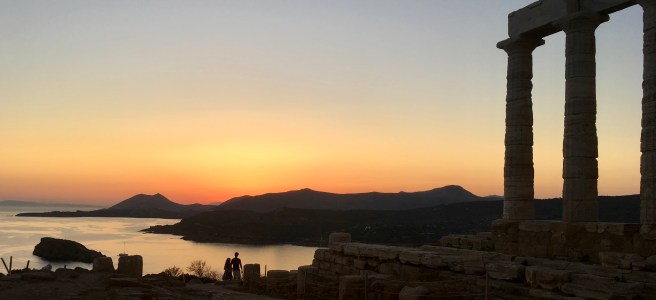
This summer I will travel to the Old Country, Greece, with my parents, siblings, and kids, to share with my kids a sliver of their heritage—of the identity that runs in their blood.  We will kiss my aunties and meet another generation of cousins.  We will eat great food and connect with the passion, grit, and generosity of our people.  I will admit my shortcoming to learn, and to teach my kids, the Greek language.  Relatives will look at me through the sympathetic cancer lens and say I look good, considering my health issues.

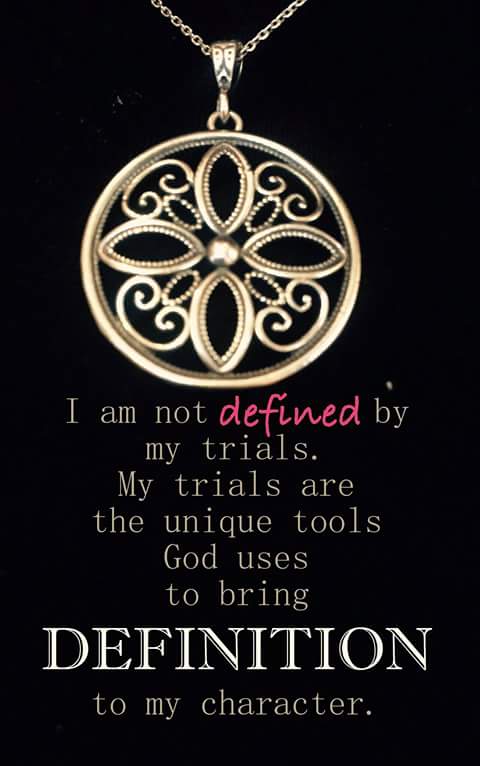
While I don’t want to be defined by the disease in my blood, I also cannot deny that it hasn’t had a significant impact on who I am.  Cancer brings definition to my character.  And for that, I am grateful.

FB_IMG_1496628639999

Thankfully, YOU don’t have to have my issues to embrace the wonderful beauty of your design.

And together let’s learn to share in the struggles of others.

Because, cancer or not, we all have issues.

fullsizeoutput_2eeb

This article was published in a series of articles for the Yemeni American News, July, 2019:

Georgia Coats is a Language & Culture Learning Coach, freelance writer, educator, wife, and mother of three who is passionate about healthy mind-body-spirit living.  Chronic Hope is Georgia’s collection of stories, lessons, and life adventures of living alongside chronic leukemia, cancer of the white blood cells, for two decades.  She often shares what’s on her mind at: www.onmymindbygeorgia.wordpress.com


Responding to a Hurting World: Lessons from the Little Drummer Boy

There are so many ways to get involved in a hurting world.  Which is a good thing, because there is SO. MUCH. HURT. in our world.  My heart leans towards people in transition, humans who are suffering, those who are trying to make it out of messes.  Immigrants coming to a new land.  Refugees fleeing war and manmade disasters.  Those who have left home, and in humility come to a new place.  They just need a little help along the way.

IMG_2249

So, what to do about it?  Turn to the wisdom of some classic Christmas lyrics for inspiration… the little musician who gave his all, even though it felt like so little.

Come they told me, pa rum pum pum pum

COME.  The first step is to receive an invitation and just plain show up.  The invitation is there to join something bigger than ourselves.  To be a part of something we can’t fix or solve.  To make it personal.  To just come.

IMG_5884
A new born King to see, pa rum pum pum pum

SEE.  Come and see the things that are happening in the world around us.  Let need, curiosity, pain, and empathy compel us to observe and join the messiness of our world in new ways.  To walk alongside a stranger in a strange land. To enter someone’s story.

Our finest gifts we bring, pa rum pum pum pum

BRING.  Come, see, what’s happening.  Bring what you have.  It may feel small and insignificant, but it is your offering to bring anyways.  Sometimes all I have to offer is myself.  And in a big, scary, complex world what I have feels so insignificant.

Slide2.jpg

To lay before the King, pa rum pum pum pum

LAY IT DOWN.  Let’s lay down our gifts, time, talents, resources as an offering. To show honor.  It may feel insignificant, but showing up has value. Taking time for someone shows they’re worth it.  Honoring another through a life-changing transition, and laying before them what we have expresses incredible value.

…When we come.

IMG_1027

BUTwe all face very real and present excuses, fears, and limitations…

I am a poor boy, too

I’m just one person, with limited talents and resources.  Many say… I’m not a teacher like you.  I would say… I’m not a lawyer like so-and-so, or an activist, or an influencer.  I’m just a ………………. trying to make it in the world (you fill in the blank).

Even our best is so limited.

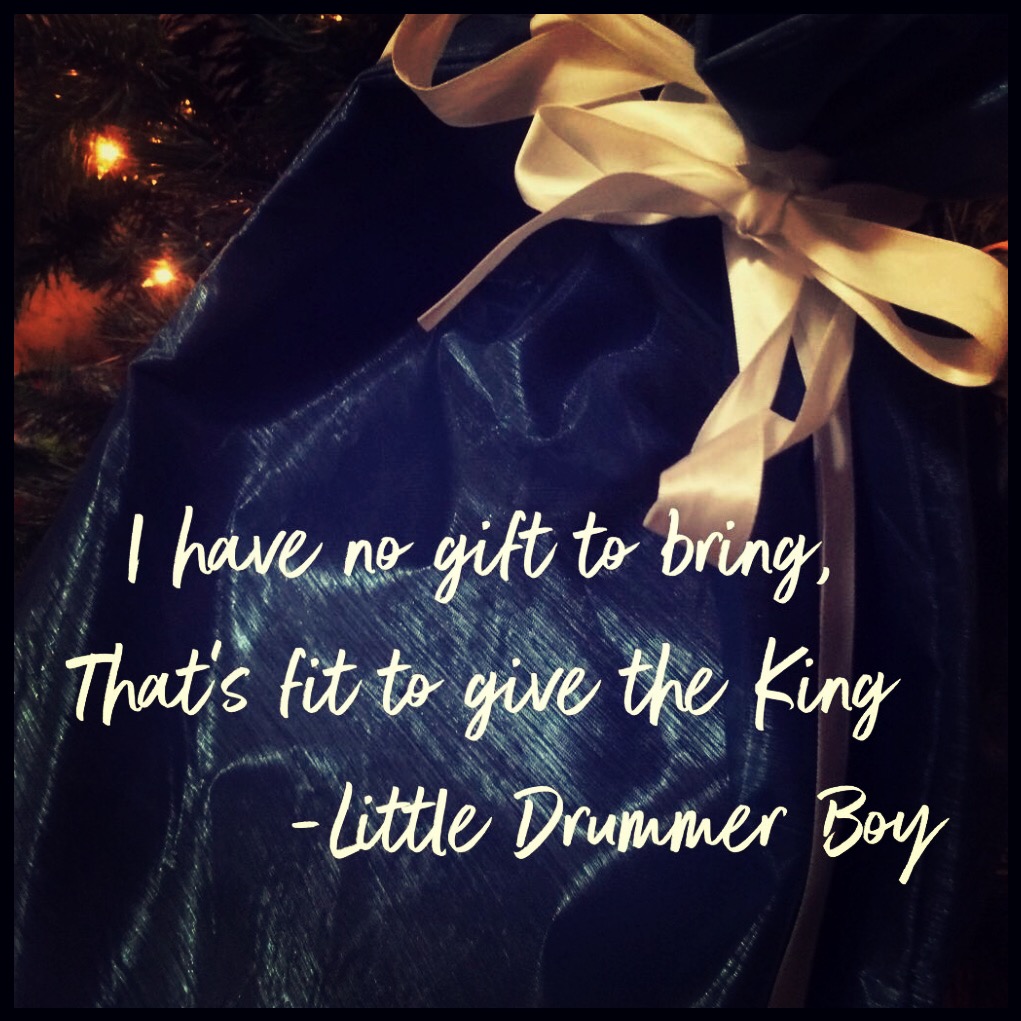
I have no gift to bring, that’s fit to give our King

I have nothing to give that would be of significance.  How can I help?  How can my small offerings possibly make a difference?

Start small.  If we all scooch over just a little in our row, we could make room for one more person to sit down.  What if everyone came, saw the need, and brought their little offerings?  That would be a significant number of insignificant offerings.  Maybe it would change the world.

What could those insignificant offerings look like?

Just come.  Show up for someone you know doing a work you admire in the world.

Just see… just listen.  Ask tough questions, hear difficult stories. Take time to process another perspective or another person’s journey.

Just bring yourself, your unique talents, your small offerings.

  • Maybe you have moments to read to a child.
  • Maybe you can pick up that book you know might challenge your thinking.
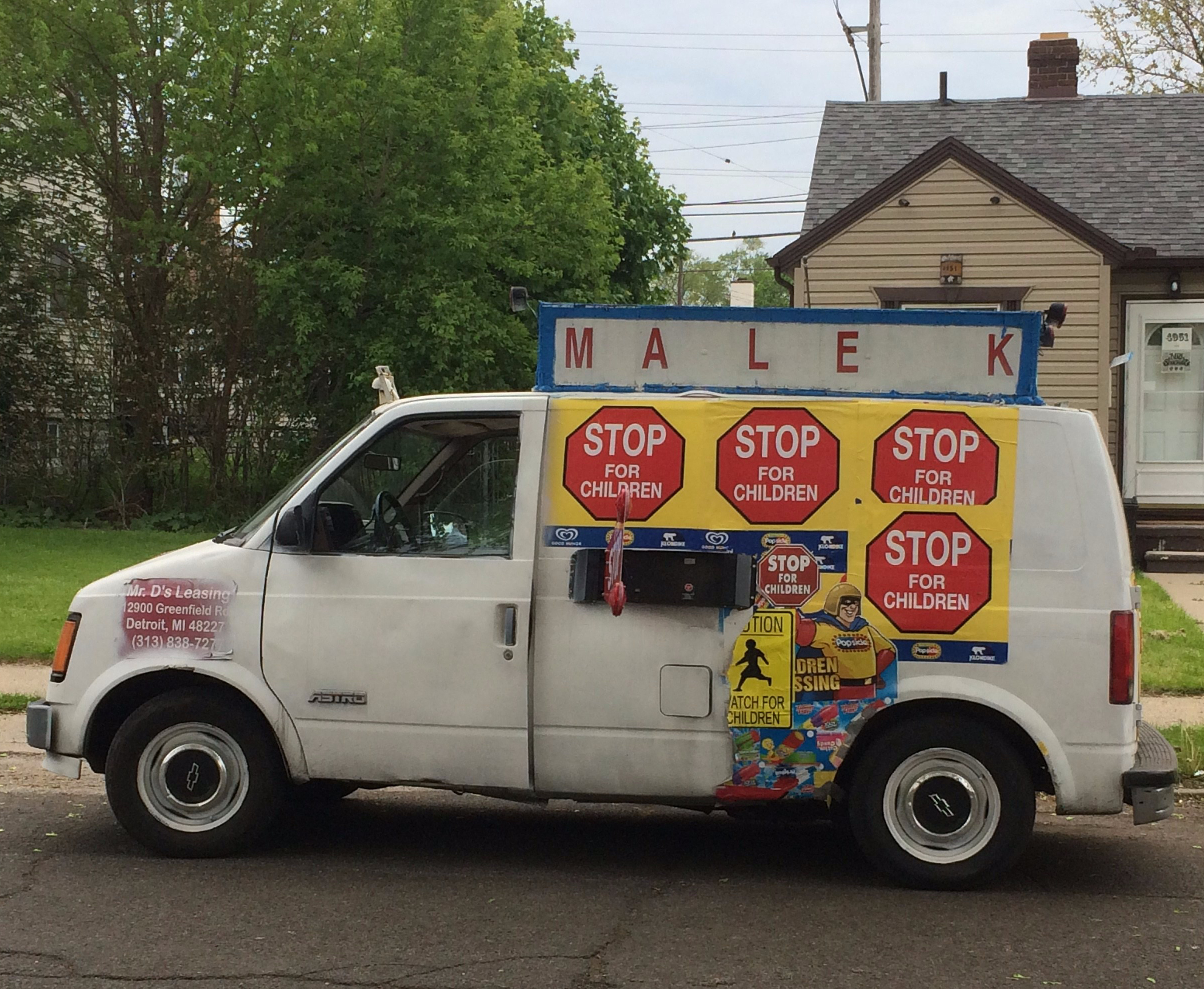
  • Maybe you can frequent a gas station or an ice cream truck where you can get to know a fellow sojourner just trying to make it in the world.
  • Maybe you invite someone new over.
  • Maybe you make that donation.
  • Maybe you share a perspective on social media that might make others think differently.
  • Maybe you start within–identifying a fear, letting go of bitterness, or choosing to forgive.

Who knows how scooching over might look for you.  Who knows what gift you bring, or how it might be fit to honor another?IMG_6942

I played my drum for Him, I played my best for Him,

pa rum pum pum pum, rum pum pum pum, rum pum, pum, pum

Whatever you do, do it wholeheartedly.  Even if it is small and insignificant.  Make it your best offering.IMG_5426

Then He smiled at me, pa rum pum pum pum
Me and my drum.

Relish in that smile.  The smile of helping someone out when they needed it most.  Showing up when it was difficult.  Offering when you felt like you had nothing.  Or maybe you are weary from many offerings that never feel like enough.  Pause.

Receive that joy.

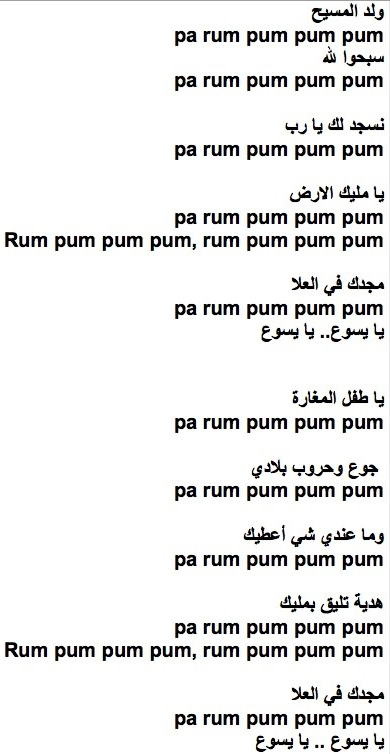
Recently, I heard an Arabic version of The Little Drummer Boy.  It was my invitation to learn some new Arabic words and practice rudimentary reading skills.  What I found was a treasured perspective I wasn’t anticipating.

Drummer Boy Arabic

With the backdrop of endless unrest in Palestine–the homeland of the Messiah and the singer–Vivian Bishara‘s lyrics of worshiping the King but having no worthy gift to bring becomes so real.  Regardless of our politics, war, hunger, and poverty are very real aspects of the world the Messiah came into–and the reason for the season today.  Emmanuel–God with us–in our messy, complex, torn up places.  Let’s come, and see, and lay down our gifts, or our lives, or both. To honor life.

To honor a Life-giving King.

… When we come.IMG_0097


Así Soy Yo: A verb of Identity

My three kids have been learning Arabic in school for the past 4-9 years.  But we recently moved and switched schools, and so they they no longer have such easy access to Arabic classes. So, because I’m a master at teaching small group Spanish classes…

We had our first Saturday morning family Spanish class:

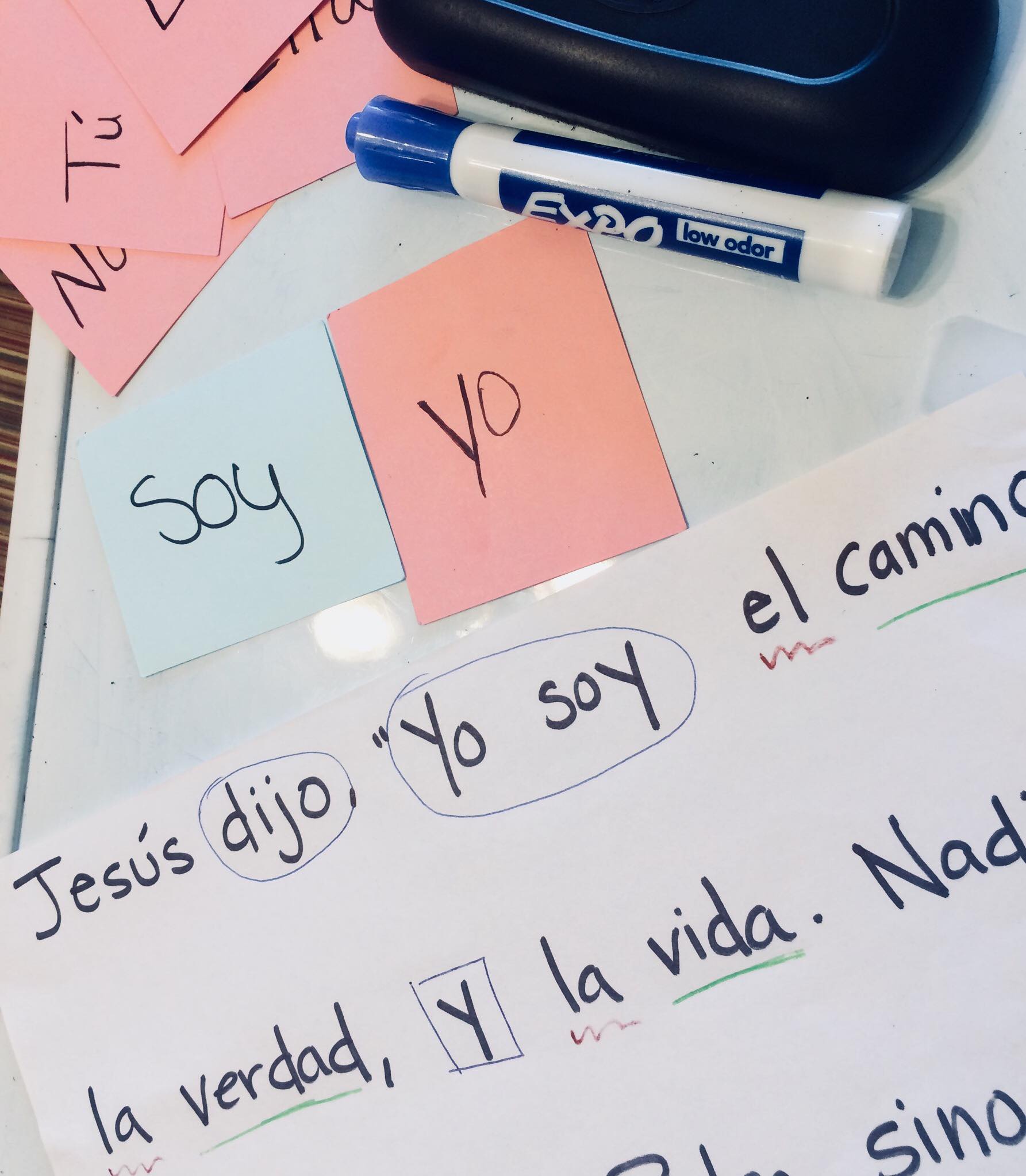
Macro level analysis of a familiar text: Juan 14:6, a Bible verse that they have previously memorized in English.  We were looking at three ways Jesus identifies himself, as the Way (el camino), the Truth (la verdad), and the Life (la vida).
Micro level grammar: subject pronouns and identity verb in the first person “Yo soy”
42273444_526153694495576_484846286676164608_o

To finish off our lesson over pancakes, we listened to one of my favorite Spanish pop songs by the Colombian band Bomba Estéreo

🎶 SOY YO
TRANSLATION: I’m me.

I fell , I got up…
I failed, I found myself,
I lived and I learned…
The harder you get hit, the deeper the beat, yeah

MESSAGE: Be who you are no matter what others may think. 🤓

They lyrics are too fast for my very beginning Spanish students, but the chorus is clear and repetitive.

Y no te preocupes si no te aprueban

cuando te critiquen tu solo di:

Soy yo

Soy yo… soy soy soy

Soy yo… yo yo yo

Así soy yo

That’s how we roll Saturday morning at our house.  Because así soy yo–that’s how I am.

IMG_0245

(It also helps that I plan on bribing them with churros.)

Defining “Neighbor”

I first met Maude* when my toddlers began to waddle northward towards her house.  She was tall and gaunt with a sensible silvery bowl cut.  Even when she was being friendly, she had a naturally sharp tone behind most of her curt comments.

IMG_6649

We intentionally moved into the neighborhood for the richness of its cultural, linguistic, and religious diversity.  We wanted to take to heart the command of Jesus the Messiah—to love God with all our hearts, and to love our neighbors as ourselves.

When a wealthy young man challenged Jesus to define neighbor, he responded with a beautiful story of a compassionate Samaritan man who met a Jewish man along his path in a moment of desperate need.  The Samaritan had to cross cultural and religious boundaries, and face the prejudices of the day to help.  It also cost him time, effort, and money to bring comfort, healing and blessing to the wounded man.

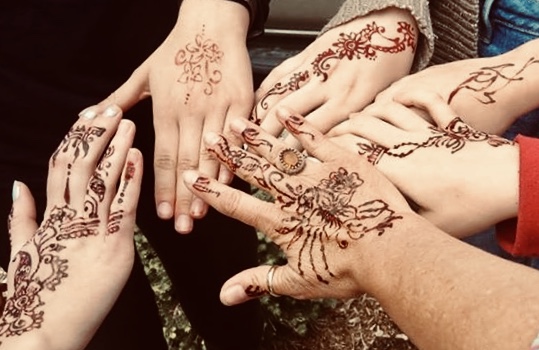
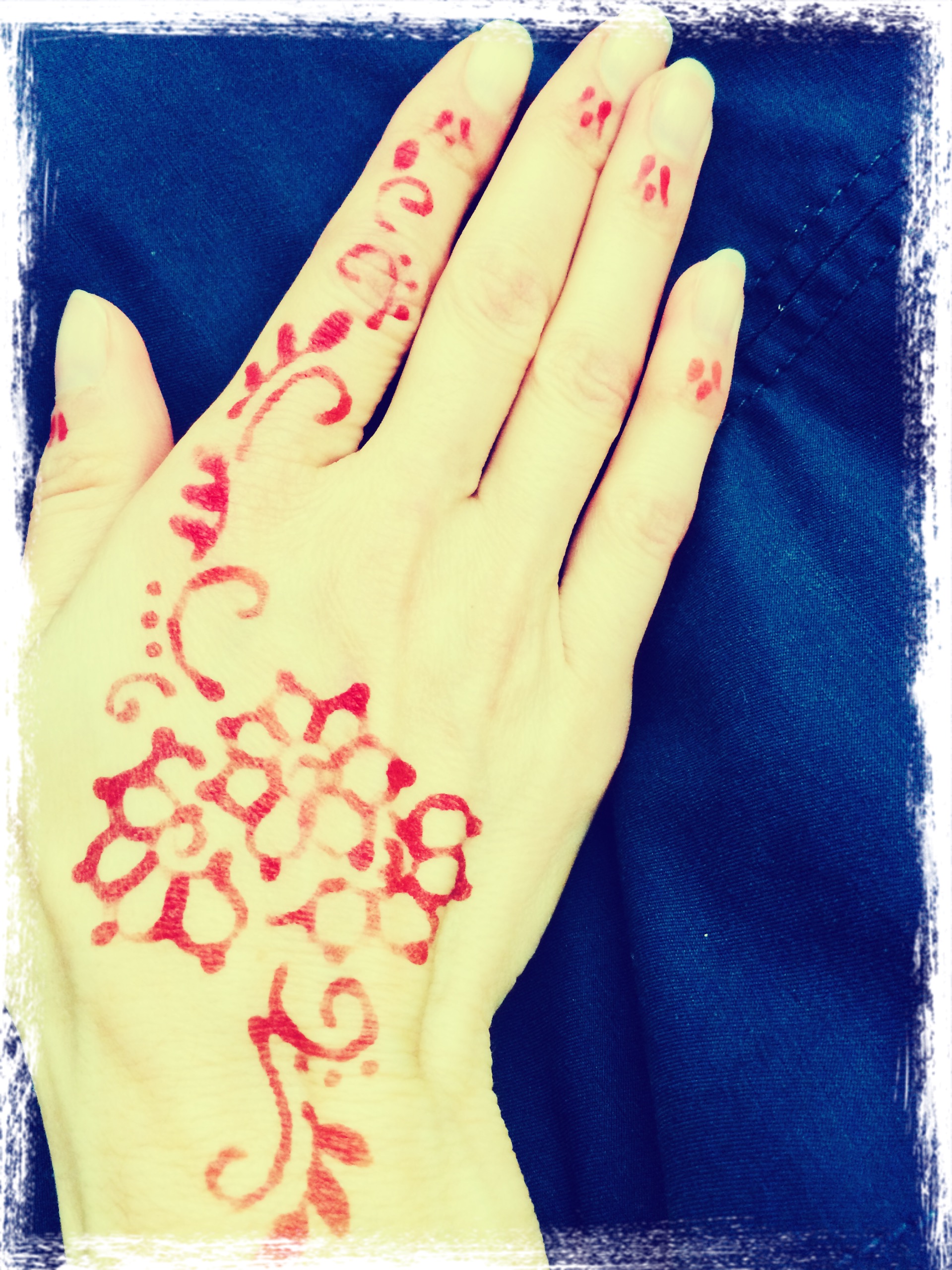
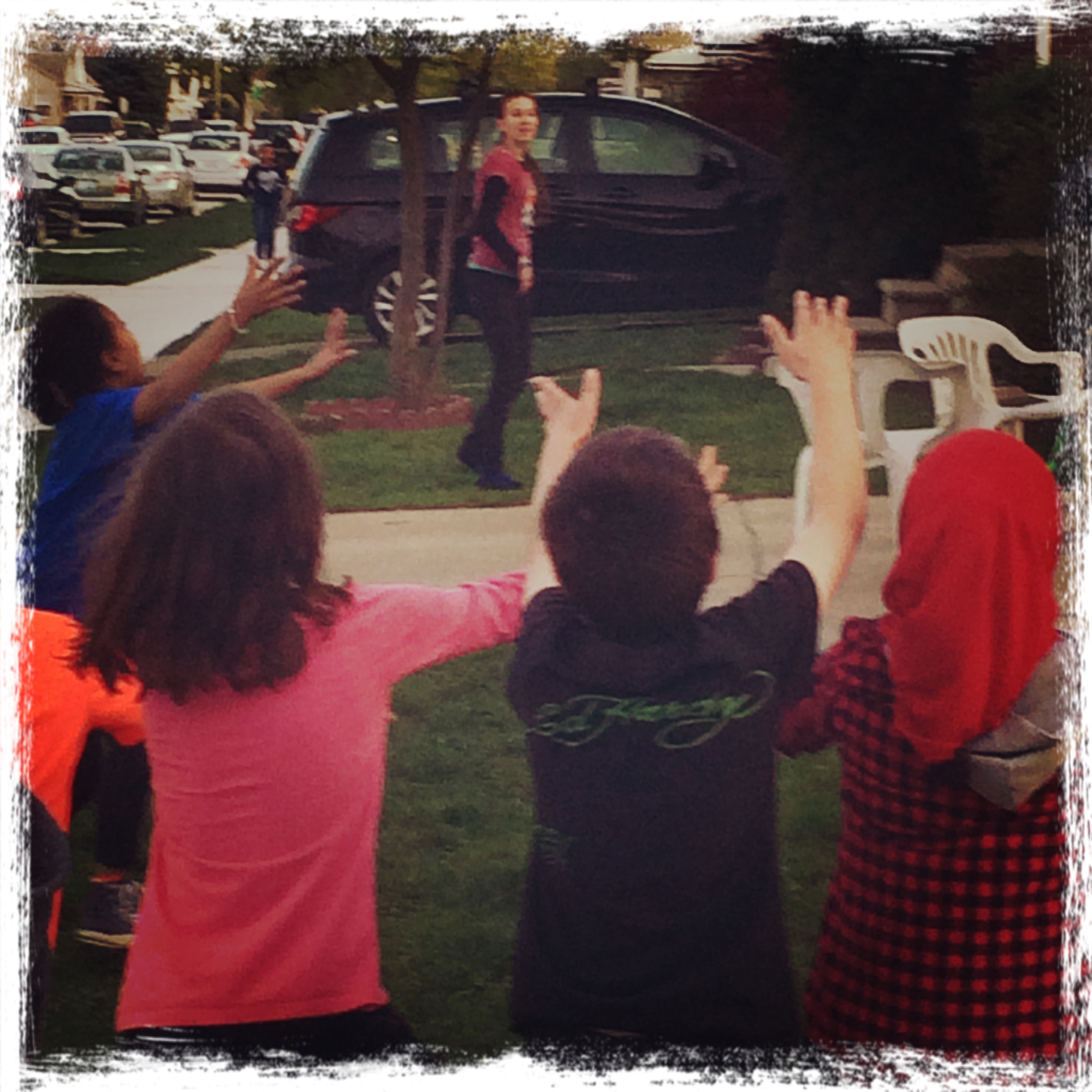
Our family has a lot to learn from Jesus’ story and expectation of loving our neighbors.  We have been challenged to cross over boundaries and enjoy the adventure of diverse neighborly relationships.  The challenge and the joy are mutual.  Our kids have grown up alongside our Arab Muslim neighbors and we have shared life together—the ice cream truck, henna, pass-the-plate wars, front yard games, and even the great flood of 2014.

IMG_6650

#lovingmyneighbors

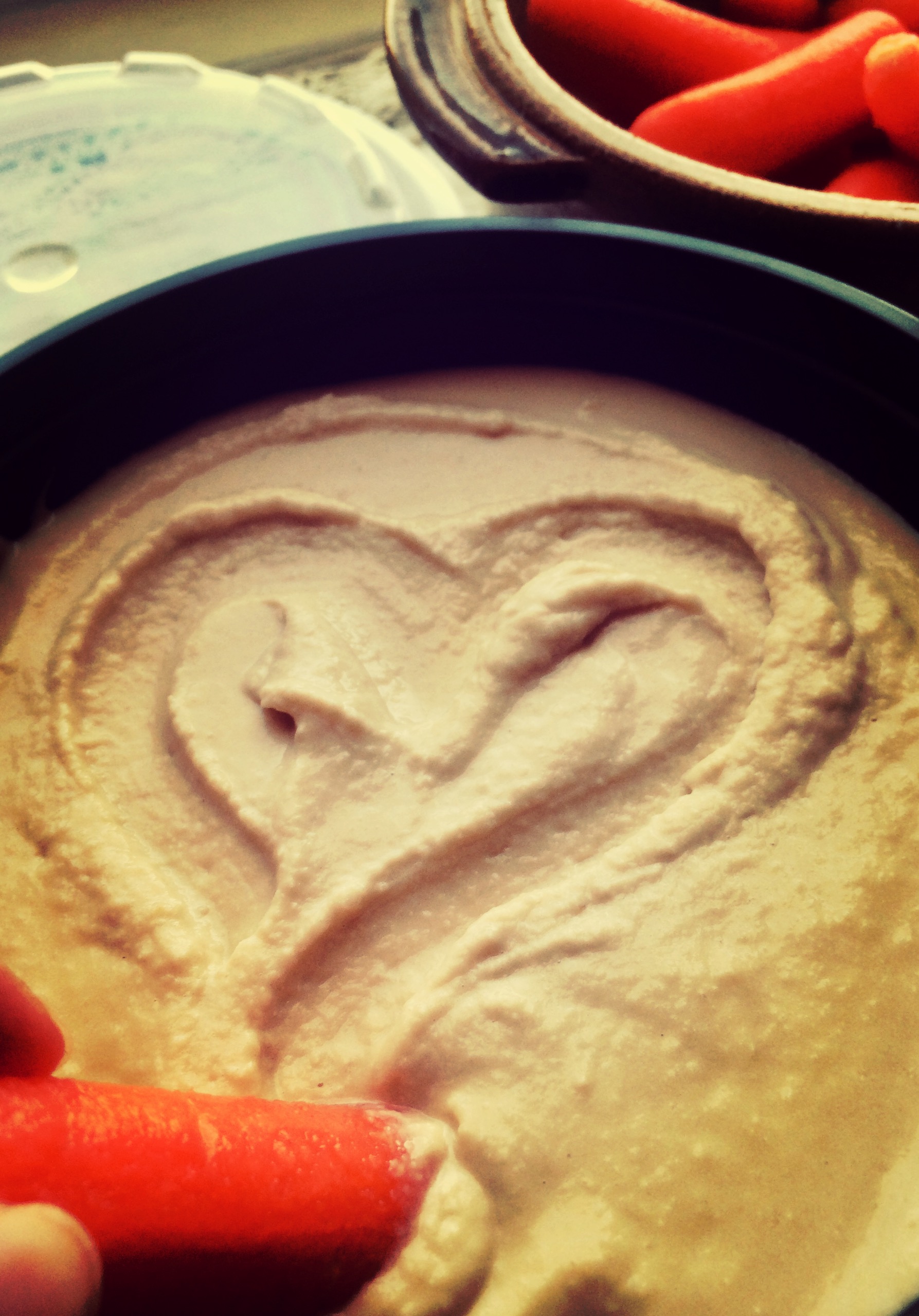
Arab hospitality is a thing.  Kindness expressed through great food is a debt we can never repay.  On our south side there is the Lebanese widow of four grown children.  She makes great hummus and has a very cute puppy.  Next to her is a young Yemeni family, a sweet elderly retired Iraqi educator, and a Palestinian family.

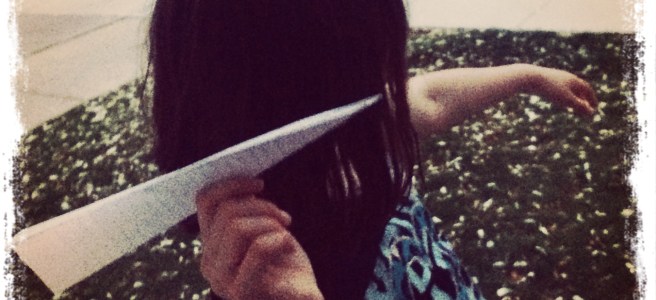
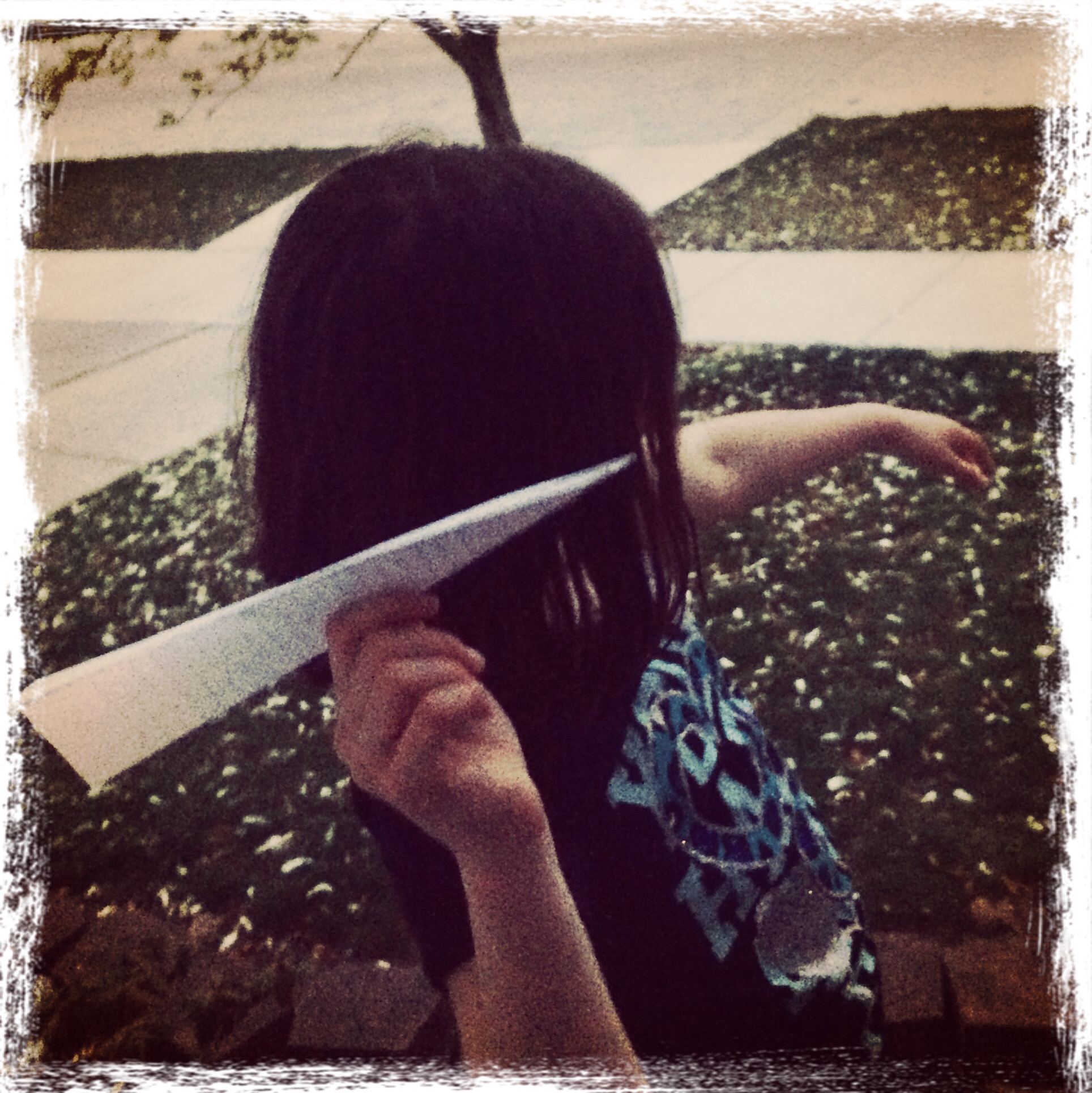
IMG_5346To our north are a few more Yemeni families who throw great girl parties and provide my kids with an endless supply of sweet treats, especially during Ramadan. Next to them is Hussein, the paper airplane guy, and his sister Latifeh, working professionals who live with their elderly parents.
And Maude.

Our kids knew Maude as the one who lived next to paper airplane guy, since he revolutionized our world with his simple craftsmanship of paper pleasure.  They clearly knew to avoid Maude’s house.  She didn’t have patience for noisy flocks of neighborhood kids. Through our outdoor springtime encounters I learned that Maude had a lot of brokenness and sorrow in her life. She had a soft heart protected by a tough exterior.  I tried to listen compassionately while always keeping one eye on the kids, the street, the ball, and the cars going by.

But what came next caught me off guard.

In her quiet quick undertone, she expressed how glad she was, that even though we had noisy toddlers, at least weren’t ARABS.

What??!!!

It slipped out so fast that I did what I tend to do in awkward conversations—I second-guessed what I really heard. It was often in that mommy-distracted place that Maude slipped in a few more of her opinions about our Middle Eastern neighbors.

Always one-liners.

Me always wishing I had a great comeback.

Years passed.  Kids grew. Maude got older and frailer.  I noticed Maude walking alone, a lot.  As a fellow walker, sometimes I joined her. She would uncharacteristically slip her arm into mine and ramble on and on.  She would oscillate from sweet melodic chitchat to swearing up and down. One morning I saw Maude wearing two different shoes.  Another time she had wandered down a street far from her normal route.  She looked lost.

Hussein happened to be home when I dropped Maude off at her house. Her dementia was getting worse.  Hussein, his sister Latifeh, and their parents took it upon themselves to keep a close eye on their aging and lonely next-door neighbor.

It was Hussein that would walk with her in the evenings up and down the block—matching her frail snail’s pace.

It was his parents who would have breakfast with her every morning.  They were the ones who found her after she had fallen, at the bottom of her staircase.

It was Latifeh who left work upon the emergency call from her parents describing Maude’s injuries.

Maude passed away shortly after that accident.

I had moved into the neighborhood to live out what Jesus taught. I thought I understood.  I thought I could be an example of a good neighbor. And we have been richly blessed by generous neighborly relationships.  But we have so much more to learn.

Hussein and his family exemplified day-to-day intentional care for Maude. Being inconvenienced for the welfare of another.  Advocating for the vulnerable.  Even loving someone with a blatant prejudice against “those people.”  Maude wasn’t the easiest person to love.  But Hussein, Latifeh, and their parents took the time to truly care for the needy, the lonely, and the lost along their path of life.

 Maude’s words still trouble me. 

What troubles me is that she is not alone in her racial one-liners.  There will always be more.  They will always feel like unexpected sucker punches.  Now is the time to devise my crafty, yet compassionate, comebacks.  To be ready to give an answer and to stand up for what is good and right and true.  How would Jesus do it?

I am open to suggestions.

And in the meantime, my neighbors have given me a lot to think about as I seek to understand the true definition of neighbor, the way Jesus the Messiah meant it.

IMG_6647

*Maude is a pseudonym.  Latifeh and Hussein are the real names of my neighbors who collaborated with me on this article. Thank you, habibti, for your beautiful stories.

This article was published in the Yemeni American News, June 2018


IMPACT

I don’t pretend to understand what’s going on in the mind of a mass shooter. The news is wrought with trying to figure out why the gunman did it. What was in his head? What were his motives?

But today, as I was watching one such report, I began to take notice of impact.

What impact did this one man have?

I don’t know why he chose to make such a horrendous impact, but here are some things I observed:

  • He had a purpose bigger than himself
  • He had a plan
  • He took dangerous risks
  • He invested to succeed
  • He powerfully changed the lives of those around him
  • He was willing to die

I HATE that he had such an impact. I HATE that he was successful.

In times like these, I try to focus on what I know to be true.

Jesus the Messiah gives us insight into the motives of a thief.

A thief is only there to steal and kill and destroy.

The impact of this one man was killing, stealing, and destroying life. But we were not designed for such destruction.

We are created for life—to choose life, to be life-giving.

Jesus the Messiah also reminds us of what life is intended to be.

I came so they can have real and eternal life, more and better life than they ever dreamed of.

So what will our impact be?

  • We are designed to live out a purpose bigger than ourselves.
  • It is good to create a plan and plot out success.
  • Being an agent of change in the world requires taking risk, prioritizing and investing to succeed, and being willing to lay down our lives for something greater than us.

The difference is hope.

We all face in some way the dullness and pains of life that have us wondering why we get up each morning. But there is hope. There is purpose.

We were designed for impact. Our souls long for immortality, somehow, in this fleeting, broken, hurting world.

Hope anchors our souls and keeps us getting up to try to live each day to the fullest.

fullsizeoutput_1488

 While one man caused death, many made music.

In the news interview I watched earlier, musicians Big and Rich, who opened the Route 91 Harvest festival in Vegas performing on October 1, 2017, recounted the beauty of song. The music festival opened that evening with a powerful sing-along of God bless America.

Making music is the whole reason people gathered that night in Vegas. Music draws us and compels something inside us. Different kinds of music draw different people. But, music brings us together; it makes our bodies move.

And when we grieve and mourn our losses, there is music for that, too.

Maren Morris released this song to honor the victims of the Vegas shooting. She addresses HATE directly in a letter:

Dear Hate,

You were there in the garden, like a snake in the grass, I see you in the morning staring through the looking glass. You whisper down through history and echo through these halls. 

But I hate to tell you, love’s gonna conquer all

While hate has always been around, love conquers all.

We hold on to that hope because we were designed for impact. That desire to be a part of something greater than ourselves screams of our eternal capacity, our longing to touch immortality and make history. Something inside us dies if we don’t perceive our purpose—and dream, plan, design, and carry out our impact on the world.

Heroes laid down their lives.

I so appreciate the news stories that give voice to the heroes and the rescued amidst the tragedy—those who risked their lives for great impact and greater good.

What I’ve learned from observing a shooter is that it’s not just about making an impact.

What I’ve learned from observing the impact of heroes is that it’s about choosing life.

Heroes sought life-giving opportunities. Being heralds of hope in a despairing world. Taking radical risks of rescue. Laying down their lives to save another. If life can grow out of the death of one little seed, there is value, meaning and purpose in that death.

Choose life.

fullsizeoutput_14aa

(Published in the Yemeni American News, November, 2017)

Fasting and Feasting: Looking in on Ramadan

Man does not live on bread alone, but on every word that proceeds from the mouth of God. (From the Tawrah)

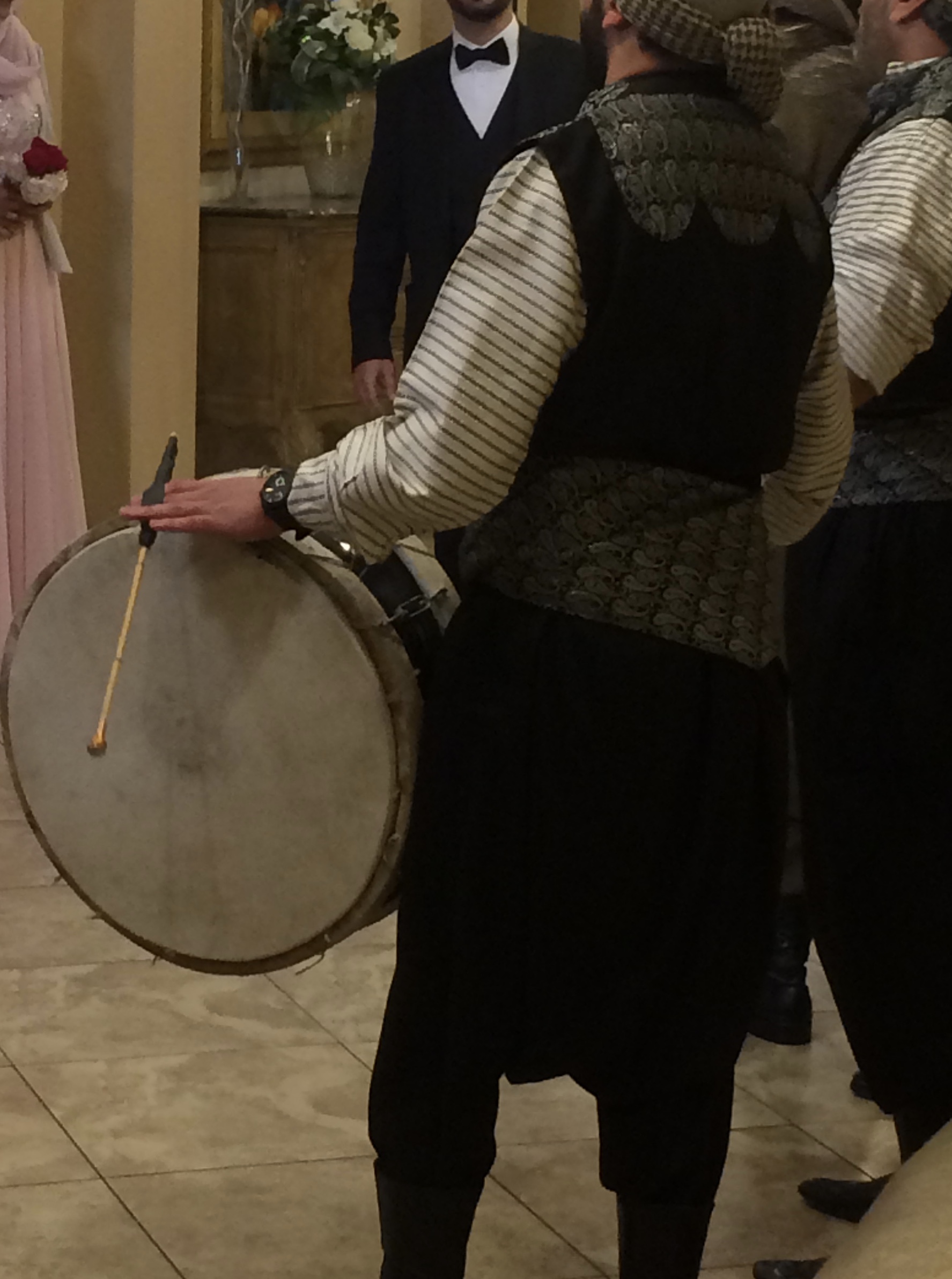
Last month, my husband and I joined our good friends at a beautiful Islamic wedding reception. He went with the men, and I with the women. It was an incredible celebration of dancing, drums, exquisite dresses, and incredible cuisine. It was a time to usher in something new and something beautiful—the union of a husband and wife in their new life together. I admired the abundant display of fruit platters and little cakes and cannolis that donned the back table. They were a vision of sweet, delicious things to IMG_1711come. And though I didn’t understand much of the Arabic conversations going on amongst the ladies at my table, I understood the topic of Ramadan on the lips of many. It seemed as though everyone was anticipating this month of fasting and all that it entails.
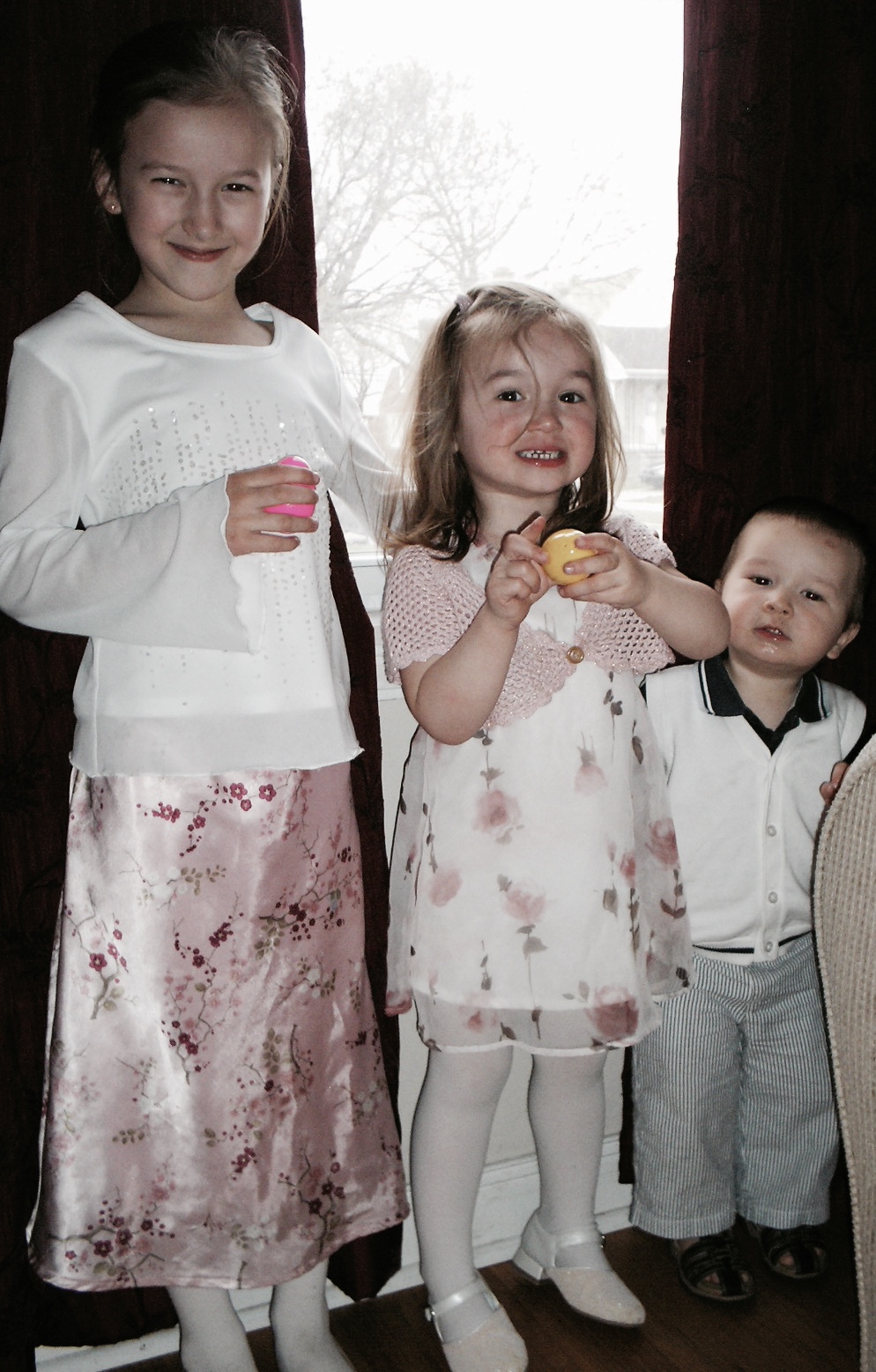
Growing up in a Greek Orthodox Christian home, my family practiced 40 days of Lent—a vegan diet, abstaining from meat, dairy and other animal products, in anticipation for the celebration of Easter. Easter is the focal point of the Christian calendar. It is a time to celebrate new life, new hope, redemption, and forgiveness as we 2010 04 04 Easter – Version 2reflect on the path of suffering and victory of Jesus the Messiah. The joy of Easter is intertwined with the fasting that comes before it. As a child, my favorite Easter treats were little chocolate eggs in a colored
candy shell. I remember trying to sneak around the kitchen to curb my chocolate craving during Lent, leading up to a grand resurrection celebration. Then, on the Saturday evening before Easter, we would dress in our best celebratory garb and attend worship services long past midnight. All I could think about was arriving home to feast on all the delicacies and choice foods we had abstained from for forty days. How sweet those treats tasted after waiting so long to eat them!

The guests abstained from celebrating until the bride and groom showed up.

When I lived on my own, away from the community aspect of this Greek Orthodox Lenten practice, I realized quickly that the little chocolate eggs didn’t taste as delectable as they did when I had abstained from them and anticipated them for 40 days. There is a time for fasting and a time for celebrating. Both are important. Jesus the Messiah used the example of a wedding feast when he described fasting to his followers. He explained that when the bridegroom enters the wedding, this is a time for celebrating. How true it was at the wedding we attended last month. We eagerly anticipated the arrival of the bride and groom. We all abstained from celebrating until they showed up.

Fasting brings to the surface our inner reality.  S. Sohaib

Sometimes I fast privately, abstaining from all food and drink, day and night, for a specified amount of time, in order to focus on prayer and listening to God. The growls in my stomach are a reminder to pray. Fasting forces me to depend on God, even before food. After all, Man does not live on bread alone, but on every word that proceeds from the mouth of God. Fasting teaches me to listen more carefully to the words of God. Fasting is both a spiritual discipline and a physical detox. It is a time to rid our bodies of unhealthy toxins and also expose the dark places in our spirits. According to Qur’an scholar Sohaib Saeed of the Bayyinah Institute, “fasting brings to the surface our inner reality.” This is so true. When we are weak, our true nature comes out.

Version 2I have studied other languages prior to Arabic, and it never occurred to me before to learn the vocabulary to talk about fasting. But in Arabic, and among my Muslim neighbors, fasting is an important topic of conversation. Living in a primarily Muslim community for the last 15 years, I have learned other valuable lessons on fasting. I appreciate the power and joy of fasting in community and breaking fast in community. My family anticipates the month of Ramadan, and not just because we are on the receiving end of the mandate to generously share with one’s neighbors. We, as part of a Muslim community, are impacted greatly by the month of fasting at our kids’ school, at the local places of business, and among friends. During this month, I am grateful to live in a community that pushes me to teach my children about this spiritual discipline at an early age. I love that kids have discussions about fasting on the playground!
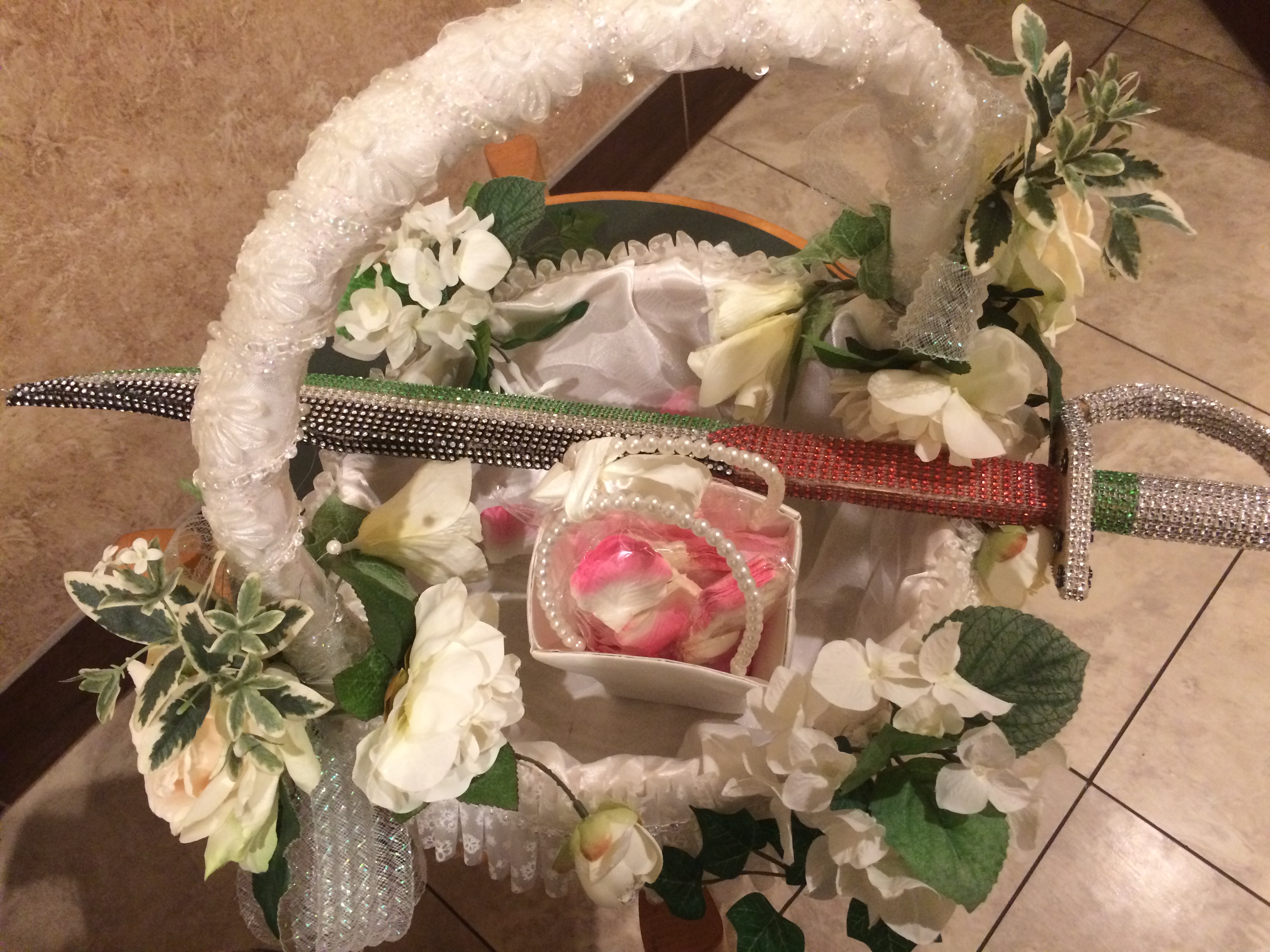
Set aside a time to seek God, to embrace our weakness, and to anticipate the sweet celebrating that follows.

IMG_1727
Whether fasting is for 30 days, breaking fast each evening, or whether it is for three days and nights straight, or a restricted diet for 40 days, what matters is the spiritual lessons that come from it: to set aside a time to seek God, to embrace our weakness, and to anticipate our breaking of fast, and the sweet celebrating that follows—like when the bride and groom show up to the wedding feast!

Published in the Yemeni American News, June 2017


An Unintended “We”

We the People of the United States, in order to form a more perfect Union, establish Justice, insure domestic Tranquility… promote the general Welfare, and secure the Blessings of Liberty to ourselves and our Posterity… 

Preamble to the Constitution of the United States

I can usually spot negative and hate speech coming from one group against another by the signature word they. “They don’t belong here.” “They do things differently.” “Why do they ________ like that?”

For Spring Break my Greek Immigrant parents came from sunny Colorado to visit my home in soggy Michigan. They did all the fun spoiling that any Yiayia and Papou would do with their grandkids. Amidst all the excitement, I invited my parents to come with me to spend some time with Zuzu, my Kurdish-Syrian New American friend. I had met her last October, at a free community event sponsored by Sabeel Media at the local library, discussing the responsibility of the media to share the experiences and needs of refugees. That event inspired me to scooch over, and make a little room in my life for the refugee crisis that faces us all as human beings.  I am regularly challenged by the command of Jesus the Messiah to love God with all my heart, soul, mind and strength; and to love my neighbors as myself. I have been visiting with Zuzu weekly for the last six months and she has taught me so much about friendship and hardship and Arabic and Kurdish. In turn, I have taught her about American systems, and phone systems, and English words. She calls me her teacher, but I call her my friend. Through it all we have become tied to each other.

There is so much political rhetoric for and against the topic of refugees, but to actually sit and sip tea with a neighbor who happens to be one seemed like a novel idea.

My parents were eager to meet Zuzu and her family. There is so much political rhetoric for and against the topic of refugees, but to actually sit and sip tea with a neighbor who happens to fit that category seemed like an interesting and novel idea. Before our visit, I prepped my parents on who to shake hands with or not shake hands with, where to put shoes, and how to sit on low couches—even with my dad’s recently replaced knees.fullsizeoutput_cc5

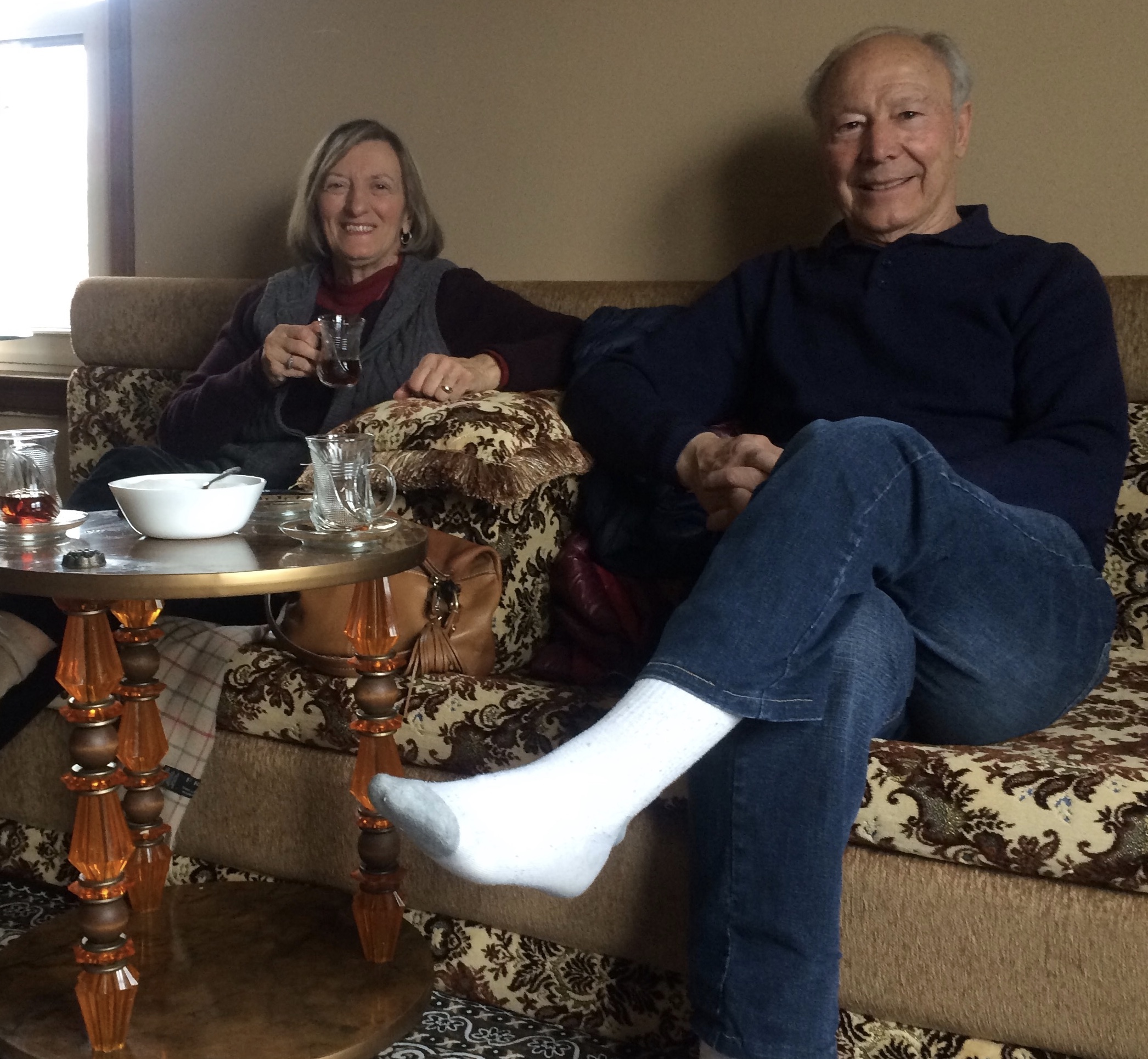
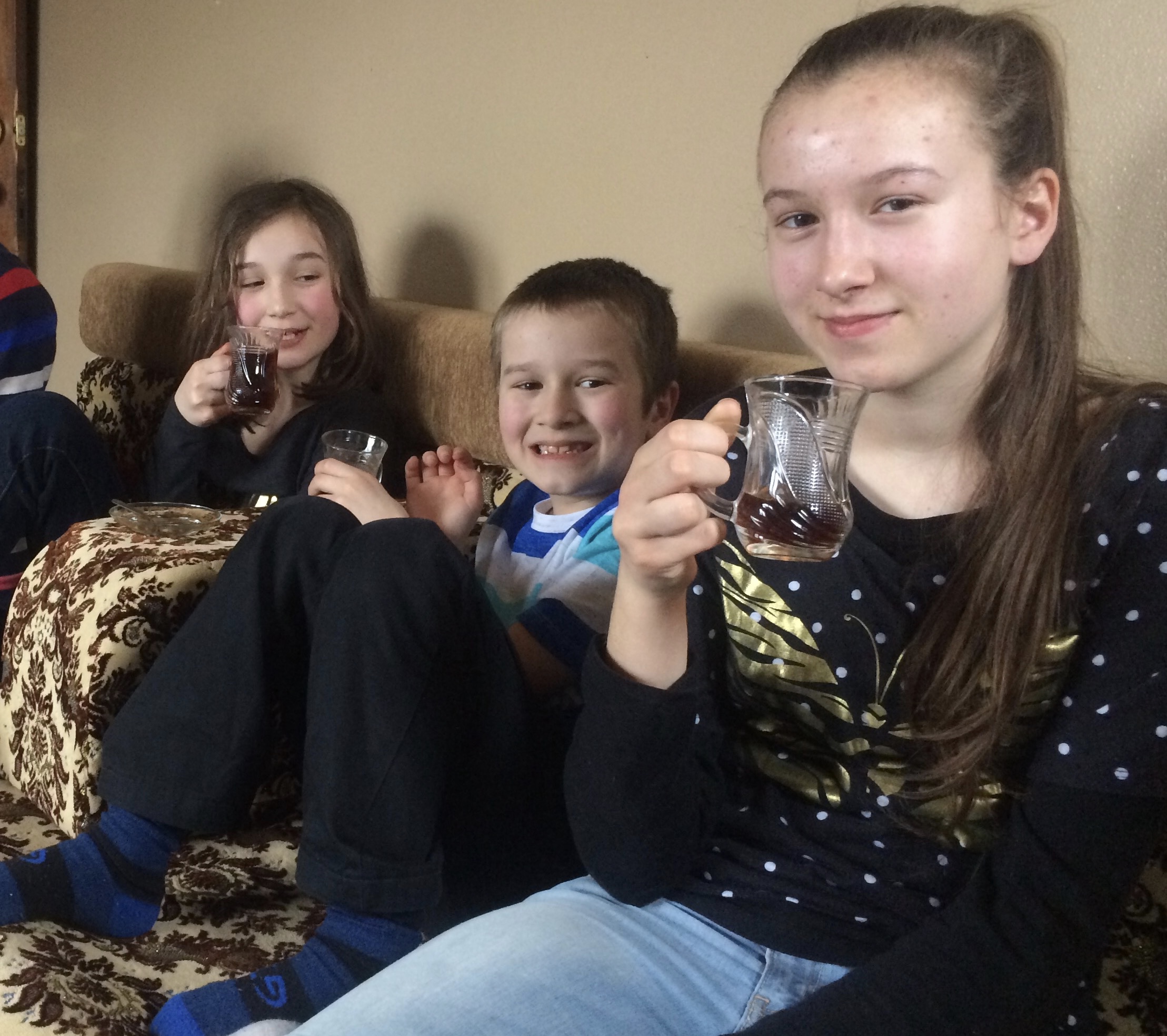
Zuzu warmly opened her modest upper flat to my parents and my three kids on a rainy March afternoon. We sipped little cups of rich black tea with as much sugar as my kids wanted. We touched on topics of politics, dictators, and dialects as we observed Kurdish television rattling on in the background. We shared a lot in common. Our little visit brought back some nostalgic memories for my mom, of the way visits used to be for her as a child growing up in a Greek immigrant community, where people shared simple but special moments together in each other’s homes. And the TV rattling in the background was normal for my dad—only his gets all the best Greek news stations.

Version 3There was a pause in our conversation, which gave Zuzu a moment to form a question in English. She asked my father if he left Greece because he was a refugee. He shook his head “No,” but then proceeded to explain in short sentences that his Greek village was ravaged in World War II, and that his parents were killed. Years later, he immigrated to the U.S. in search of a better life. The look on Zuzu’s face was full of compassion and understanding as she responded to the look of great loss on my dad’s face. Different generations. Different countries. Different wars. Different dictators. But for a moment, Zuzu and my dad were ushered into the same horrible club of loss, tragedy and destruction by war. It’s a large club that no one wants to join, but many are forced into its membership. As I sat and observed this unintended “we” moment between my father and Zuzu, I said a silent prayer for her young children. I am a product of my dad’s hope for a better life in a new land. Maybe our family gives Zuzu perspective on what things might look like for her young children as they grow up to call this new land their home. At least for now. I know deep down, Zuzu really hopes to take her children back to her home country of Syria in better times, Inshallah, God-willing.
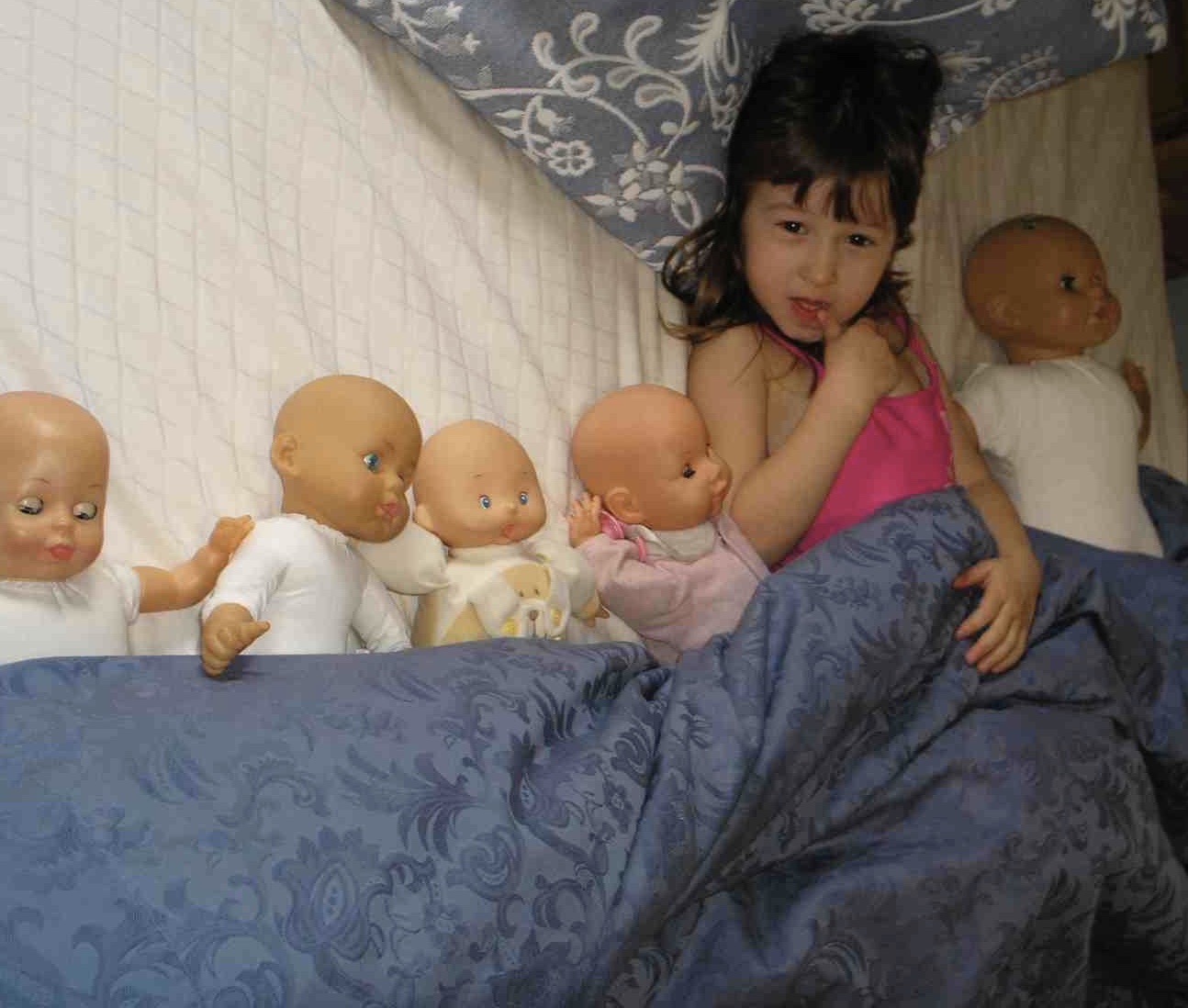
As we said our good-byes, I thanked God for this incredible moment to share with my family and my friend. We were blessed. We enjoyed each other’s company. Our human hearts beat the same, and by unintended circumstances, we had more in common than we imagined. We, the people, who long for justice and tranquility in a more perfect Union.

We had more in common than we imagined. We, the people, who long for justice and tranquility in a more perfect Union.

Published in the Yemeni American News, May, 2017

What are You Afraid Of?

“You gain strength, courage and confidence by every experience in which you really stop to look fear in the face.” Eleanor Roosevelt

OLYMPUS DIGITAL CAMERAThe best part about cold winter months in Michigan is snuggling under warm blankets, reading and telling stories with my kids. In these moments I often pause just to take it all in, and then thank God for the beauty of such simple yet priceless memories.   Children truly are a treasure and a gift in this life. Recently, I took part in a short, two-question survey on FEAR. The first question was: What is something you are afraid of? A lot of things came to mind…debt, disease, destruction…but if I had to pick just one to write down, I would say that what I fear most regularly is something horrible happening to my children. As a mom, I do all I can to protect my children from harm. I teach them how to be safe, I stay near them in uncertain circumstances, and I try to keep them healthy.
These things were going through my mind as we read the historical account of the birth of Jesus the Messiah together. We got to the dark part of the story where a corrupt leader, King Herod, was feeling threatened by the news of a young Messiah being born. Out of fear, King Herod terrorized the Palestinian town and region he governed, and ordered the mass slaughter of all baby boys under two years old. As we read through the account, my eight-year-old son quickly named our young friend that fit that description. We all agreed that it was horrible to imagine our friends losing their 1½-year-old son to the terror of a corrupt leader.

For days I was troubled by this disturbing account of male infanticide that went on as a result of the Messiah’s birth. The families of those baby boys weren’t celebrating the birth of a promised and foretold anointed one sent from God. Instead, they grieved deep loss around the event that led to mass extermination of baby boys in and around Bethlehem. The story recounts that King Herod was “terrified” at the news of a prophetic Messiah-King entering the world and being revered by foreign Wise Men from the East. He saw this child as a threat to his powerful position of leadership. But the birth of Jesus also stirred a new hope far and wide. The coming of a promised Messiah reminded the world that God Most High is near to His people.

I tried to imagine myself living in a time and place of such need for hope—a world of terror and destruction enacted by powerful people. It didn’t take me long to realize that that is our world. Those are the bleak circumstances facing so many in war-torn Yemen today. According to a recent interview that the Yemeni American News had with the President of the National Association of Yemeni Americans (NAYA), AbdulHakem a. Alsadah, the United Nations estimate 3 million “displaced” Yemeni people.   “There is no international awareness about this crisis,” Alsadah stated. Tears stream down my face when I see pictures of Yemeni children who are near death due to acute malnutrition. My heart breaks as I read stories about Yemeni parents who are forced to make hard decisions about losing their children, either to disease, destruction or starvation. According to a December 2016 article in www.theGuardian.com, one man tells of how he and his other children don’t eat so they can pay for his young daughter’s cancer medication. How does any parent face that kind of fearful reality and not lose hope?

The second question in my survey was:

What do you do when you are afraid?

Fear makes me want to hold my children tighter and never let them out of my sight. It makes me want to turn off the news because I can’t possibly process all the destruction going on in the world—in Yemen, in Syria… But what can I do about it? Fear and ignorance are the easy ways out, at least initially. If I raise my kids in fear, they are set up to react in fear. There’s a reason why the angels who came to announce the birth of the Messiah always started by saying, “Fear Not.” It’s because we do fear. Nevertheless, God Most High sends His chosen ones to a messy world because we need to hear from Him.

“Man can live about forty days without food, about three days without water, about eight minutes without air, but only for one second without hope.” H. Lindsey

It is good to be near God.  His presence brings hope, and hope keeps us alive.  Author Hal Lindsey said that, “Man can live about forty days without food, about three days without water, about eight minutes without air, but only for one second without hope.”  In the worst of our despair, hope anchors our souls. It has to. Otherwise we wouldn’t survive the fear, terror and destruction that surrounds us. Education, compassion, prayer, hope. These are the things we must hold on to when we are afraid.

What is something you’re afraid of? What do you do when you are afraid?

 So, as we really stop to look fear in the face, join me in trying a few of these things:

  • Give thanks for the good things God has done.

  • Tell a story to raise awareness of the crisis going on in Yemen.

  • Hug your children a little tighter.

  • Pray for those who suffer.

  • Give of your resources (time, money, or talents) to help another struggling human being.

  • Educate children about how to process fear.

  • Take a moment to grieve sad and disturbing news when you see it or hear it.

  • Love your neighbor.

  • Look for ways to spread love and kindness, especially when it is easier to spread fear or hate.

  • Hold on to hope as an anchor for your soul.

(Published in the Yemeni American News, February, 2017)

A Thrill of Hope: Adventures in Scooching Over

(Adapted from the Yemeni American News, December, 2016 publication)

“Do not be afraid. I bring you good news that will cause great joy for all the people…” ~Angel of God~

When the world around me seemingly swirls with hatred, anger and fear, and my heart is heavy for the hurting, my coping mechanism is to reminisce on stories of hope. In my profession of language teaching, motivation is a key element for success. Motivation in life, as in language learning, contains two essential ingredients: 1. You have to think you can do something: hope 2. You have to think that it matters: need. In November I was reticent to click send on my article, Scooching Over, because I knew that if I made my thoughts public, my own words would move me to action, and I wasn’t sure I had the capacity to scooch over for a new friend in my daily life. The last thing I want to do in this refugee crisis is talk about doing something and then do nothing. The need was clear: I believed wholeheartedly that my small action to make a difference in one refugee’s life mattered; but I wasn’t sure I could actually do something about it on my own. That’s where hope is bigger than me. It requires me to believe that I can be involved in great and impossible things.

slide2

After taking a moment in my hectic day to pause and pray, I called my New American friend that I have endearingly nicknamed Zuzu. Zuzu and I had connected at the Sabeel Media Event in October, where she had expressed that she needed help finding a preschool for her son. I had already called at least eight preschool locations in her zip code before I got on the phone with Zuzu. I offered to come over the next day, take her to visit a preschool, and teach her some English. To my surprise, she told me NOT to come. She said that she had already found a preschool, that her family was moving to a better location, and that she was currently too busy for me to come visit her. As it turned out, there was no room in her week for me.   She didn’t need my charity to survive, which made me even more determined to get to know this highly motivated woman.

When things settled for Zuzu, I came by to see her new place. In her intermediate English she reported that she had signed up for English classes at the local college, she was studying for her driver’s permit, and she was in walking distance from most of the places she needed to get to each week. She has been in the U.S. since April and is determined to settle her family here. Zuzu’s vision is bigger than she is. Her hope is deep. Her potential is great. Her work is humble. She walks her in-laws to the doctor and her son to preschool; she cooks and cleans for her household of six. At night when everything is quiet, she studies English and listens to audio messages I leave for her to practice each week. Zuzu doesn’t want to live indefinitely off of the kindness of others. On the contrary, she wants to be an agent of care and change and assistance to others. She also would like to go home if she could. But she can’t. So her plan is to bloom where she has currently been transplanted—right here in they Detroit Metro Area, MI, USA.

|Her plan is to bloom where she has currently been transplanted|

 From our visits together I have learned that Zuzu is Syrian Kurdish. Her hope is seen in the languages she wants her kids to know: English of course, so they can thrive in their new community. Kurdish of course, because that is the language of heart and home. Arabic of course, because you can’t live in Syria and not know Arabic. She is preparing her son and daughter to function in this new world, but also to be ready to return to her beloved home country…someday, Inshallah, God-willing.

Sitting on the floor of her upper flat on soft blankets against big couch pillows, sipping warm, sweet instant coffee with milk, my first step in our mini English lessons, was to identify her goals for learning English: 1. Help her mother and father-in-law with their medical prescriptions and paperwork 2. Help her kids learn English. 3. Go to college 4. Talk about travel and places to visit 5. Tell her personal history. Zuzu believes that learning English matters. She also clearly believes she can do it. Unless you’ve ever worked with someone that motivated to learn something, it’s difficult to describe how exhilarating it is. Her need is clear. Her desire is clear. She has hope for her future that is bigger than she is. And I have the privilege of joining her venture.

|Together our hearts break for the displaced people of her country.|

 As a writer, I want to carefully handle the stories entrusted to me. This past week, sipping our coffee, I pulled out the Yemeni American Newspaper and explained to Zuzu that she fullsizeoutput_9e0
had inspired the article I wrote last month. I told her that I follow the teachings of Jesus the Messiah who says we are to love one another. His heart is for the orphans, the widows, and all those in need. As His follower, I offer what little I have with big hope. After all, the good news of great joy this Christmas season is for all people.

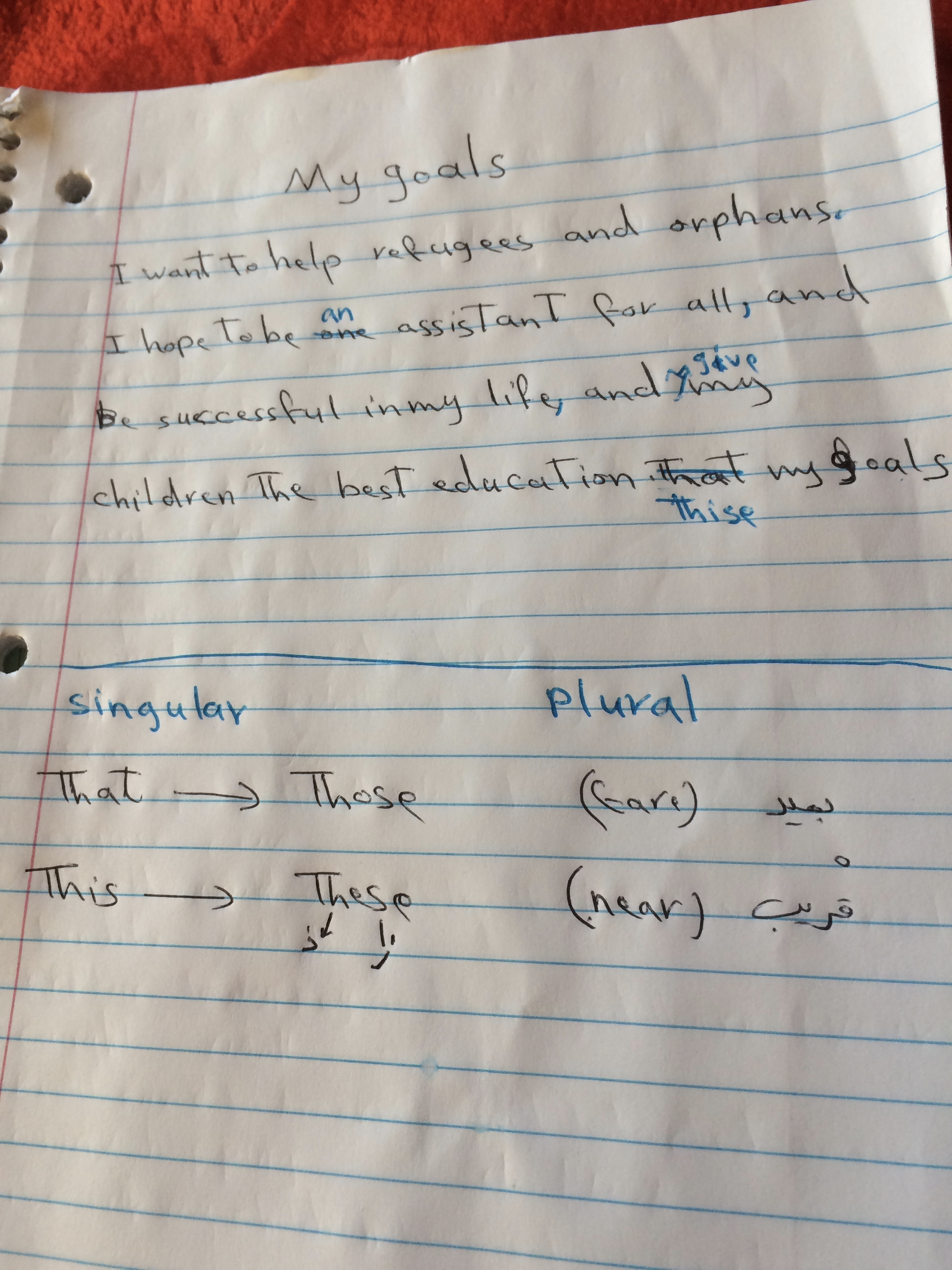
Zuzu shared with me another goal statement she had crafted late one night: I want to help refugees and orphans. I hope to be one assistant for all.  And be successful in my life and my children the best education. That my goals. Clearly, Zuzu and I share a vision of helping those in need. Together our hearts break for the displaced people of her country. I asked Zuzu if I could publically share her beautifully articulated goals because they inspired me, and I think they would inspire others. She agreed.

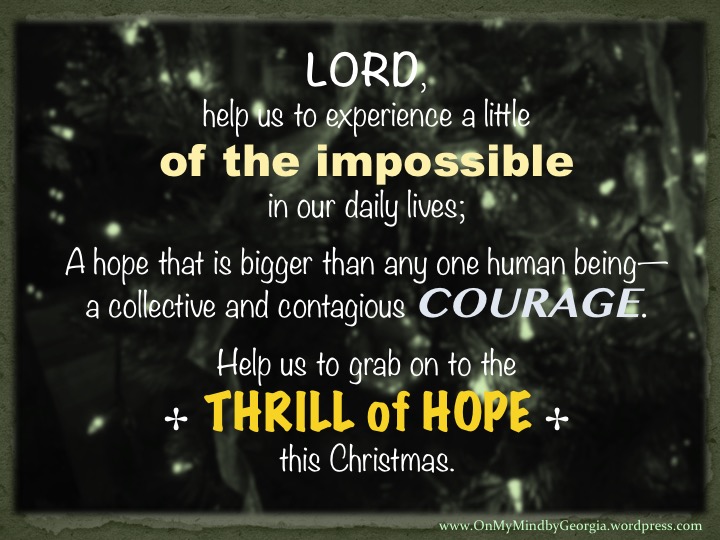
As Zuzu and I both scooch over each week to make room for each other, we hold on to the thrill of hope. My prayer is that all of us would experience a little of the impossible in our daily lives; that we would together find a hope that is bigger than the determination of any one human being—a collective and contagious courage. My prayer is for many more to get out of harm’s way and be welcomed into a safer place where hope can be nurtured, and that they can experience the good news of great joy that is for all people.

Long lay the world in sin and error pining, 

Till He appeared, and the soul felt its worth.

The thrill of hope, The weary world rejoices…

~O Holy Night~