I first met Maude* when my toddlers began to waddle northward towards her house. She was tall and gaunt with a sensible silvery bowl cut. Even when she was being friendly, she had a naturally sharp tone behind most of her curt comments.
We intentionally moved into the neighborhood for the richness of its cultural, linguistic, and religious diversity. We wanted to take to heart the command of Jesus the Messiah—to love God with all our hearts, and to love our neighbors as ourselves.
When a wealthy young man challenged Jesus to define neighbor, he responded with a beautiful story of a compassionate Samaritan man who met a Jewish man along his path in a moment of desperate need. The Samaritan had to cross cultural and religious boundaries, and face the prejudices of the day to help. It also cost him time, effort, and money to bring comfort, healing and blessing to the wounded man.
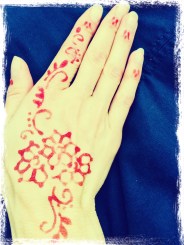
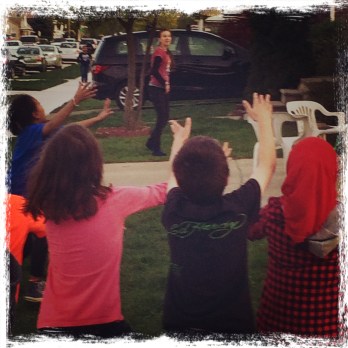
Our family has a lot to learn from Jesus’ story and expectation of loving our neighbors. We have been challenged to cross over boundaries and enjoy the adventure of diverse neighborly relationships. The challenge and the joy are mutual. Our kids have grown up alongside our Arab Muslim neighbors and we have shared life together—the ice cream truck, henna, pass-the-plate wars, front yard games, and even the great flood of 2014.
#lovingmyneighbors
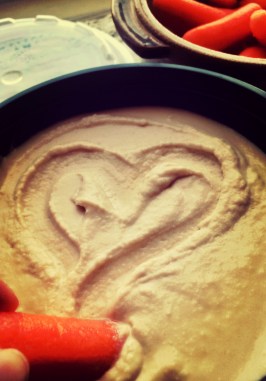
Arab hospitality is a thing. Kindness expressed through great food is a debt we can never repay. On our south side there is the Lebanese widow of four grown children. She makes great hummus and has a very cute puppy. Next to her is a young Yemeni family, a sweet elderly retired Iraqi educator, and a Palestinian family.
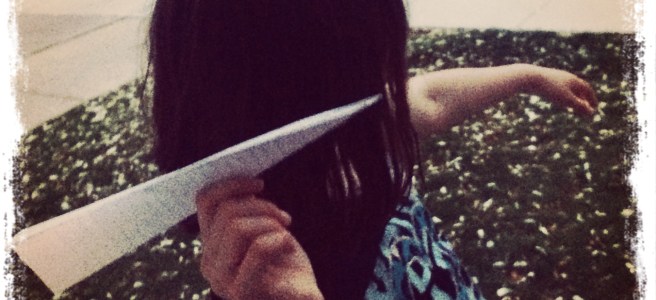
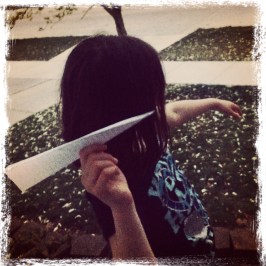
 To our north are a few more Yemeni families who throw great girl parties and provide my kids with an endless supply of sweet treats, especially during Ramadan. Next to them is Hussein, the paper airplane guy, and his sister Latifeh, working professionals who live with their elderly parents.
And Maude.
Our kids knew Maude as the one who lived next to paper airplane guy, since he revolutionized our world with his simple craftsmanship of paper pleasure. They clearly knew to avoid Maude’s house. She didn’t have patience for noisy flocks of neighborhood kids. Through our outdoor springtime encounters I learned that Maude had a lot of brokenness and sorrow in her life. She had a soft heart protected by a tough exterior. I tried to listen compassionately while always keeping one eye on the kids, the street, the ball, and the cars going by.
But what came next caught me off guard.
In her quiet quick undertone, she expressed how glad she was, that even though we had noisy toddlers, at least weren’t ARABS.
What??!!!
It slipped out so fast that I did what I tend to do in awkward conversations—I second-guessed what I really heard. It was often in that mommy-distracted place that Maude slipped in a few more of her opinions about our Middle Eastern neighbors.
Always one-liners.
Me always wishing I had a great comeback.
Years passed. Kids grew. Maude got older and frailer. I noticed Maude walking alone, a lot. As a fellow walker, sometimes I joined her. She would uncharacteristically slip her arm into mine and ramble on and on. She would oscillate from sweet melodic chitchat to swearing up and down. One morning I saw Maude wearing two different shoes. Another time she had wandered down a street far from her normal route. She looked lost.
Hussein happened to be home when I dropped Maude off at her house. Her dementia was getting worse. Hussein, his sister Latifeh, and their parents took it upon themselves to keep a close eye on their aging and lonely next-door neighbor.
It was Hussein that would walk with her in the evenings up and down the block—matching her frail snail’s pace.
It was his parents who would have breakfast with her every morning. They were the ones who found her after she had fallen, at the bottom of her staircase.
It was Latifeh who left work upon the emergency call from her parents describing Maude’s injuries.
Maude passed away shortly after that accident.
I had moved into the neighborhood to live out what Jesus taught. I thought I understood. I thought I could be an example of a good neighbor. And we have been richly blessed by generous neighborly relationships. But we have so much more to learn.
Hussein and his family exemplified day-to-day intentional care for Maude. Being inconvenienced for the welfare of another. Advocating for the vulnerable. Even loving someone with a blatant prejudice against “those people.” Maude wasn’t the easiest person to love. But Hussein, Latifeh, and their parents took the time to truly care for the needy, the lonely, and the lost along their path of life.
Maude’s words still trouble me.
What troubles me is that she is not alone in her racial one-liners. There will always be more. They will always feel like unexpected sucker punches. Now is the time to devise my crafty, yet compassionate, comebacks. To be ready to give an answer and to stand up for what is good and right and true. How would Jesus do it?
I am open to suggestions.
And in the meantime, my neighbors have given me a lot to think about as I seek to understand the true definition of neighbor, the way Jesus the Messiah meant it.
*Maude is a pseudonym. Latifeh and Hussein are the real names of my neighbors who collaborated with me on this article. Thank you, habibti, for your beautiful stories.
This article was published in the Yemeni American News, June 2018
 Last month, as my husband and I and our three children drove homeward after an epic road-trip across miles and miles of United States, we started to notice a pattern. Colorado, Nebraska, Iowa, Indiana, Illinois… My kids wanted to know what was wrong with all the American flags. I explained to them the phenomenon of “half-staff”. When something really bad happens in our country, people hang the flags at half-staff on purpose as a way to show their grief and support. My son asked, “Did something bad happen in each of these places?” I assured him that it was to show support, not because every city we passed had something horrendous happen in it. But deep inside, I shuddered at that fearful possibility.
 On My Mind