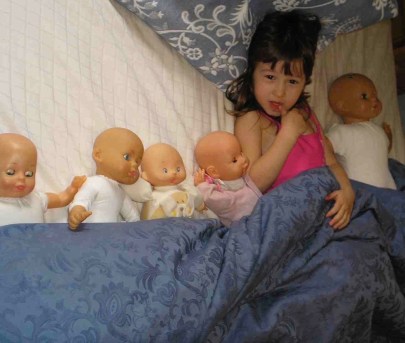
NY2020: Happy to Dis-appoint

Dear Disappointment,

I’ve spent way too much time thinking about you.  But don’t flatter yourself.  We’re not becoming friends.  In fact, I’ve acknowledged you, unwelcomed, inside the kingdom walls of my heart.  I just needed a moment to reset, refocus, breathe. I guess I also needed to spend way too much time in the shower on a Wednesday morning.  Rest my thoughts.

Now I’m ready to take some action.

Here’s what I know about you:  You work from within to kick down little appointments.  You damper dares and infect healthy fear.  You friend frustration and fiend innocence about it all.  Your M.O—If you can frustrate small fulfillments of goals and longings, you can make room for your older, stronger relative—discouragement.  But discouragement is harder to go unnoticed, like you.

Your goal is to impede me from moving forward with mine.

You see, my 3 words for 2020 are…

small…

…..daring…

………… worthy.

It’s a tremendous trio.  It’s diamond strength I’m learning to weild.

Just in the first few weeks of 2020, I have seen what you do to daring. I’m on to you.  And small—that’s my word, and you can’t claim it.  Thanks to MLK Jr., I’m committed to figuring out how to do small in great ways.  Wouldn’t you just love to dis-appoint all that, in your small ways?
BDB5A459-B209-48A6-A33E-D2907534394A

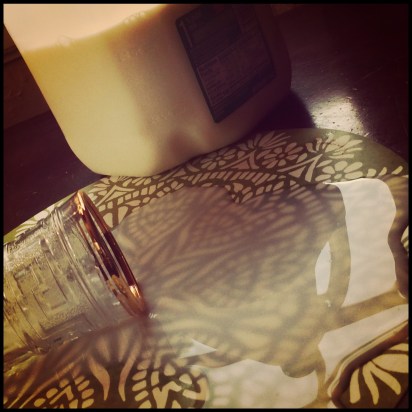
But then there’s worthy—I have intrinsic value and this is my heart space, not yours.  I have authority to appoint.  All you can do is kick down edifications and expectations that others have built up.  You exist to make us fret the small stuff; you are right there when the cold, full glass of milk spills, and you lie in wait to see what we’ll do about it.

Well, I’m here to dis-appoint you.  Because I can.

In the little kingdom of my heart, I appoint hope to reign, which means despair is not welcome in my kingdom.  I appoint encouragement as ministry of defense, and offense.  Discouragement will meet defeat… outside my kingdom walls.

Thanks to you, I’m taking back my appointment power.

Thanks to you, I’m reassessing what I long for, and what I hope is fulfilled in my schedule of daily life.

Thanks to you, I’m reminded that even the greatest of greats in history faced you.  But the ones I aspire to be like looked past their unfilled dreams to fulfill their greater destiny.

You and I are both small.  But I have the power to appoint, and you don’t.

You don’t belong here.  I can acknowledge when you show up, but I don’t have to let you stay.  I don’t have to let you decide who gets to make my heart home.

I don’t have to let your disses make me feel smaller or less worthy, or even less daring.  You may have damper power, but I have a fire that goes before me.

03849DC2-A560-4EB5-86F8-01B34D266382

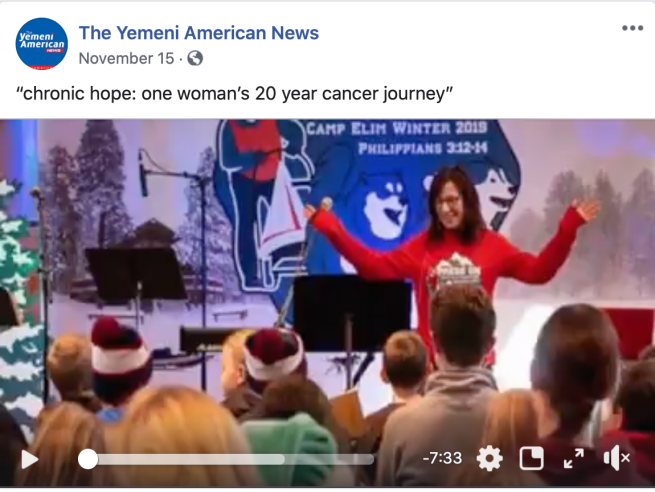
Chronic Hope: the Video

4C0EDE10-1F6E-4F9E-A33E-472C8886AEAA

I feel incredibly grateful. I feel like I’ve been given a second lease on life. If not this time in history, if not this diagnosis, if not so many things along the way, I may not be here. I may not been able to live 20 years with this cancer diagnosis.

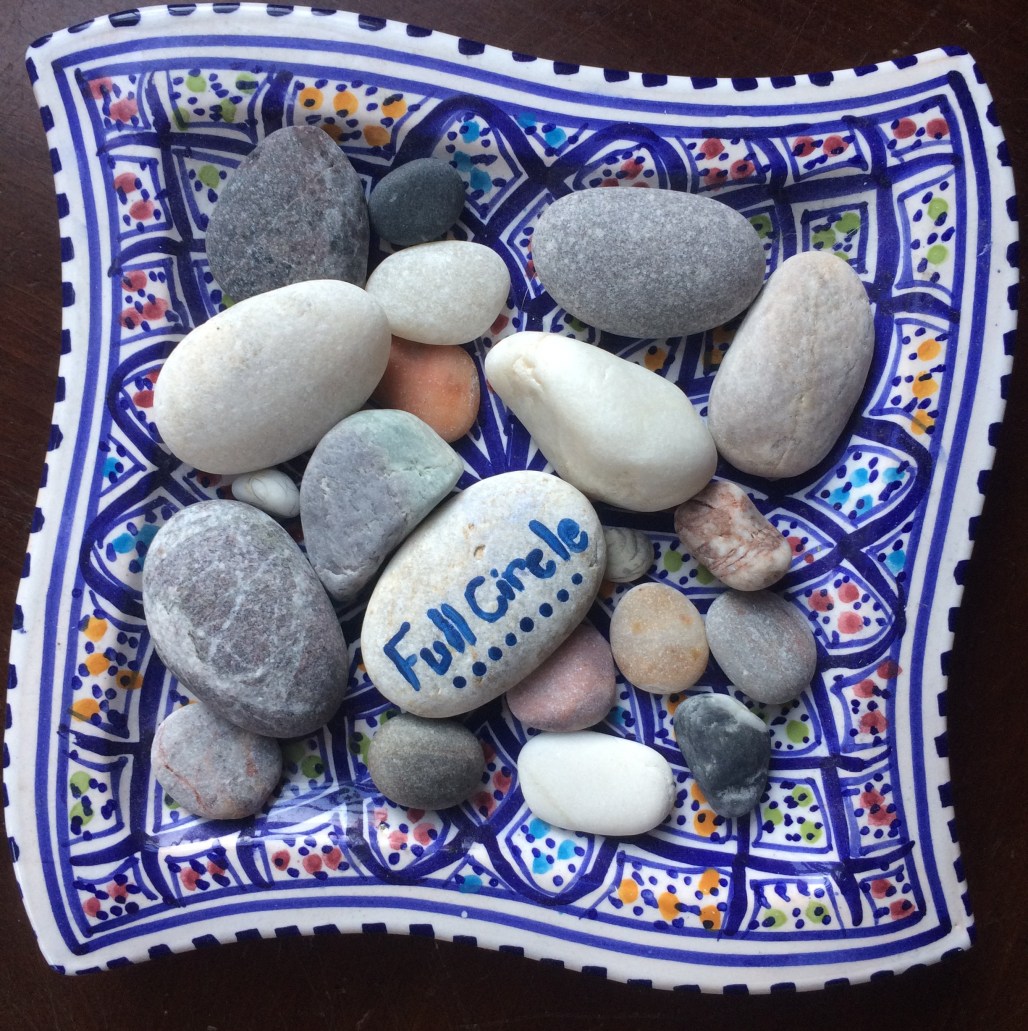
It has been a full circle year for me.

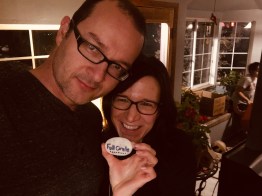
This year, my husband and I celebrated 20 years of marriage.

This year, I also have had the privilege to reflect back over my cancer journey from a healthy place, back in the place where it all began.

To cultivate gratitude.

To set goals for the future.

To be amazed by the grace and power of God along the way.

I’m thankful for my amazing husband, Stephen Coats, who produced this 7-minute summary of our 20-year cancer journey:

Chronic hope video pic.png

This video was produced alongside a series of Chronic Hope articles for the Yemeni American News, 2019:

Georgia Coats is a Language & Culture Learning Coach, freelance writer, educator, wife, and mother of three who is passionate about healthy mind-body-spirit living.  Chronic Hope is Georgia’s collection of stories, lessons, and life adventures of living alongside chronic leukemia, cancer of the white blood cells, for two decades.  She often shares what’s on her mind at: www.onmymindbygeorgia.wordpress.com

1EA620C6-C02B-4695-BE47-D63ED921DD1A

CHRONIC HOPE #6: The Luxury of Looking Forward

“If you can’t fly then run, if you can’t run then walk, if you can’t walk then crawl, but whatever you do you have to keep moving forward.”

Martin Luther King, Jr.

When I was first diagnosed with chronic myeloid leukemia (CML) in my 20s I stopped looking too far forward.  Planning for the future felt presumptuous, so I learned to live more fully in the present.

IMG_5562

September 2019 marked 19 years since my cancer diagnosis.

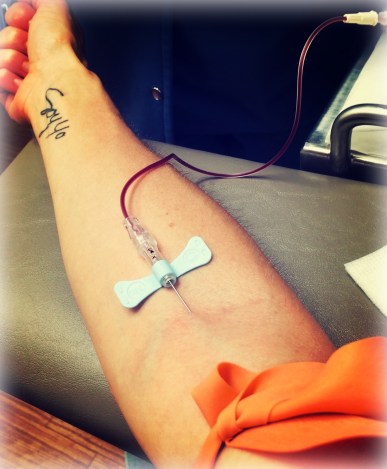
I’ve had the privilege of reflecting back on 2 decades of living alongside a cancer diagnosis while continuously being treated for it.

4 different cancer treatments.

12+ bone marrow biopsies.

2 cutting edge miracle meds.

3 miracle babies. 

3 times achieving medicated remissions.

2 relapses.

1 Master’s Degree.  

Tens of thousands of dollars invested.

This journey is chronic. Chronic struggles. Chronic tears. Chronic persistence. Eventually forging a resilient chronic hope that anchors the soul.

I have learned invaluable life lessons of chronic hope: 

We all have struggles.  We all need help.  We all seek a hope that is bigger than us.

We don’t rise above our struggles alone.

fullsizeoutput_1488

I can dare to make long-term goals that are bigger than me, because others dared before me.

In 1959 a researcher identified a very specific chromosomal abnormality present in CML patients.  In the 1990s my first miracle medication was developed—a targeted immunotherapy treatment that was revolutionary.  The standard chemotherapy treatments do not discriminate between healthy cells and cancerous ones, thus, leaving the patient with a myriad of miserable toxicities and a bleak prognosis.  But this miracle medication targeted and treated a very specific problem inside of me, on a genetic level.  It was proven more effective, more efficient, and less toxic than standard chemo.

It changed the world for people like me.


Reflecting back is essential for moving forward.

Now, with 3 growing kids, a specialized degree as a language and culture learning coach, and a healthy body in medicated remission, I dare to look forward.

There are so many people along the way who have given of themselves for me to be in this privileged place.

Like the doctor who created my miracle med after building on a researcher’s breakthrough 30 years earlier, what offerings can I bring that just might change the quality of life for a single soul?

These words of Dr. Martin Luther King, Jr. both scare and inspire me:

“An individual has not started living until he can rise above the narrow confines of his individualistic concerns to the broader concerns of all humanity.”  MLK, Jr.

As a language learning coach, I love to champion individuals towards greater possibilities in their lives.  But MLK Jr.’s words challenge me further forward.  How can I rise above my personal cancer and be a part of treating malignancies that face all humanity?

While Dr. Martin Luther King, Jr.’s impact on society was profound, maybe he started with small offerings and a few champions in his life.  I can do that!  I can spend precious life energy trying to figure out my present and future impact, courageously taking small steps forward.

“If I cannot do great things, I can do small things in a great way.”  MLK, Jr.

IMG_5578

Thank you, dear people in my life, who have championed me along the way to fight my battles with cancer—my devoted Greek-immigrant family, my loving husband in sickness and in health, my life-giving friends, my empathetic professors and generous neighbors.

Thank you, doctors and researchers, for devoting your lives and your minds to profoundly changing my prognosis and my quality of life.

Thank you, Dr. Martin Luther King, Jr., for your wisdom and impact on the world, and for encouraging me to bravely take baby steps far beyond my personal cancer.

Thank you, readers, for allowing me to reflect back and dare into the future on this journey of chronic hope.

IMG_3359


This article was published in a series of articles for the Yemeni American News, October, 2019:

Georgia Coats is a Language & Culture Learning Coach, freelance writer, educator, wife, and mother of three who is passionate about healthy mind-body-spirit living.  Chronic Hope is Georgia’s collection of stories, lessons, and life adventures of living alongside chronic leukemia, cancer of the white blood cells, for two decades.  She often shares what’s on her mind at: www.onmymindbygeorgia.wordpress.com

CHRONIC HOPE #4: A Potential Risk of Fighting Cancer

“How dare you be so irresponsible with your wife’s health?  Don’t you understand the risks you’re putting her through by getting her pregnant in her condition?”

I watched my husband’s face change from shock to anger as the nurse unleashed her stern lecture on him.

Five years into marriage and four years into my cancer diagnosis, I was nearing my 30th birthday.  We had given up on making long-term life goals.  I let go of the dream of living abroad for language and cultural studies, and I quit graduate school.

But the dream of being a mom got stronger.

My super-effective miracle medication for chronic myeloid leukemia (CML) extended both my quality and quantity of life.  Aside from 3-month check ups, an annual bone marrow biopsy, and my daily meds, I lived a normal life.  But normal life made me hope for normal things, like a family of my own.

Truth: In this world we all face struggles.

My doctor was STUBBORNLY clear: pregnancy was out of the question.  It was too risky to subject a fetus to the potentially hazardous effects of my miracle meds. And it was too risky for me to go off my miracle meds for any reason.

After multiple heart-wrenching conversations, desperate prayers, and seeking counsel from others who had faced life’s storms and held on to hope, my husband and I felt like it was risky NOT to start a family.

Two significant things happened:

  1. We learned that we must calculate our risk and take the first step into the storm; and expect God’s reassuring presence to show up along the way.
  2. My stubborn doctor left. His replacement was willing to treat me as a whole person, instead of just treating my disease.  We needed someone to champion for the fullness of life.

Hope is a function of struggle. 

“Hope is a function of struggle,” affirms Brené Brown, author of Daring Greatly: How the Courage to be Vulnerable Transforms the Way We Live, Love, Parent & Lead.
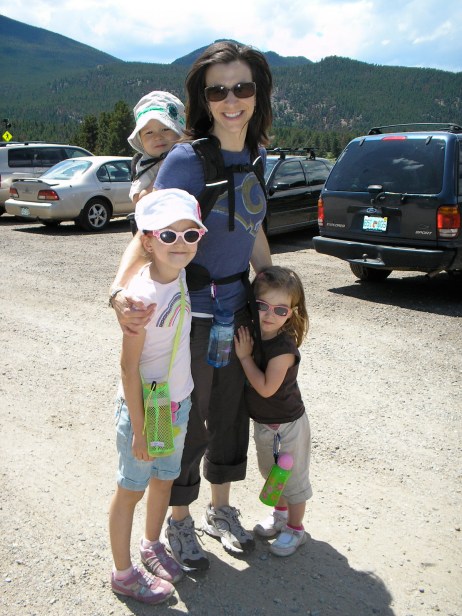
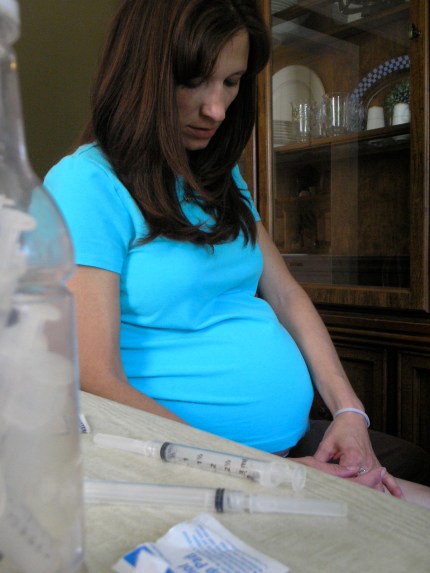
Eighteen months of chemotherapy injections were considered “safe” for growing three wondrous new lives, but they left me feverish and weak.  As I lay limp on the couch, I regularly recalculated our risk.

Giving up a safe miserable life without big dreams, for the opportunity to cultivate new life, changed something in me forever.  Ultimately, wherever beauty and life-giving possibilities exist, they are worth the pursuit.

Brené Brown reminds us that, “the willingness to show up changes us. It makes us a little braver each time.” 

My desire to be a mom dared me to set 9-month goals.  Three times. That led me to reconsider the daunting goal of graduate school to become a Language and Culture Learning Coach—this time as a non-traditional, cancer-fighting, mother of three.
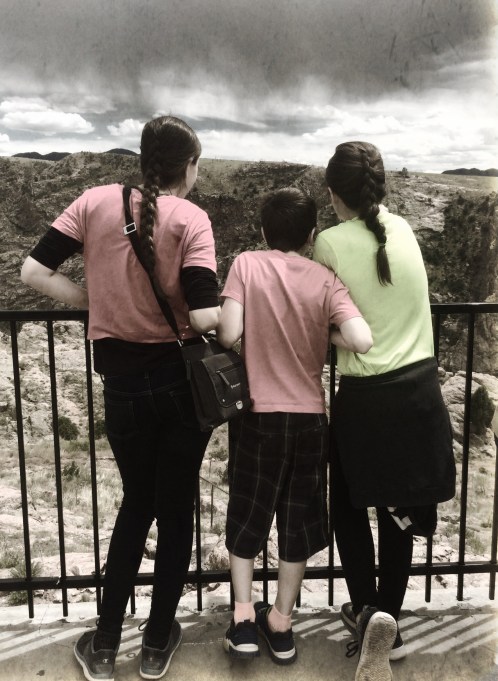
Chronic struggles forged profound hope that pushed me higher and deeper in mind, body, and spiritual potential. And, in setting an example for my miracle children to live courageous lives.

The ongoing challenge is to keep hands open while living courageously—to never close in on the great gifts of life we’ve been given. I’ve been given 20 years to cultivate chronic hope. IMG_4212I find myself in a privileged place to champion others.  My heart is for those who face war, leave home, and migrate across cultural and linguistic barriers in search of the fullness of what life can be.  To these souls I hold out small offerings with open hands.

What are your dreams, forged in struggle?

Who are your champions?

What are the little offerings in your hands?

IMG_0695

This article was published in a series of articles for the Yemeni American News, August, 2019:

Georgia Coats is a Language & Culture Learning Coach, freelance writer, educator, wife, and mother of three who is passionate about healthy mind-body-spirit living.  Chronic Hope is Georgia’s collection of stories, lessons, and life adventures of living alongside chronic leukemia, cancer of the white blood cells, for two decades.  She often shares what’s on her mind at: www.onmymindbygeorgia.wordpress.com


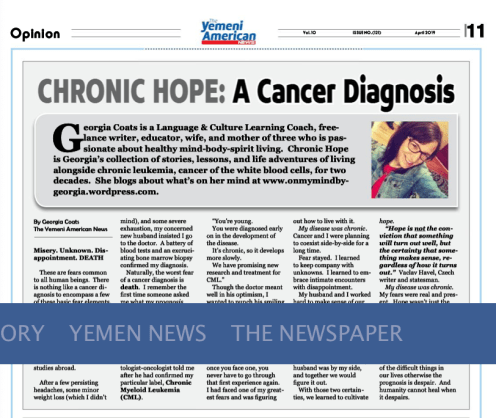
CHRONIC HOPE: A Cancer Diagnosis

Misery. Unknown. Disappointment. DEATH

These are fears common to all human beings.  There is nothing like a cancer diagnosis to encompass a few of these basic fear elements. I faced a dreaded diagnosis when I was 27 years old, newly married, and had many hopes and dreams of traveling the world and raising a family.  I was in graduate school and hoping to do some Middle Eastern studies abroad.

After a few persisting headaches, some minor weight loss (which I didn’t mind), and some severe exhaustion, my concerned new husband insisted I go to the doctor.  A battery of blood tests and an excruciating bone marrow biopsy confirmed my diagnosis.

Naturally, the worst fear of a cancer diagnosis is death. I remember the first time someone asked me what my prognosis was.  I didn’t even know that word.  I had to look it up, and let it sink in that people were actually asking me when the doctors think I might die.  That was crazy!  I was still in my twenties!

“Good news!” the hematologist-oncologist told me after he had confirmed my particular label, Chronic Myeloid Leukemia (CML).

“You’re young.

You were diagnosed early on in the development of the disease.

It’s chronic, so it develops more slowly.

We have promising new research and treatment for CML.”

Though the doctor meant well in his optimism, I wanted to punch his smiling face.  These factors were all in my favor to avoid death.  But what about living a miserable life?  What about dreams of starting a family?  So many unknowns.

The strange thing about a cancer diagnosis, is that once you face one, you never have to go through that first experience again.  I had faced one of my greatest fears and was figuring out how to live with it.

My disease was chronic.  Cancer and I were planning to coexist side-by-side for a long time.

Fear stayed.  I learned to keep company with unknowns.  I learned to embrace intimate encounters with disappointment.

My husband and I worked hard to make sense of our new circumstances.  I quit graduate school.  really hate quitting.  I gave up the dream of studying abroad.

Two things were certain amidst the unsettling unknowns: 

1. God is still God and He is good.

2. My husband was by my side, and together we would figure it out.

With those two certainties, we learned to cultivate hope.

“Hope is not the conviction that something will turn out well, but the certainty that something makes sense, regardless of how it turns out.”

Vaclav Havel, Czech writer and statesman.

My disease was chronic.  My fears were real and present.  Hope wasn’t just the optimism I needed to “fight this thing.”  We were clinging to the hope that this diagnosis would make sense in our lives—eventually.  Someday, our hope would be greater than our fear.

We have to make sense of the difficult things in our lives otherwise the prognosis is despair.  And humanity cannot heal when it despairs.

To ponder…

A friend of mine going through a difficult time compared her life to a garden in the winter. She said, “Hope is the promise that things will grow again.”  How do you make sense of the difficulties in life?  How would you describe hope?

IMG_2672

This article was published as the first in a series of articles for the Yemeni American News, May, 2019:

Georgia Coats is a Language & Culture Learning Coach, freelance writer, educator, wife, and mother of three who is passionate about healthy mind-body-spirit living.  Chronic Hope is Georgia’s collection of stories, lessons, and life adventures of living alongside chronic leukemia, cancer of the white blood cells, for two decades.  She often shares what’s on her mind at: www.onmymindbygeorgia.wordpress.com

Screen Shot 2019-05-04 at 12.17.00 PM

IMPACT

I don’t pretend to understand what’s going on in the mind of a mass shooter. The news is wrought with trying to figure out why the gunman did it. What was in his head? What were his motives?

But today, as I was watching one such report, I began to take notice of impact.

What impact did this one man have?

I don’t know why he chose to make such a horrendous impact, but here are some things I observed:

  • He had a purpose bigger than himself
  • He had a plan
  • He took dangerous risks
  • He invested to succeed
  • He powerfully changed the lives of those around him
  • He was willing to die

I HATE that he had such an impact. I HATE that he was successful.

In times like these, I try to focus on what I know to be true.

Jesus the Messiah gives us insight into the motives of a thief.

A thief is only there to steal and kill and destroy.

The impact of this one man was killing, stealing, and destroying life. But we were not designed for such destruction.

We are created for life—to choose life, to be life-giving.

Jesus the Messiah also reminds us of what life is intended to be.

I came so they can have real and eternal life, more and better life than they ever dreamed of.

So what will our impact be?

  • We are designed to live out a purpose bigger than ourselves.
  • It is good to create a plan and plot out success.
  • Being an agent of change in the world requires taking risk, prioritizing and investing to succeed, and being willing to lay down our lives for something greater than us.

The difference is hope.

We all face in some way the dullness and pains of life that have us wondering why we get up each morning. But there is hope. There is purpose.

We were designed for impact. Our souls long for immortality, somehow, in this fleeting, broken, hurting world.

Hope anchors our souls and keeps us getting up to try to live each day to the fullest.

fullsizeoutput_1488

 While one man caused death, many made music.

In the news interview I watched earlier, musicians Big and Rich, who opened the Route 91 Harvest festival in Vegas performing on October 1, 2017, recounted the beauty of song. The music festival opened that evening with a powerful sing-along of God bless America.

Making music is the whole reason people gathered that night in Vegas. Music draws us and compels something inside us. Different kinds of music draw different people. But, music brings us together; it makes our bodies move.

And when we grieve and mourn our losses, there is music for that, too.

Maren Morris released this song to honor the victims of the Vegas shooting. She addresses HATE directly in a letter:

Dear Hate,

You were there in the garden, like a snake in the grass, I see you in the morning staring through the looking glass. You whisper down through history and echo through these halls. 

But I hate to tell you, love’s gonna conquer all

While hate has always been around, love conquers all.

We hold on to that hope because we were designed for impact. That desire to be a part of something greater than ourselves screams of our eternal capacity, our longing to touch immortality and make history. Something inside us dies if we don’t perceive our purpose—and dream, plan, design, and carry out our impact on the world.

Heroes laid down their lives.

I so appreciate the news stories that give voice to the heroes and the rescued amidst the tragedy—those who risked their lives for great impact and greater good.

What I’ve learned from observing a shooter is that it’s not just about making an impact.

What I’ve learned from observing the impact of heroes is that it’s about choosing life.

Heroes sought life-giving opportunities. Being heralds of hope in a despairing world. Taking radical risks of rescue. Laying down their lives to save another. If life can grow out of the death of one little seed, there is value, meaning and purpose in that death.

Choose life.

fullsizeoutput_14aa

(Published in the Yemeni American News, November, 2017)

What are You Afraid Of?

“You gain strength, courage and confidence by every experience in which you really stop to look fear in the face.” Eleanor Roosevelt

OLYMPUS DIGITAL CAMERAThe best part about cold winter months in Michigan is snuggling under warm blankets, reading and telling stories with my kids. In these moments I often pause just to take it all in, and then thank God for the beauty of such simple yet priceless memories.   Children truly are a treasure and a gift in this life. Recently, I took part in a short, two-question survey on FEAR. The first question was: What is something you are afraid of? A lot of things came to mind…debt, disease, destruction…but if I had to pick just one to write down, I would say that what I fear most regularly is something horrible happening to my children. As a mom, I do all I can to protect my children from harm. I teach them how to be safe, I stay near them in uncertain circumstances, and I try to keep them healthy.
These things were going through my mind as we read the historical account of the birth of Jesus the Messiah together. We got to the dark part of the story where a corrupt leader, King Herod, was feeling threatened by the news of a young Messiah being born. Out of fear, King Herod terrorized the Palestinian town and region he governed, and ordered the mass slaughter of all baby boys under two years old. As we read through the account, my eight-year-old son quickly named our young friend that fit that description. We all agreed that it was horrible to imagine our friends losing their 1½-year-old son to the terror of a corrupt leader.

For days I was troubled by this disturbing account of male infanticide that went on as a result of the Messiah’s birth. The families of those baby boys weren’t celebrating the birth of a promised and foretold anointed one sent from God. Instead, they grieved deep loss around the event that led to mass extermination of baby boys in and around Bethlehem. The story recounts that King Herod was “terrified” at the news of a prophetic Messiah-King entering the world and being revered by foreign Wise Men from the East. He saw this child as a threat to his powerful position of leadership. But the birth of Jesus also stirred a new hope far and wide. The coming of a promised Messiah reminded the world that God Most High is near to His people.

I tried to imagine myself living in a time and place of such need for hope—a world of terror and destruction enacted by powerful people. It didn’t take me long to realize that that is our world. Those are the bleak circumstances facing so many in war-torn Yemen today. According to a recent interview that the Yemeni American News had with the President of the National Association of Yemeni Americans (NAYA), AbdulHakem a. Alsadah, the United Nations estimate 3 million “displaced” Yemeni people.   “There is no international awareness about this crisis,” Alsadah stated. Tears stream down my face when I see pictures of Yemeni children who are near death due to acute malnutrition. My heart breaks as I read stories about Yemeni parents who are forced to make hard decisions about losing their children, either to disease, destruction or starvation. According to a December 2016 article in www.theGuardian.com, one man tells of how he and his other children don’t eat so they can pay for his young daughter’s cancer medication. How does any parent face that kind of fearful reality and not lose hope?

The second question in my survey was:

What do you do when you are afraid?

Fear makes me want to hold my children tighter and never let them out of my sight. It makes me want to turn off the news because I can’t possibly process all the destruction going on in the world—in Yemen, in Syria… But what can I do about it? Fear and ignorance are the easy ways out, at least initially. If I raise my kids in fear, they are set up to react in fear. There’s a reason why the angels who came to announce the birth of the Messiah always started by saying, “Fear Not.” It’s because we do fear. Nevertheless, God Most High sends His chosen ones to a messy world because we need to hear from Him.

“Man can live about forty days without food, about three days without water, about eight minutes without air, but only for one second without hope.” H. Lindsey

It is good to be near God.  His presence brings hope, and hope keeps us alive.  Author Hal Lindsey said that, “Man can live about forty days without food, about three days without water, about eight minutes without air, but only for one second without hope.”  In the worst of our despair, hope anchors our souls. It has to. Otherwise we wouldn’t survive the fear, terror and destruction that surrounds us. Education, compassion, prayer, hope. These are the things we must hold on to when we are afraid.

What is something you’re afraid of? What do you do when you are afraid?

 So, as we really stop to look fear in the face, join me in trying a few of these things:

  • Give thanks for the good things God has done.

  • Tell a story to raise awareness of the crisis going on in Yemen.

  • Hug your children a little tighter.

  • Pray for those who suffer.

  • Give of your resources (time, money, or talents) to help another struggling human being.

  • Educate children about how to process fear.

  • Take a moment to grieve sad and disturbing news when you see it or hear it.

  • Love your neighbor.

  • Look for ways to spread love and kindness, especially when it is easier to spread fear or hate.

  • Hold on to hope as an anchor for your soul.

(Published in the Yemeni American News, February, 2017)

A Thrill of Hope: Adventures in Scooching Over

(Adapted from the Yemeni American News, December, 2016 publication)

“Do not be afraid. I bring you good news that will cause great joy for all the people…” ~Angel of God~

When the world around me seemingly swirls with hatred, anger and fear, and my heart is heavy for the hurting, my coping mechanism is to reminisce on stories of hope. In my profession of language teaching, motivation is a key element for success. Motivation in life, as in language learning, contains two essential ingredients: 1. You have to think you can do something: hope 2. You have to think that it matters: need. In November I was reticent to click send on my article, Scooching Over, because I knew that if I made my thoughts public, my own words would move me to action, and I wasn’t sure I had the capacity to scooch over for a new friend in my daily life. The last thing I want to do in this refugee crisis is talk about doing something and then do nothing. The need was clear: I believed wholeheartedly that my small action to make a difference in one refugee’s life mattered; but I wasn’t sure I could actually do something about it on my own. That’s where hope is bigger than me. It requires me to believe that I can be involved in great and impossible things.

slide2

After taking a moment in my hectic day to pause and pray, I called my New American friend that I have endearingly nicknamed Zuzu. Zuzu and I had connected at the Sabeel Media Event in October, where she had expressed that she needed help finding a preschool for her son. I had already called at least eight preschool locations in her zip code before I got on the phone with Zuzu. I offered to come over the next day, take her to visit a preschool, and teach her some English. To my surprise, she told me NOT to come. She said that she had already found a preschool, that her family was moving to a better location, and that she was currently too busy for me to come visit her. As it turned out, there was no room in her week for me.   She didn’t need my charity to survive, which made me even more determined to get to know this highly motivated woman.

When things settled for Zuzu, I came by to see her new place. In her intermediate English she reported that she had signed up for English classes at the local college, she was studying for her driver’s permit, and she was in walking distance from most of the places she needed to get to each week. She has been in the U.S. since April and is determined to settle her family here. Zuzu’s vision is bigger than she is. Her hope is deep. Her potential is great. Her work is humble. She walks her in-laws to the doctor and her son to preschool; she cooks and cleans for her household of six. At night when everything is quiet, she studies English and listens to audio messages I leave for her to practice each week. Zuzu doesn’t want to live indefinitely off of the kindness of others. On the contrary, she wants to be an agent of care and change and assistance to others. She also would like to go home if she could. But she can’t. So her plan is to bloom where she has currently been transplanted—right here in they Detroit Metro Area, MI, USA.

|Her plan is to bloom where she has currently been transplanted|

 From our visits together I have learned that Zuzu is Syrian Kurdish. Her hope is seen in the languages she wants her kids to know: English of course, so they can thrive in their new community. Kurdish of course, because that is the language of heart and home. Arabic of course, because you can’t live in Syria and not know Arabic. She is preparing her son and daughter to function in this new world, but also to be ready to return to her beloved home country…someday, Inshallah, God-willing.

Sitting on the floor of her upper flat on soft blankets against big couch pillows, sipping warm, sweet instant coffee with milk, my first step in our mini English lessons, was to identify her goals for learning English: 1. Help her mother and father-in-law with their medical prescriptions and paperwork 2. Help her kids learn English. 3. Go to college 4. Talk about travel and places to visit 5. Tell her personal history. Zuzu believes that learning English matters. She also clearly believes she can do it. Unless you’ve ever worked with someone that motivated to learn something, it’s difficult to describe how exhilarating it is. Her need is clear. Her desire is clear. She has hope for her future that is bigger than she is. And I have the privilege of joining her venture.

|Together our hearts break for the displaced people of her country.|

 As a writer, I want to carefully handle the stories entrusted to me. This past week, sipping our coffee, I pulled out the Yemeni American Newspaper and explained to Zuzu that she fullsizeoutput_9e0
had inspired the article I wrote last month. I told her that I follow the teachings of Jesus the Messiah who says we are to love one another. His heart is for the orphans, the widows, and all those in need. As His follower, I offer what little I have with big hope. After all, the good news of great joy this Christmas season is for all people.

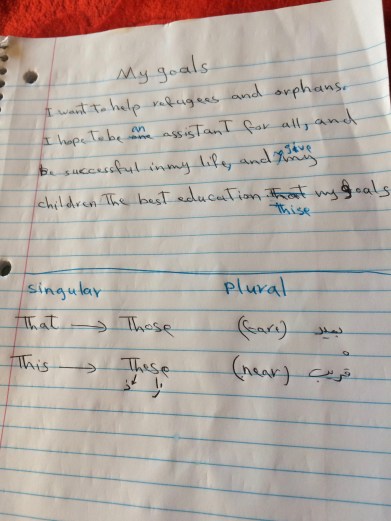
Zuzu shared with me another goal statement she had crafted late one night: I want to help refugees and orphans. I hope to be one assistant for all.  And be successful in my life and my children the best education. That my goals. Clearly, Zuzu and I share a vision of helping those in need. Together our hearts break for the displaced people of her country. I asked Zuzu if I could publically share her beautifully articulated goals because they inspired me, and I think they would inspire others. She agreed.

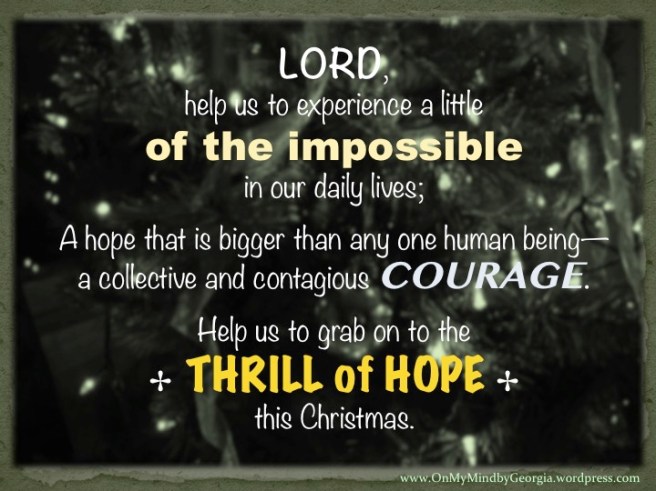
As Zuzu and I both scooch over each week to make room for each other, we hold on to the thrill of hope. My prayer is that all of us would experience a little of the impossible in our daily lives; that we would together find a hope that is bigger than the determination of any one human being—a collective and contagious courage. My prayer is for many more to get out of harm’s way and be welcomed into a safer place where hope can be nurtured, and that they can experience the good news of great joy that is for all people.

Long lay the world in sin and error pining, 

Till He appeared, and the soul felt its worth.

The thrill of hope, The weary world rejoices…

~O Holy Night~