

I got a call the other day from Dr. K, my former hematologist-oncologist of 15 years. From Michigan. I don’t know if it’s the weight of the heavy Colorado spring snow on budding branches, or the heaviness of a pandemic that hangs on every soul, but I cherish the check ins that comes my way.
Being officially in the immunocompromised category by chronic leukemia and the immunotherapy treatment for it, I feel privileged to receive random check in calls from caring people wanting to know if I am doing okay during this pandemonium that has taken over the globe. They want to make sure I am taking extra care of myself.
Emotionally Broadsided
When Dr. K called, I felt emotionally broadsided by the unexpected check in. I’m sure he has a million things to think about at the main hospital, hit hard with COVID-19, in the heart of Detroit. But he paused to think of me. To make sure I was doing okay.
That call confirmed my self-diagnosis. I am emotionally compromised. Yup. Emotions are just below the surface and ready to well up. At. Any. Moment.
Just a fair warning: If you call to check in and say kind things—I’ll probably cry. If you stop to tell me your sad or touching news—I’ll probably cry. It’s possible I might start out laughing at something and end up crying. Or vice versa. Why limit ourselves to one emotion at a time when we can feel multiple, complex emotions simultaneously?
Mentally Tumbled
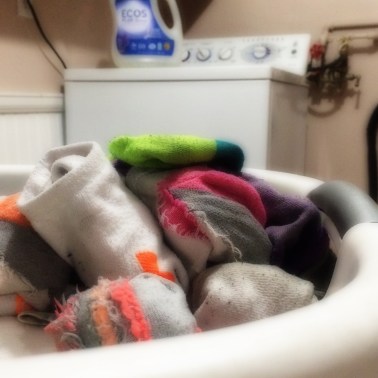
And then there’s my brain. My thoughts tumble around in my head like wet laundry. The significant intertwined with the curious and bombarded with the mundane and distracted. Chaotic and scattered. It’s the opposite of focused. I’m lacking goals, and trajectory is vague. So many thoughts circling around in each presented moment. Yup. Definitely mentally compromised, too.
“How is Strength my Weakness?”
My favorite part of the movie Jumanji: Welcome to the Jungle is when the characters discover that they each have specific strengths and weakness within the Jumanji game. Kevin Hart’s character discovers that strength is actually on his list of Weaknesses.
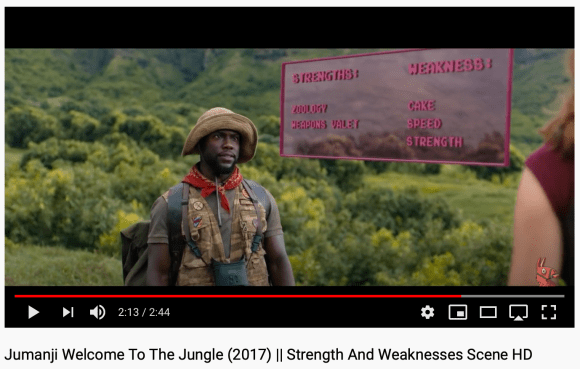
I love his question:
“How is strength my weakness?”
But I also like to flip things around:
What if weakness is actually my strength?
What if tears are my superpower? And grief is a place I’ve grown comfortable with?
What if chronic hope comes from chronic illness?
What if immunocompromised means I’m also immuno-alert?
What if mentally scattered means centered in the present?
What if my limitations are the exact ingredients of sensitive, present, and vulnerable I need now, in the middle of a pandemic?
Broadsided by Grace
If I were to connect with the Designer of my strengths and weaknesses, how would that go?
I imagine it to be similar to The Apostle Paul’s process, being broadsided by grace—grace that came through a conduit of weakness.
Paul pleaded and discussed with the Divine to take away his weakness.
His Designer declared:
My grace is enough; it’s all you need.
My strength comes into its own in your weakness.
And so, the Apostle Paul relinquished himself to be broadsided by grace:
Once I heard that, I was glad to let it happen. I quit focusing on the handicap and began appreciating the gift. It was a case of Christ’s strength moving in on my weakness. Now I take limitations in stride… And so the weaker I get, the stronger I become. (2 Cor. 12:9-10)
Weakness was the Saint’s necessary ingredient for greater sources of grace.
To hear the voice of my Designer… Not to tell me I am healed or that I am strong. But to hear that at the heart of humanity is weakness, and that on my list of strengths, weakness is at the top.
The weaker I get, the stronger I become. In my current mentally scattered state, I’m okay to sit in the presence of this paradox. I’m okay to lavishly love on another grieving soul with my unstoppable tears. I’m awkwardly eager to hold up my best super girl akimbo pose with my favorite napping blanket flapping cape-like behind me in the wind.
I’m surprisingly okay. Immuno-okay. I’m being cautious, and there’s not much to report health wise or otherwise. So strong in weakness. So okay with my compromised state (at least in this present moment).


 On My Mind