
Compromised: Immuno-and-Otherwise

C57AF784-FB29-48B0-A95D-21099BDF35D8_1_201_a

I got a call the other day from Dr. K, my former hematologist-oncologist of 15 years.  From Michigan.  I don’t know if it’s the weight of the heavy Colorado spring snow on budding branches, or the heaviness of a pandemic that hangs on every soul, but I cherish the check ins that comes my way.

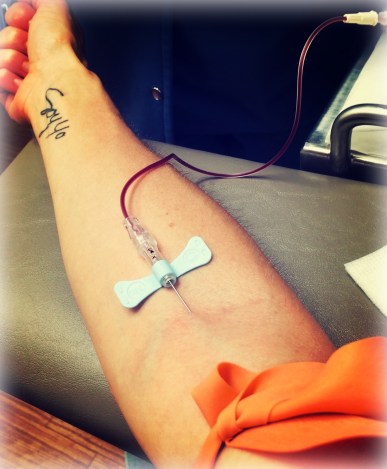
Being officially in the immunocompromised category by chronic leukemia and the immunotherapy treatment for it, I feel privileged to receive random check in calls from caring people wanting to know if I am doing okay during this pandemonium that has taken over the globe.  They want to make sure I am taking extra care of myself.

Emotionally Broadsided

When Dr. K called, I felt emotionally broadsided by the unexpected check in.  I’m sure he has a million things to think about at the main hospital, hit hard with COVID-19, in the heart of Detroit.  But he paused to think of me.  To make sure I was doing okay.

That call confirmed my self-diagnosis.  I am emotionally compromised.  Yup.  Emotions are just below the surface and ready to well up. At. Any. Moment.

Just a fair warning:  If you call to check in and say kind things—I’ll probably cry.  If you stop to tell me your sad or touching news—I’ll probably cry.  It’s possible I might start out laughing at something and end up crying.  Or vice versa. Why limit ourselves to one emotion at a time when we can feel multiple, complex emotions simultaneously?

Mentally Tumbled
3353CFA4-3771-41D6-9132-EC070F6D545D

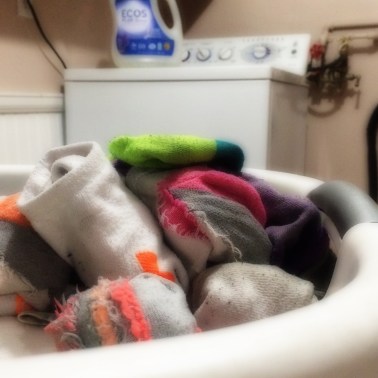
And then there’s my brain. My thoughts tumble around in my head like wet laundry.  The significant intertwined with the curious and bombarded with the mundane and distracted.  Chaotic and scattered.  It’s the opposite of focused.  I’m lacking goals, and trajectory is vague.  So many thoughts circling around in each presented moment.  Yup.  Definitely mentally compromised, too.

“How is Strength my Weakness?”

My favorite part of the movie Jumanji: Welcome to the Jungle is when the characters discover that they each have specific strengths and weakness within the Jumanji game.  Kevin Hart’s character discovers that strength is actually on his list of Weaknesses.
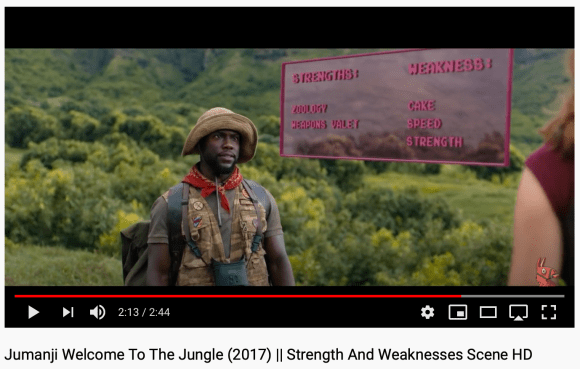
Jumanji-Strength my weakness?

I love his question: 

“How is strength my weakness?”

But I also like to flip things around:

What if weakness is actually my strength?

What if tears are my superpower? And grief is a place I’ve grown comfortable with?

What if chronic hope comes from chronic illness?

What if immunocompromised means I’m also immuno-alert?

What if mentally scattered means centered in the present?

What if my limitations are the exact ingredients of sensitive, present, and vulnerable I need now, in the middle of a pandemic?

Broadsided by Grace

If I were to connect with the Designer of my strengths and weaknesses, how would that go?

I imagine it to be similar to The Apostle Paul’s process, being broadsided by grace—grace that came through a conduit of weakness.

Paul pleaded and discussed with the Divine to take away his weakness.

His Designer declared:

My grace is enough; it’s all you need.

My strength comes into its own in your weakness.

And so, the Apostle Paul relinquished himself to be broadsided by grace:

Once I heard that, I was glad to let it happen. I quit focusing on the handicap and began appreciating the gift. It was a case of Christ’s strength moving in on my weakness. Now I take limitations in stride… And so the weaker I get, the stronger I become.  (2 Cor. 12:9-10)

Weakness was the Saint’s necessary ingredient for greater sources of grace.

To hear the voice of my Designer…  Not to tell me I am healed or that I am strong. But to hear that at the heart of humanity is weakness, and that on my list of strengths, weakness is at the top.

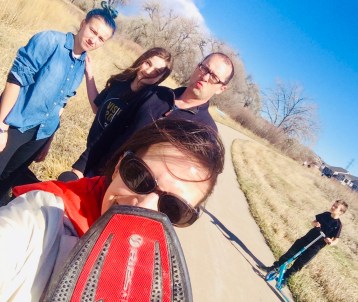
The weaker I get, the stronger I become.  In my current mentally scattered state, I’m okay to sit in the presence of this paradox.  I’m okay to lavishly love on another grieving soul with my unstoppable tears.  I’m awkwardly eager to hold up my best super girl akimbo pose with my favorite napping blanket flapping cape-like behind me in the wind.

I’m surprisingly okay.  Immuno-okay.  I’m being cautious, and there’s not much to report health wise or otherwise.  So strong in weakness.  So okay with my compromised state (at least in this present moment).
1DADB225-ACEE-4BEF-9CFE-16CAE14D7442_1_201_a

CHRONIC HOPE #6: The Luxury of Looking Forward

“If you can’t fly then run, if you can’t run then walk, if you can’t walk then crawl, but whatever you do you have to keep moving forward.”

Martin Luther King, Jr.

When I was first diagnosed with chronic myeloid leukemia (CML) in my 20s I stopped looking too far forward.  Planning for the future felt presumptuous, so I learned to live more fully in the present.

IMG_5562

September 2019 marked 19 years since my cancer diagnosis.

I’ve had the privilege of reflecting back on 2 decades of living alongside a cancer diagnosis while continuously being treated for it.

4 different cancer treatments.

12+ bone marrow biopsies.

2 cutting edge miracle meds.

3 miracle babies. 

3 times achieving medicated remissions.

2 relapses.

1 Master’s Degree.  

Tens of thousands of dollars invested.

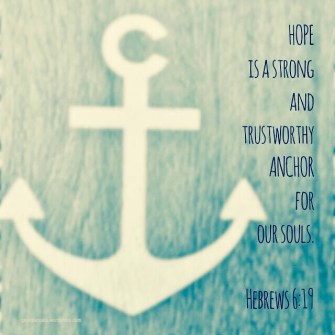
This journey is chronic. Chronic struggles. Chronic tears. Chronic persistence. Eventually forging a resilient chronic hope that anchors the soul.

I have learned invaluable life lessons of chronic hope: 

We all have struggles.  We all need help.  We all seek a hope that is bigger than us.

We don’t rise above our struggles alone.

fullsizeoutput_1488

I can dare to make long-term goals that are bigger than me, because others dared before me.

In 1959 a researcher identified a very specific chromosomal abnormality present in CML patients.  In the 1990s my first miracle medication was developed—a targeted immunotherapy treatment that was revolutionary.  The standard chemotherapy treatments do not discriminate between healthy cells and cancerous ones, thus, leaving the patient with a myriad of miserable toxicities and a bleak prognosis.  But this miracle medication targeted and treated a very specific problem inside of me, on a genetic level.  It was proven more effective, more efficient, and less toxic than standard chemo.

It changed the world for people like me.


Reflecting back is essential for moving forward.

Now, with 3 growing kids, a specialized degree as a language and culture learning coach, and a healthy body in medicated remission, I dare to look forward.

There are so many people along the way who have given of themselves for me to be in this privileged place.

Like the doctor who created my miracle med after building on a researcher’s breakthrough 30 years earlier, what offerings can I bring that just might change the quality of life for a single soul?

These words of Dr. Martin Luther King, Jr. both scare and inspire me:

“An individual has not started living until he can rise above the narrow confines of his individualistic concerns to the broader concerns of all humanity.”  MLK, Jr.

As a language learning coach, I love to champion individuals towards greater possibilities in their lives.  But MLK Jr.’s words challenge me further forward.  How can I rise above my personal cancer and be a part of treating malignancies that face all humanity?

While Dr. Martin Luther King, Jr.’s impact on society was profound, maybe he started with small offerings and a few champions in his life.  I can do that!  I can spend precious life energy trying to figure out my present and future impact, courageously taking small steps forward.

“If I cannot do great things, I can do small things in a great way.”  MLK, Jr.

IMG_5578

Thank you, dear people in my life, who have championed me along the way to fight my battles with cancer—my devoted Greek-immigrant family, my loving husband in sickness and in health, my life-giving friends, my empathetic professors and generous neighbors.

Thank you, doctors and researchers, for devoting your lives and your minds to profoundly changing my prognosis and my quality of life.

Thank you, Dr. Martin Luther King, Jr., for your wisdom and impact on the world, and for encouraging me to bravely take baby steps far beyond my personal cancer.

Thank you, readers, for allowing me to reflect back and dare into the future on this journey of chronic hope.

IMG_3359


This article was published in a series of articles for the Yemeni American News, October, 2019:

Georgia Coats is a Language & Culture Learning Coach, freelance writer, educator, wife, and mother of three who is passionate about healthy mind-body-spirit living.  Chronic Hope is Georgia’s collection of stories, lessons, and life adventures of living alongside chronic leukemia, cancer of the white blood cells, for two decades.  She often shares what’s on her mind at: www.onmymindbygeorgia.wordpress.com

CHRONIC HOPE #5: From Battling Fatigue to Balancing an Energy Budget

I knew the call would come, like the expectation of a winter storm.

My oncologist forecasted that my body would eventually build up a resistance to my medication for chronic myeloid leukemia (CML) after going off of it 3 times to have 3 miracle babies.

That dreaded call came the day after Christmas in the middle of a family movie.  The nurse dictated dates for blood tests and biopsies.  It was clear as I fumbled for a pen while running out of the darkened theatre that she didn’t care which dates worked for my grad school class schedule, my teaching hours, or my family life.

Bottom line, I needed to rewrite my priority list—ASAP!

I was thankful for a short commute between hospital and university in the heart of Detroit.  I naively thought I could change medications and not skip a beat in class.  I didn’t account for the unexpected toxicities of Sprycel, my new miracle medication.  It was super effective in treating cancer.   But my fatigued body could barely make it through a day.IMG_5394.JPG

5 Steps of Energy Budgeting

I know what it’s like to live on a tight financial budget.  I’ve been stretching dollars for decades.  Taking Sprycel syphoned off a significant portion of my energy each day.  It was clear that I drastically needed to rebalance my energy budget to account for success within my new limitations of fatigue.

1. Set Goals

Set clear, attainable goals. Identify the most important places to spend limited resources of energy. For me it was: Finish grad school.  Aspire to excellence—as a mom, wife and student.  As I pushed forward with my Master’s degree, I became a goal-setting master.

2. Prioritize 

Show up wholeheartedly

Decide the most important ways to expend mental, emotional and spiritual energy, and then let go of the other stuff.

If I aspired to excellence as a mom, wife, and graduate student, I couldn’t also be an excellent teacher.  I quit my teaching job, and we creatively rebalanced an even tighter financial budget.IMG_4263

3. Eliminate Excess

Identify and get rid of unnecessary energy drains.  It’s like knowing you’re going to shipwreck if you don’t throw stuff overboard.  Learn to say “NO” to superfluous obligations and to excess noise in your head.

Nursing a grudge or second-guessing good decisions were luxuries I couldn’t afford.  Instead, I learned the energy-rejuvenating power of clear thinking cultivated by a rhythm of rest, walks, and intimate times in prayer.

4. Show Up Wholeheartedly

Once goals are set, priorities are clear, and junk has been eliminated, be present in your priorities. Embrace them fully and generously.

It was costly to be a mother of three and a non-traditional, cancer fighting grad student.  I wasn’t going to miss any of those prioritized moments. I studied hard. I also learned to set studies aside and wholeheartedly cherish puppy movies with my feverish 4th grader as the privileged place of being a mom.

fullsizeoutput_28cf

5. Celebrate Success

Find joy in the things that contribute to success.  Setbacks and shortcomings are ingredients for grit when it comes to celebrating achievement.

I regularly thanked my amazing professors.  When my worn out body ached, I thanked God for my cozy bed as I crawled into it.  I cried tears of gratefulness as my husband picked up my slack at home.

When I finally finished graduate school, debt free, after 5 ½ years, celebrations of success were the sweetest.IMG_5393

I learned to thank God for my miracle medication.

It keeps my body cancer-free.  It has afforded me peace of mind, power in weakness, freedom in limitations, and grace in weariness. I have learned to live more lightly and freely as I regularly surrender all my priorities to my highest priority of all—loving God with all my heart, soul, mind, and strength.

IMG_4447

This article was published in a series of articles for the Yemeni American News, September, 2019, p. 10:

Georgia Coats is a Language & Culture Learning Coach, freelance writer, educator, wife, and mother of three who is passionate about healthy mind-body-spirit living.  Chronic Hope is Georgia’s collection of stories, lessons, and life adventures of living alongside chronic leukemia, cancer of the white blood cells, for two decades.  She often shares what’s on her mind at: www.onmymindbygeorgia.wordpress.com