NY2020: Dear Disappointment…What’s the Point of You?

Dear Disappointment,

You’re not my favorite.  You are a slow drain on my motivation.  You make my brain fuzzy and indecisive.  You send me veering off track ever so slightly. You bring fear to the party, uninvited. I feel more adept at interacting with some of your crotchety and domineering relatives, like discouragement.  And over the years I have learned to set clear boundaries with despair.  I see nothing redeeming about spending quality time with you.

There’s no hope for you.

I purposely keep my expectations low so I can minimize how often we hang out.  I’m awesome at anticipating what is needed and adapting to people and circumstances.  I can shake your little solo missions fairly quickly.  But you… you just hover in the middle of my weekdays.  You look for ways to accumulate and gang up. You are the frown faces in calendar next to all the appointments you dissed—my cancelled meeting, my rejection notification on an application, my feverish and coughing kids, my mediocre night’s sleep.
6EBBB22D-A402-4D26-A7C4-43A98211B4D8

Recently, I invited daring into my 2020 mindset. And I’m realizing that you come in the fine print.  You accompany daring wherever she goes.  You are the damper on more daring attempts.  You are the reason my risk-taking is so intentional and well-thought out.  And yet, I turn around and there you are, still. I see you. You keep one foot in the door so frustration can just slip right in.

Go away!

At least I can learn from failure.  That’s how we grow.  I understand how healthy fear makes me more courageous.  Grief, sadness, shame, guilt, rejection, loneliness…. I’ve had intimate relationships with all of these negative emotions and am better for them.  But you?  All you do is take, take, take.

What do you have to give?

Chronic disappointment becomes discouragement—the wearing down over time.  Chronic discouragement untreated becomes despair—the total loss of hope.  But I’m the queen of chronic hope.  That was my 2019 mindset.  You can’t touch my hope.

King Solomon the Wise of the ancient world said that,  “Hope deferred makes the heart sick, but a longing fulfilled is a tree of life.”

Or can you?  Are you the one who makes a heart sick?  Are you the one who stunts tree-of-life growth?  Are you the slow deferring of hope that flies under the radar?  Are you the one who causes my decision fatigue, for every dis-appointed thing I have to reconfigure?

What is the point of you?
CD992679-05FF-4176-8C4A-A8666CF64AD7

NY2020: Feeling Small

D1CAD816-B662-49A9-8C00-E04D0F43A1B2_4_5005_c

Dear Dr. Martin Luther King Jr.,

I’m feeling pretty small.  Things are kind of crazy at the onset of 2020.  Injustice. Intolerance. Mean words. In 2020 people are angry and feel like they have the right to take it out on others.

I used to feel bad for the time in the history that you had to face.  I was content to just be inspired by your legacy, that even though we face the difficulties of today and tomorrow, we can still have a dream… that this nation will rise up and live out the true meaning of its creed… that all humans are created equal.

Your dreams and accomplishments made me thankful for how you made our nation a better place for everyone to live peacefully and safely.

What Went Wrong?

I’m not sure what went wrong, or if I just opened my eyes a little bit wider.  When I read, in 2020, your convicting words against racism, I feel like I could never live up to your standards.  I’ve never been discriminated by the color of my skin as you have.  I’ve never been as outspoken as you are.

You are our civil rights hero.  And we celebrate that.

But, in order to even fathom your dreams in this new decade, I’m realizing that it’s not always about being big and strong and fiercely outspoken.  It’s not about excusing myself from an impossible calling for more gifted people.

It’s about the small stuff. 

It’s about scooching over to make room on my bench for one more weary human to sit.  It’s about knowing my neighbor, looking into her determined eyes and seeing her very great smile of grit and gratitude.  It’s about being so amazed by the content of her character that I have nothing but respect for her.  It’s about sharing our humanity.

You see, I have some amazing friends.  And they have been judged by their ethnicity, religion, immigration status, and the color of their skin.  They have faced and overcome tremendous odds to get where they are today.  And they still have So. Far. To. Go.

CAE74C1D-AAAF-4964-AF9E-90FF4AE84FC5

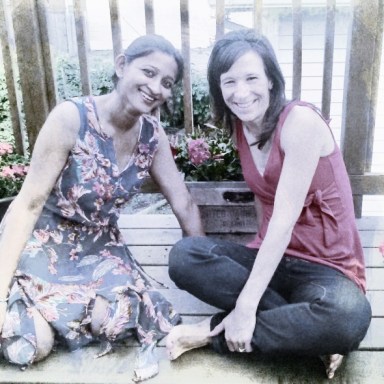
Pompa had been in this country for 9 years before she realized her husband had filed no immigration paperwork for her.  So, when he filed for a divorce, he figured she would have to disappear back into the bustle of Bangladesh.  With nothing.

He didn’t account for her courage, her fortitude.  Or for her faith in the God of the impossible.  He didn’t account for the kindness of others—both Muslim and Christian—who provided for her legal fees and her housing needs.  He didn’t imagine she had anything to offer that would inspire the faith and courage of others.  He was so wrong.

959F1B1A-6077-4517-A47A-E5F7DAED140A

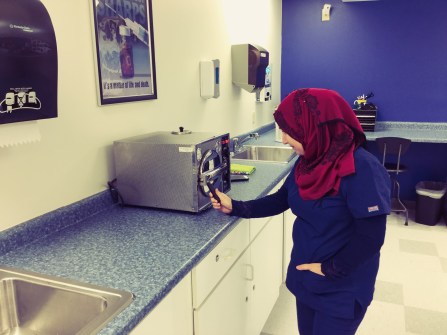
And Zuzu.  She has never let her refugee status conquer or even dampen her spirit.  Instead, she embraced the opportunity of a fresh start in a new country.  As a mother of 3, she also manages the family finances and cares for her aging in-laws while pursuing her education in her 4th language.  Her husband also works tirelessly so she can go to school and together they can achieve in this country what hasn’t been possible for them back in war-torn Syria.

Screen Shot 2020-01-20 at 11.41.38 AM

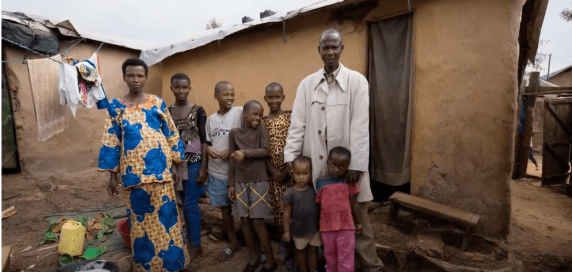
My newest neighbor is a Gentle Soul with the brightest smile I have ever seen.  She met and married her husband and gave birth to their 10 kids in a refugee camp in Rwanda.  Now, as a widow, she braves a strange new community as a single mom with NO English language.  She works nights at a meat packing plant and relies on the kindness of others, her deep faith, and the services our great country has to offer to help her kids thrive.

I feel so small. 

I have so little to offer.  But I also know that every little offering is something.  I have held hands in prayer with Pompa.  I have celebrated Zuzu’s achievements over little cups of tea.  And I have connected deeply—mother to mother, woman to woman, human to human—far beyond words with my Gentle-Souled neighbor.

Dr. King, thank you for these words:

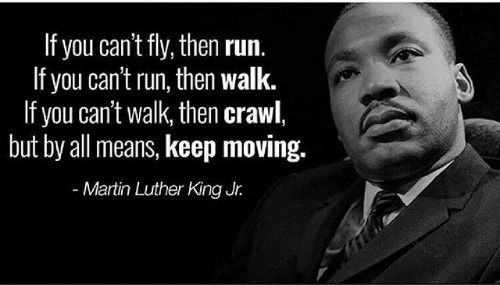
If you can’t fly then run, if you can’t run then walk, if you can’t walk then crawl, but whatever you do you have to keep moving forward.

I can’t tell you how relieved I am that you actually said this.  I have seen my three beautiful friends move forward and cross insurmountable barriers with hope and grit.  My friends have been incredibly patient and grateful and gracious.  They have taught me to never waste a moment—to live, to learn, to move forward, to love others, to dare greatly.  They have shown me equality in our pursuits of happiness.

I feel so small in a big, scary 2020 world.  But, I’m learning that I can do the small stuff.  I can move forward, even if my steps feel ever so insignificant.  I can scooch over.  I can give my neighbor’s kids a ride home from school.  I can help her understand the electric bill.

I can take on small… I could even be great at the small things.

If I cannot do great things, I can do small things in a great way.  -MLK, Jr.

Dr. King, did you really ever start out small?

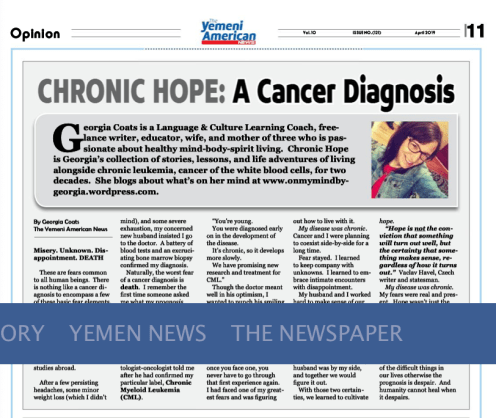
CHRONIC HOPE: A Cancer Diagnosis

Misery. Unknown. Disappointment. DEATH

These are fears common to all human beings.  There is nothing like a cancer diagnosis to encompass a few of these basic fear elements. I faced a dreaded diagnosis when I was 27 years old, newly married, and had many hopes and dreams of traveling the world and raising a family.  I was in graduate school and hoping to do some Middle Eastern studies abroad.

After a few persisting headaches, some minor weight loss (which I didn’t mind), and some severe exhaustion, my concerned new husband insisted I go to the doctor.  A battery of blood tests and an excruciating bone marrow biopsy confirmed my diagnosis.

Naturally, the worst fear of a cancer diagnosis is death. I remember the first time someone asked me what my prognosis was.  I didn’t even know that word.  I had to look it up, and let it sink in that people were actually asking me when the doctors think I might die.  That was crazy!  I was still in my twenties!

“Good news!” the hematologist-oncologist told me after he had confirmed my particular label, Chronic Myeloid Leukemia (CML).

“You’re young.

You were diagnosed early on in the development of the disease.

It’s chronic, so it develops more slowly.

We have promising new research and treatment for CML.”

Though the doctor meant well in his optimism, I wanted to punch his smiling face.  These factors were all in my favor to avoid death.  But what about living a miserable life?  What about dreams of starting a family?  So many unknowns.

The strange thing about a cancer diagnosis, is that once you face one, you never have to go through that first experience again.  I had faced one of my greatest fears and was figuring out how to live with it.

My disease was chronic.  Cancer and I were planning to coexist side-by-side for a long time.

Fear stayed.  I learned to keep company with unknowns.  I learned to embrace intimate encounters with disappointment.

My husband and I worked hard to make sense of our new circumstances.  I quit graduate school.  really hate quitting.  I gave up the dream of studying abroad.

Two things were certain amidst the unsettling unknowns: 

1. God is still God and He is good.

2. My husband was by my side, and together we would figure it out.

With those two certainties, we learned to cultivate hope.

“Hope is not the conviction that something will turn out well, but the certainty that something makes sense, regardless of how it turns out.”

Vaclav Havel, Czech writer and statesman.

My disease was chronic.  My fears were real and present.  Hope wasn’t just the optimism I needed to “fight this thing.”  We were clinging to the hope that this diagnosis would make sense in our lives—eventually.  Someday, our hope would be greater than our fear.

We have to make sense of the difficult things in our lives otherwise the prognosis is despair.  And humanity cannot heal when it despairs.

To ponder…

A friend of mine going through a difficult time compared her life to a garden in the winter. She said, “Hope is the promise that things will grow again.”  How do you make sense of the difficulties in life?  How would you describe hope?

IMG_2672

This article was published as the first in a series of articles for the Yemeni American News, May, 2019:

Georgia Coats is a Language & Culture Learning Coach, freelance writer, educator, wife, and mother of three who is passionate about healthy mind-body-spirit living.  Chronic Hope is Georgia’s collection of stories, lessons, and life adventures of living alongside chronic leukemia, cancer of the white blood cells, for two decades.  She often shares what’s on her mind at: www.onmymindbygeorgia.wordpress.com

Screen Shot 2019-05-04 at 12.17.00 PM

IMPACT

I don’t pretend to understand what’s going on in the mind of a mass shooter. The news is wrought with trying to figure out why the gunman did it. What was in his head? What were his motives?

But today, as I was watching one such report, I began to take notice of impact.

What impact did this one man have?

I don’t know why he chose to make such a horrendous impact, but here are some things I observed:

  • He had a purpose bigger than himself
  • He had a plan
  • He took dangerous risks
  • He invested to succeed
  • He powerfully changed the lives of those around him
  • He was willing to die

I HATE that he had such an impact. I HATE that he was successful.

In times like these, I try to focus on what I know to be true.

Jesus the Messiah gives us insight into the motives of a thief.

A thief is only there to steal and kill and destroy.

The impact of this one man was killing, stealing, and destroying life. But we were not designed for such destruction.

We are created for life—to choose life, to be life-giving.

Jesus the Messiah also reminds us of what life is intended to be.

I came so they can have real and eternal life, more and better life than they ever dreamed of.

So what will our impact be?

  • We are designed to live out a purpose bigger than ourselves.
  • It is good to create a plan and plot out success.
  • Being an agent of change in the world requires taking risk, prioritizing and investing to succeed, and being willing to lay down our lives for something greater than us.

The difference is hope.

We all face in some way the dullness and pains of life that have us wondering why we get up each morning. But there is hope. There is purpose.

We were designed for impact. Our souls long for immortality, somehow, in this fleeting, broken, hurting world.

Hope anchors our souls and keeps us getting up to try to live each day to the fullest.

fullsizeoutput_1488

 While one man caused death, many made music.

In the news interview I watched earlier, musicians Big and Rich, who opened the Route 91 Harvest festival in Vegas performing on October 1, 2017, recounted the beauty of song. The music festival opened that evening with a powerful sing-along of God bless America.

Making music is the whole reason people gathered that night in Vegas. Music draws us and compels something inside us. Different kinds of music draw different people. But, music brings us together; it makes our bodies move.

And when we grieve and mourn our losses, there is music for that, too.

Maren Morris released this song to honor the victims of the Vegas shooting. She addresses HATE directly in a letter:

Dear Hate,

You were there in the garden, like a snake in the grass, I see you in the morning staring through the looking glass. You whisper down through history and echo through these halls. 

But I hate to tell you, love’s gonna conquer all

While hate has always been around, love conquers all.

We hold on to that hope because we were designed for impact. That desire to be a part of something greater than ourselves screams of our eternal capacity, our longing to touch immortality and make history. Something inside us dies if we don’t perceive our purpose—and dream, plan, design, and carry out our impact on the world.

Heroes laid down their lives.

I so appreciate the news stories that give voice to the heroes and the rescued amidst the tragedy—those who risked their lives for great impact and greater good.

What I’ve learned from observing a shooter is that it’s not just about making an impact.

What I’ve learned from observing the impact of heroes is that it’s about choosing life.

Heroes sought life-giving opportunities. Being heralds of hope in a despairing world. Taking radical risks of rescue. Laying down their lives to save another. If life can grow out of the death of one little seed, there is value, meaning and purpose in that death.

Choose life.

fullsizeoutput_14aa

(Published in the Yemeni American News, November, 2017)

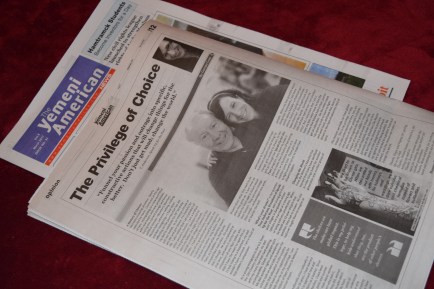
The Privilege of Choice

Funnel your passion and outrage into specific, constructive actions that will change things for the better. Don’t just get mad; change the world.    T. Anderson, Speak Up for the Poor

A History of Choices

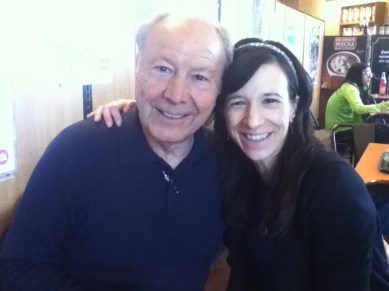
Narrowly escaping abortion. Nearly executed by Nazis. Orphaned at the age of two. Immigrating to a new land filled with new hopes and new possibilities. During this current strange and tense political climate—Women’s Marches, Muslim bans, extreme vetting, trolling, and fear mongering—I have been reflecting on the journey that has led my dad to celebrate his 75th birthday just last month. In a heated climate of pro-life and pro-choice, I’m thankful for life. I also realize that I am a product of other people’s choices. I am a product of my grandparents’ decision not to abort my father, by night, in secret, outside a small village in Greece in the 1940s. I had heard the story countless times of my grandmother’s decision not to eliminate the unexpected pregnancy that was my father, long before I ever comprehended what abortion meant. Then, as a toddler, my dad barely escaped Nazi execution. His parents didn’t though. He was orphaned at that time, and were it not for the compassion of one Nazi soldier who didn’t have the heart to open fire on 13 kids hiding in a basement, my dad wouldn’t have survived. I am a result of that soldier’s compassion.me-and-dad
As a young immigrant to the U.S. from the Old Country of Greece, my dad, with my mom, had that hard working, unconquerable, Greek, immigrant spirit. My dad worked nights and weekends, and he took on extra jobs to pursue the dream that education in this country would lead to more opportunities for his kids than he or my mom had. I am the product of their choice to believe in the American dream.

Living intentionally cross-culturally in a diverse community for 16 years, I have learned that it is best to approach new and complex situations as a learner. Since the Women’s Marches, I have been carefully reading posts and counter posts in Ping-Pong style about women who marched, women who didn’t, women who wished they did, women who were angry, women who didn’t want to get involved… My heart swelled with the pride for some of those who marched. I also understood why some didn’t. From those who chronicled their marches, I learned to value the privileges of choice we have today, because others fought for them in a previous era.

When he would ask 12-year-old girls, “What’s your dream?” they had no answer. No one had ever taught them to imagine an alternative to forced child-marriage.

The Privilege of Dreaming

My kids are privileged with choice. Since they could to talk, my kids have dreamt about what they want to be when they grow up. It was never an option for them not to dream about their futures. They can even change their minds—archaeologist one week, art teacher the next.

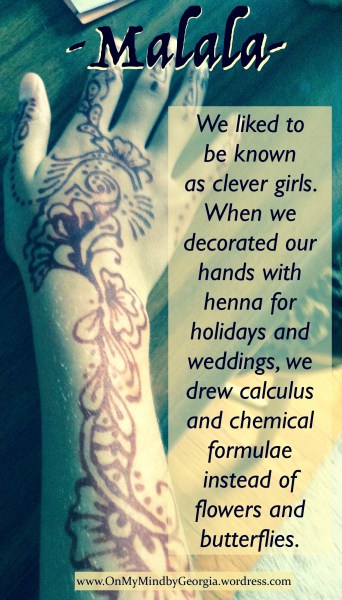
malala-3“What’s your dream?” is the question Troy Anderson, President of Speak Up for the Poor, asks young girls from poor villages in Bangladesh whose options are marriage at a young age, or being sold into prostitution. When he would ask 12-year-old girls that question, they had no answer. No one had ever taught them to imagine an alternative to forced child-marriage. Anderson realized that for things to change, girls needed to dream. As the girls go through the Speak Up for the Poor program, they learn to make a plan to make their dreams of becoming a nurse, or a business owner, or a teacher come true. These girls dare to fight societal norms to realize a better life.
Changing the World

From the Women’s Marches I’ve learned that many have sacrificed to make things better for another generation and another group of people. When my kids grumble about doing their homework, I tell them stories about Malala—a Pakistani girl whose choice of going to school was taken from her. She fought back and inspired the world. Sometimes my kids roll their eyes at me—not another story! But, crazy mom that I am, I want my kids to appreciate their privileges, to work hard for what they believe in, and to have that dare-to-dream-in-the-face-of-adversity kind of spirit.

The choices we make can have global impact. This is my privilege, to help my kids understand that they, too, are the product of other people’s choices. Who could imagine the life-giving impact of one Nazi soldier’s choice back in 1944 in a small Greek village? My kids will hopefully never have to face gunshots on the school bus like Malala did, but they can choose to promote peace on the playground, and stand up against a friend being bullied. We are all connected to a greater historical context, and the choices we make can change the world.

(Published in the Yemeni American News, March, 2017)DSC_0151