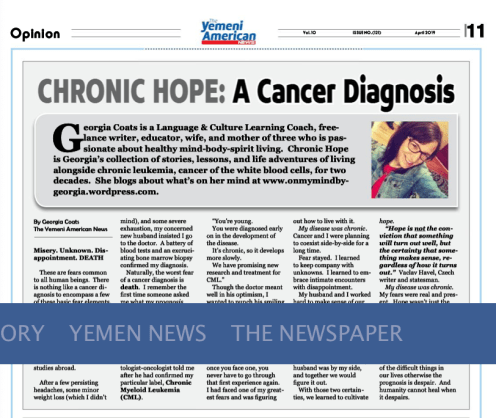
CHRONIC HOPE: A Cancer Diagnosis

Misery. Unknown. Disappointment. DEATH

These are fears common to all human beings.  There is nothing like a cancer diagnosis to encompass a few of these basic fear elements. I faced a dreaded diagnosis when I was 27 years old, newly married, and had many hopes and dreams of traveling the world and raising a family.  I was in graduate school and hoping to do some Middle Eastern studies abroad.

After a few persisting headaches, some minor weight loss (which I didn’t mind), and some severe exhaustion, my concerned new husband insisted I go to the doctor.  A battery of blood tests and an excruciating bone marrow biopsy confirmed my diagnosis.

Naturally, the worst fear of a cancer diagnosis is death. I remember the first time someone asked me what my prognosis was.  I didn’t even know that word.  I had to look it up, and let it sink in that people were actually asking me when the doctors think I might die.  That was crazy!  I was still in my twenties!

“Good news!” the hematologist-oncologist told me after he had confirmed my particular label, Chronic Myeloid Leukemia (CML).

“You’re young.

You were diagnosed early on in the development of the disease.

It’s chronic, so it develops more slowly.

We have promising new research and treatment for CML.”

Though the doctor meant well in his optimism, I wanted to punch his smiling face.  These factors were all in my favor to avoid death.  But what about living a miserable life?  What about dreams of starting a family?  So many unknowns.

The strange thing about a cancer diagnosis, is that once you face one, you never have to go through that first experience again.  I had faced one of my greatest fears and was figuring out how to live with it.

My disease was chronic.  Cancer and I were planning to coexist side-by-side for a long time.

Fear stayed.  I learned to keep company with unknowns.  I learned to embrace intimate encounters with disappointment.

My husband and I worked hard to make sense of our new circumstances.  I quit graduate school.  really hate quitting.  I gave up the dream of studying abroad.

Two things were certain amidst the unsettling unknowns: 

1. God is still God and He is good.

2. My husband was by my side, and together we would figure it out.

With those two certainties, we learned to cultivate hope.

“Hope is not the conviction that something will turn out well, but the certainty that something makes sense, regardless of how it turns out.”

Vaclav Havel, Czech writer and statesman.

My disease was chronic.  My fears were real and present.  Hope wasn’t just the optimism I needed to “fight this thing.”  We were clinging to the hope that this diagnosis would make sense in our lives—eventually.  Someday, our hope would be greater than our fear.

We have to make sense of the difficult things in our lives otherwise the prognosis is despair.  And humanity cannot heal when it despairs.

To ponder…

A friend of mine going through a difficult time compared her life to a garden in the winter. She said, “Hope is the promise that things will grow again.”  How do you make sense of the difficulties in life?  How would you describe hope?
IMG_2672

This article was published as the first in a series of articles for the Yemeni American News, May, 2019:

Georgia Coats is a Language & Culture Learning Coach, freelance writer, educator, wife, and mother of three who is passionate about healthy mind-body-spirit living.  Chronic Hope is Georgia’s collection of stories, lessons, and life adventures of living alongside chronic leukemia, cancer of the white blood cells, for two decades.  She often shares what’s on her mind at: www.onmymindbygeorgia.wordpress.com
Screen Shot 2019-05-04 at 12.17.00 PM

BEAUTY IN THE PATTERNS

IMG_6961

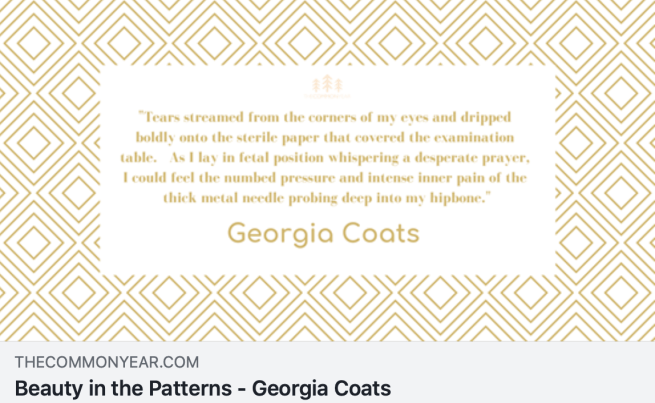
Tears streamed from the corners of my eyes and dripped boldly onto the sterile paper that covered the examination table.   As I lay in fetal position whispering a desperate prayer, I could feel the numbed pressure and intense inner pain of the thick metal needle probing deep into my hipbone.  I had stopped counting bone marrow biopsies after a dozen. They had become routine over the years of chronic leukemia treatments. With a thick layer of gauze under an over-sized Band-Aid, the doctor patched up my tiny yet deep bone wound and sent me on my way.

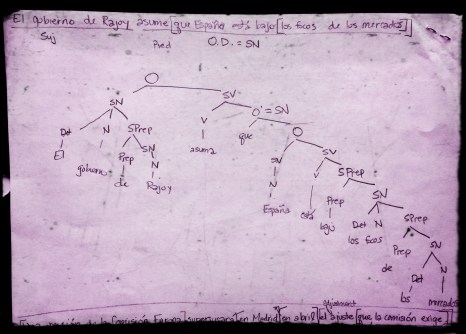
My husband hugged me tight, handed me my coat, and ushered me out the door.  I still had time to make it to my absolutely favorite graduate Spanish linguistics class.  Being an already awkward, over-achieving, non-traditional grad student, I decided limping in late with tearstains and a bandaged backside was still worth it.  I slipped into my front row seat and began to copiously copy the tree diagrams sprawled all over the whiteboards in the room. Syntax. I couldn’t decide if I loved syntax or morphology more.  Good thing I didn’t have to choose—I just love the one I’m with.

IMG_5419

My profesora gave me a sympathetic look and proceeded with her lecture. Compassionately, she had offered that I could take an Incomplete for her class if I needed to during this uncertain time of changing leukemia treatments.  That was unthinkable.  It wasn’t that I needed to “stay busy” during a difficult time, it’s that I needed to be part of something meaningful.

Who knew that la lingüística could provide such purpose?

Within the field of linguistics, the goal is to discover patterns in language.  Once the patterns are discovered, linguists search out evidence found in natural speech to describe the rules and identify the boundaries of such defined patterns.  I find comfort in the certainty of patterns that allow us to explore deep mysteries of minds and cultures.

fullsizeoutput_2b04.jpeg

Did you know that there are universal principles found in all the world’s languages that set human language apart from animal communication?  This is where geeky meets inspirational.

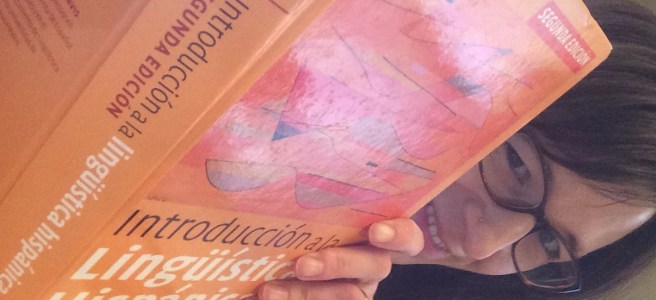
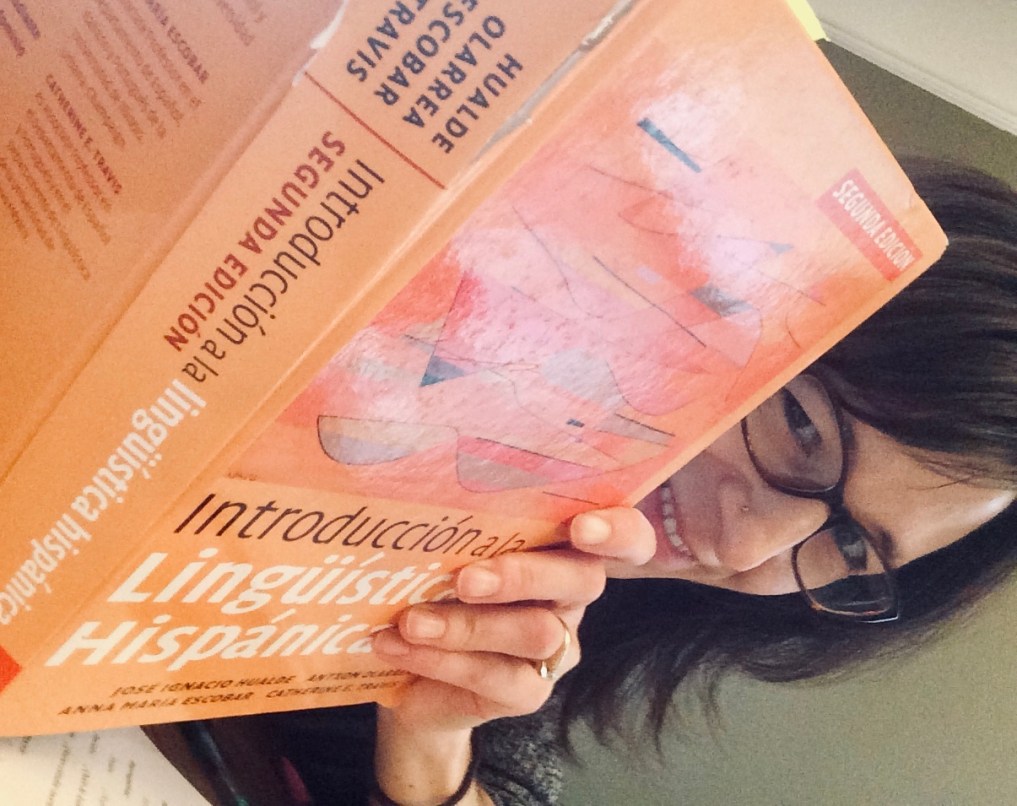
According to my favorite textbook, Introducción a la lingüística hispánica, creativity in a linguistic sense is the ability to take a finite number of items (a set of sounds, letters, morphemes, or words) and to produce an utterance that has never been said before.  We have the power to create.  This creativity allows us to make friend a verb, and to invent novel combinations like un-Google-able and stay-cation.

Prevarication reflects our human ability to fabricate, that is, both to deceive and imagine other possible worlds.

Recursion is how we use a finite number of language structures and patterns to produce infinite possibilities:

This is the house that Jack built.  This is the malt that lay in the house that Jack built.  This is the rat that ate the malt that lay in the house that Jack built.  This is the cat that killed the rat that…

Patterns help our finite human minds fathom infinity.  

We can ponder impossible things.  We can process the past and hope for the future.  Our language capacity allows us to imagine, to weave together a story—whether it is to fabricate a brilliant excuse or invent a fantastical new dimension.

Patterns are discernable and predictable structures that repeat and could potentially go on forever.  They are God’s eternal fingerprint on our temporal world. He set eternity in our hearts and gave us the tools to process and express His everlasting essence.  He has wired us to marvel at divine mystery and to comprehend great and unsearchable things.

In the midst of life’s unknowns, I have learned to cry out to the One who knows me.  To seek the One who penetrates marrow and searches souls. To search for His beauty in patterns.  And not just in language. God has scattered discernable patterns all over this world for us to discover and describe and fathom and imagine.

Meal:

Maybe you have Taco Tuesday.  We have omelets on Fridays.  Embrace the rhythm of routine, but pause to savor it.  Make your favorite omelet, but tweak the ingredients just enough to stir your culinary imagination.  Add smoked Gouda or sundried tomatoes. Top with sautéed mushrooms and onions. Try a side of roasted sweet potatoes drizzled with olive oil.

Song:

I love patterns in music—both the tune and the lyrics.  With hands opened towards heaven, listen, notice, and discover; surrender to His design.

NeedtoBreathe, Multiplied 

Prayer:

Lord, you are infinitely loving.  You set eternity in our hearts that we may comprehend unsearchable things.  I call out to you today. Reveal yourself to me through the patterns in this world.  Transform me out of the rut of life-depleting routine and into the unforced rhythm of your grace.  Thank you, Jesus.

Time:

Take time to play with words and play on words.  Marvel at the morphemes that make un-fathom-able possible.  Listen closely to the whispered words God has for you. Try to keep track of unsearchable things.  Get lost in a pattern and imagine new possible worlds. Share a good word from His Word with a friend. Screen Shot 2019-03-18 at 10.29.52 AMhttps://www.thecommonyear.com/blog/2019/3/16/beauty-in-the-patterns-georgia-coats