Responding to a Hurting World: Lessons from the Little Drummer Boy

There are so many ways to get involved in a hurting world.  Which is a good thing, because there is SO. MUCH. HURT. in our world.  My heart leans towards people in transition, humans who are suffering, those who are trying to make it out of messes.  Immigrants coming to a new land.  Refugees fleeing war and manmade disasters.  Those who have left home, and in humility come to a new place.  They just need a little help along the way.

IMG_2249

So, what to do about it?  Turn to the wisdom of some classic Christmas lyrics for inspiration… the little musician who gave his all, even though it felt like so little.

Come they told me, pa rum pum pum pum

COME.  The first step is to receive an invitation and just plain show up.  The invitation is there to join something bigger than ourselves.  To be a part of something we can’t fix or solve.  To make it personal.  To just come.
IMG_5884
A new born King to see, pa rum pum pum pum

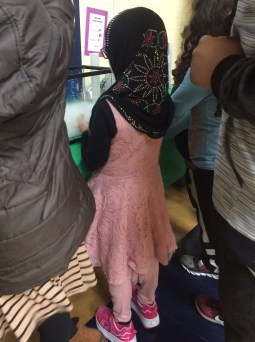
SEE.  Come and see the things that are happening in the world around us.  Let need, curiosity, pain, and empathy compel us to observe and join the messiness of our world in new ways.  To walk alongside a stranger in a strange land. To enter someone’s story.

Our finest gifts we bring, pa rum pum pum pum

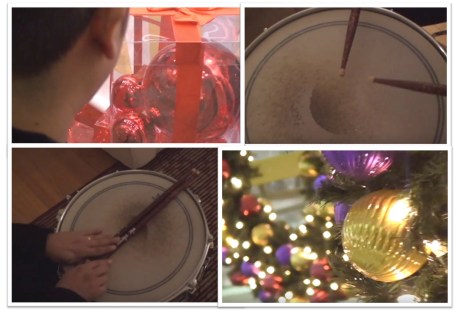
BRING.  Come, see, what’s happening.  Bring what you have.  It may feel small and insignificant, but it is your offering to bring anyways.  Sometimes all I have to offer is myself.  And in a big, scary, complex world what I have feels so insignificant.
Slide2.jpg

To lay before the King, pa rum pum pum pum

LAY IT DOWN.  Let’s lay down our gifts, time, talents, resources as an offering. To show honor.  It may feel insignificant, but showing up has value. Taking time for someone shows they’re worth it.  Honoring another through a life-changing transition, and laying before them what we have expresses incredible value.

…When we come.
IMG_1027

BUTwe all face very real and present excuses, fears, and limitations…

I am a poor boy, too

I’m just one person, with limited talents and resources.  Many say… I’m not a teacher like you.  I would say… I’m not a lawyer like so-and-so, or an activist, or an influencer.  I’m just a ………………. trying to make it in the world (you fill in the blank).

Even our best is so limited.

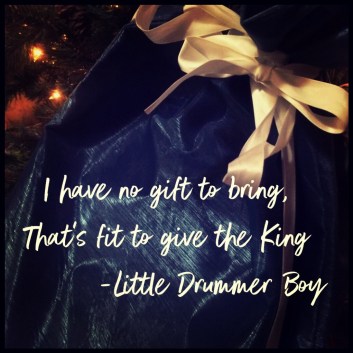
I have no gift to bring, that’s fit to give our King

I have nothing to give that would be of significance.  How can I help?  How can my small offerings possibly make a difference?

Start small.  If we all scooch over just a little in our row, we could make room for one more person to sit down.  What if everyone came, saw the need, and brought their little offerings?  That would be a significant number of insignificant offerings.  Maybe it would change the world.

What could those insignificant offerings look like?

Just come.  Show up for someone you know doing a work you admire in the world.

Just see… just listen.  Ask tough questions, hear difficult stories. Take time to process another perspective or another person’s journey.

Just bring yourself, your unique talents, your small offerings.

  • Maybe you have moments to read to a child.
  • Maybe you can pick up that book you know might challenge your thinking.
  • Maybe you can frequent a gas station or an ice cream truck where you can get to know a fellow sojourner just trying to make it in the world.
  • Maybe you invite someone new over.
  • Maybe you make that donation.
  • Maybe you share a perspective on social media that might make others think differently.
  • Maybe you start within–identifying a fear, letting go of bitterness, or choosing to forgive.

Who knows how scooching over might look for you.  Who knows what gift you bring, or how it might be fit to honor another?IMG_6942

I played my drum for Him, I played my best for Him,

pa rum pum pum pum, rum pum pum pum, rum pum, pum, pum

Whatever you do, do it wholeheartedly.  Even if it is small and insignificant.  Make it your best offering.IMG_5426
Then He smiled at me, pa rum pum pum pum
Me and my drum.

Relish in that smile.  The smile of helping someone out when they needed it most.  Showing up when it was difficult.  Offering when you felt like you had nothing.  Or maybe you are weary from many offerings that never feel like enough.  Pause.

Receive that joy.

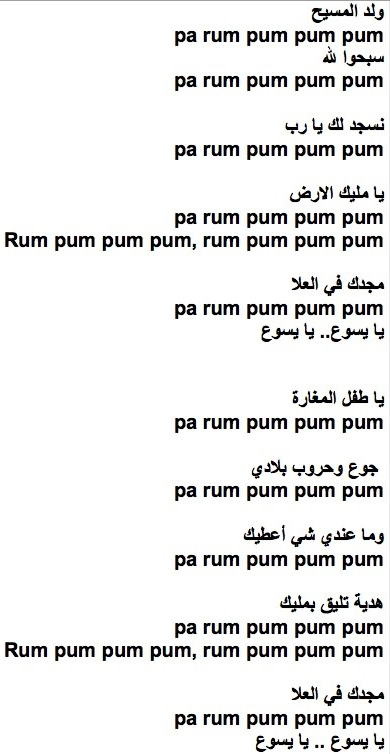
Recently, I heard an Arabic version of The Little Drummer Boy.  It was my invitation to learn some new Arabic words and practice rudimentary reading skills.  What I found was a treasured perspective I wasn’t anticipating.
Drummer Boy Arabic

With the backdrop of endless unrest in Palestine–the homeland of the Messiah and the singer–Vivian Bishara‘s lyrics of worshiping the King but having no worthy gift to bring becomes so real.  Regardless of our politics, war, hunger, and poverty are very real aspects of the world the Messiah came into–and the reason for the season today.  Emmanuel–God with us–in our messy, complex, torn up places.  Let’s come, and see, and lay down our gifts, or our lives, or both. To honor life.

To honor a Life-giving King.

… When we come.IMG_0097


When Politics are Personal: Joining Strong Beautiful People through Challenging Life Transitions

I recently wrote a post about how politics scare me, but, as a language and culture teacher, a language and culture learner, a mom, a cross-cultural neighbor, and a daughter of immigrants, I mustered up a small amount of courage to share some of my perspective on immigrants and refugee issues.  I’m not trying to take a strong political stance, but I do love the people on my path and the relationships that have enriched my life.

IMG_0695

I’ve learned that issues become much less political as they become more personal–when issues have names, faces, stories, and favorite foods.

5 observations about strong people and challenging life transitions:

  1. Leaving home is just plain hard.  My little family of 5 recently relocated after 17 years in our beloved town of Dearborn, MI.  Same language.  Same country.  No emergency. But it was SOOO HARD. Even now my heart tears and my eyes tear up for what we left behind.  Whenever things get challenging in this transition, I think of my brave Syrian Kurdish refugee friend who has relocated with her family 3 times, navigating in 4 languages–Arabic, Kurdish, Turkish, and English, with at least 2 distinct scripts to learn.  Have you ever tried to read the electric bill in a new language–deciphering the issue date, the due date, and the past due date?  Would you be able to tell the difference between tricky junk mail and important official letters written in a script that is oriented in the opposite direction than you’re used to?fullsizeoutput_28cf.jpeg
  2. We all need a little help at times in order to succeed.  In our cross-country move there were countless people who came alongside us in different ways–with food, with gentle reminders about change-of-address forms, with time and muscle to help us carry stuff.  We put our all into our move.  We calculated it for years.  But regardless, it was just bigger than us.

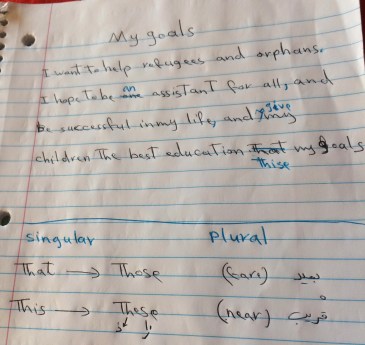
I will never forget the faces of those who have shown up in my difficult times and transitions of life.  Those people have a special place in my life journey.  Have you ever had the privilege of walking alongside someone in their unique ICU experience?  My secret honors include explaining to my English Language class full of moms the important distinction between the Spanish word molestar, which means to bother, and the English word molest, a very different meaning than bother (especially when Google translate has led them astray).  And I’ll forever cherish the joy of being one Muslim friend’s first experience in an American woman’s home.

img_6575.jpg

3. It takes courage and intentionality to show up, everyday.  I have a rule that I have applied as a mom, teacher, and learning coach: when it comes to helping others learn something new, I will only work as hard as they do.  Granted, part of my job is to teach motivation, but if a toddler learning to clean up, puts away two toys, then so will I.  If she puts away 10, I’ll show up for 10.  Fifteen women who show up for my English Language class two mornings a week.  It’s free for them to attend.  Some show up with a baby or two in tow.  Some work 12-hour shifts at Walmart on the loading dock and show up to class sporadically. I have one student who shows up with a smile, a pencil, and a notebook–even though she doesn’t know how to read or write in any language.  They show up with gratitude and grit, ready to take on their new world.  It is my great privilege to show up with them in some small way.

IMG_0070

4. My refugee and immigrant friends want the same things I want.  Most of the beautiful people on my path are other women and moms like me.  They want good, safe, happy lives for their children.  They want to contribute to their community.  They want to pay their bills and take good care of their families.  They get emotional around special holidays away from special relatives.  There is always a little bit of grief in their joy when a baby is born who may never get to meet their grandparents or uncles or cousins.  I’m amazed at the simple yet heartfelt constructions my very beginning students communicate with their limited English.  I know that they have experienced loss, that they long for their mothers’ cooking, and that they struggle with their kids spending too much time on their devices.  I have so much respect for their courage and humility to succeed in a new and strange environment. They inspire me daily to dare greatly.

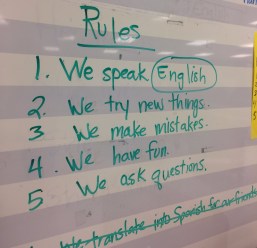
fullsizeoutput_9e05. Families strategize for success.  While I mostly spend time with women, I know that families are doing their best together.  I believe wholeheartedly that my husband deserves his own diploma when I graduated with my MA after 5 1/2 years of intensive studying and juggling.  He showed up with me and for me.  I am also keenly aware that for every married mom who shows up to learn English in my class, there are noble husbands who work tirelessly at blue collar jobs with limited English skills so that their wives can learn English, navigate the needs of their households, and maybe even plan for college.img_4690.jpgMy current adult ESL class is in an elementary school cafeteria.  It’s chaotic and interruptible.  Kids, teachers, administrators, and lunch room staff are always passing through. But we have rules–we ask great questions and we build community together.  We share music and we laugh hard–especially when Lulu is present, because every class needs a class clown.  My life is forever enriched.  I know what it is to sip yerba mate through a special straw, and savor Yemeni sabayah.  And though I have yet to try mofongo, I can’t wait to share my spanakopita recipe with my students.  I love being a part of their safe place–to learn, to take risks, to make mistakes and to grow.  They are courageous and beautiful women.  They show up.  And all our lives are richer for it.IMG_6318


Así Soy Yo: A verb of Identity

My three kids have been learning Arabic in school for the past 4-9 years.  But we recently moved and switched schools, and so they they no longer have such easy access to Arabic classes. So, because I’m a master at teaching small group Spanish classes…

We had our first Saturday morning family Spanish class:

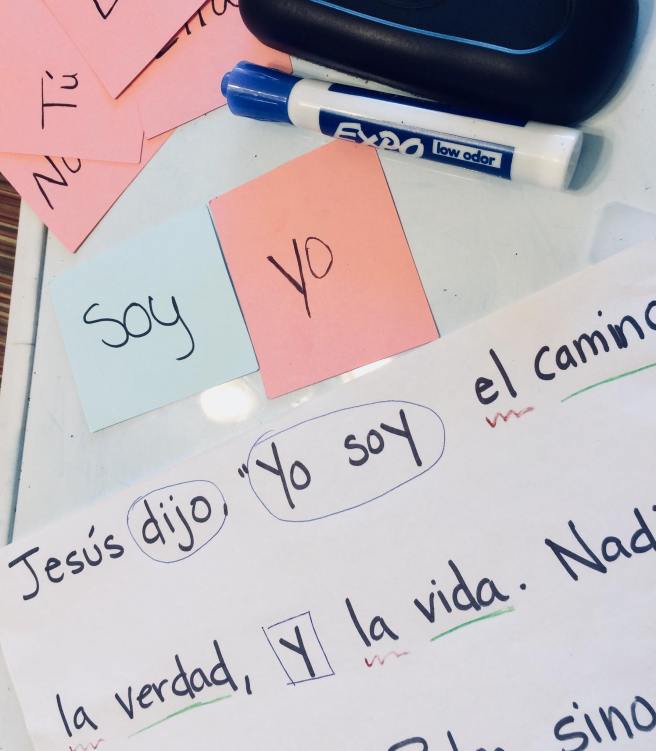
Macro level analysis of a familiar text: Juan 14:6, a Bible verse that they have previously memorized in English.  We were looking at three ways Jesus identifies himself, as the Way (el camino), the Truth (la verdad), and the Life (la vida).
Micro level grammar: subject pronouns and identity verb in the first person “Yo soy”
42273444_526153694495576_484846286676164608_o

To finish off our lesson over pancakes, we listened to one of my favorite Spanish pop songs by the Colombian band Bomba Estéreo

🎶 SOY YO
TRANSLATION: I’m me.

I fell , I got up…
I failed, I found myself,
I lived and I learned…
The harder you get hit, the deeper the beat, yeah

MESSAGE: Be who you are no matter what others may think. 🤓

They lyrics are too fast for my very beginning Spanish students, but the chorus is clear and repetitive.

Y no te preocupes si no te aprueban

cuando te critiquen tu solo di:

Soy yo

Soy yo… soy soy soy

Soy yo… yo yo yo

Así soy yo

That’s how we roll Saturday morning at our house.  Because así soy yo–that’s how I am.

IMG_0245

(It also helps that I plan on bribing them with churros.)

Fasting and Feasting: Looking in on Ramadan

Man does not live on bread alone, but on every word that proceeds from the mouth of God. (From the Tawrah)

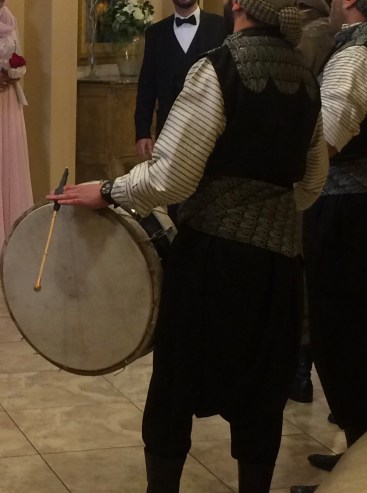
Last month, my husband and I joined our good friends at a beautiful Islamic wedding reception. He went with the men, and I with the women. It was an incredible celebration of dancing, drums, exquisite dresses, and incredible cuisine. It was a time to usher in something new and something beautiful—the union of a husband and wife in their new life together. I admired the abundant display of fruit platters and little cakes and cannolis that donned the back table. They were a vision of sweet, delicious things to IMG_1711come. And though I didn’t understand much of the Arabic conversations going on amongst the ladies at my table, I understood the topic of Ramadan on the lips of many. It seemed as though everyone was anticipating this month of fasting and all that it entails.
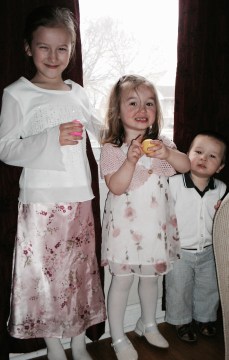
Growing up in a Greek Orthodox Christian home, my family practiced 40 days of Lent—a vegan diet, abstaining from meat, dairy and other animal products, in anticipation for the celebration of Easter. Easter is the focal point of the Christian calendar. It is a time to celebrate new life, new hope, redemption, and forgiveness as we 2010 04 04 Easter – Version 2reflect on the path of suffering and victory of Jesus the Messiah. The joy of Easter is intertwined with the fasting that comes before it. As a child, my favorite Easter treats were little chocolate eggs in a colored
candy shell. I remember trying to sneak around the kitchen to curb my chocolate craving during Lent, leading up to a grand resurrection celebration. Then, on the Saturday evening before Easter, we would dress in our best celebratory garb and attend worship services long past midnight. All I could think about was arriving home to feast on all the delicacies and choice foods we had abstained from for forty days. How sweet those treats tasted after waiting so long to eat them!

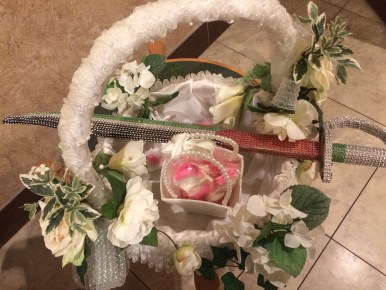
The guests abstained from celebrating until the bride and groom showed up.

When I lived on my own, away from the community aspect of this Greek Orthodox Lenten practice, I realized quickly that the little chocolate eggs didn’t taste as delectable as they did when I had abstained from them and anticipated them for 40 days. There is a time for fasting and a time for celebrating. Both are important. Jesus the Messiah used the example of a wedding feast when he described fasting to his followers. He explained that when the bridegroom enters the wedding, this is a time for celebrating. How true it was at the wedding we attended last month. We eagerly anticipated the arrival of the bride and groom. We all abstained from celebrating until they showed up.

Fasting brings to the surface our inner reality.  S. Sohaib

Sometimes I fast privately, abstaining from all food and drink, day and night, for a specified amount of time, in order to focus on prayer and listening to God. The growls in my stomach are a reminder to pray. Fasting forces me to depend on God, even before food. After all, Man does not live on bread alone, but on every word that proceeds from the mouth of God. Fasting teaches me to listen more carefully to the words of God. Fasting is both a spiritual discipline and a physical detox. It is a time to rid our bodies of unhealthy toxins and also expose the dark places in our spirits. According to Qur’an scholar Sohaib Saeed of the Bayyinah Institute, “fasting brings to the surface our inner reality.” This is so true. When we are weak, our true nature comes out.

Version 2I have studied other languages prior to Arabic, and it never occurred to me before to learn the vocabulary to talk about fasting. But in Arabic, and among my Muslim neighbors, fasting is an important topic of conversation. Living in a primarily Muslim community for the last 15 years, I have learned other valuable lessons on fasting. I appreciate the power and joy of fasting in community and breaking fast in community. My family anticipates the month of Ramadan, and not just because we are on the receiving end of the mandate to generously share with one’s neighbors. We, as part of a Muslim community, are impacted greatly by the month of fasting at our kids’ school, at the local places of business, and among friends. During this month, I am grateful to live in a community that pushes me to teach my children about this spiritual discipline at an early age. I love that kids have discussions about fasting on the playground!
Set aside a time to seek God, to embrace our weakness, and to anticipate the sweet celebrating that follows.

IMG_1727
Whether fasting is for 30 days, breaking fast each evening, or whether it is for three days and nights straight, or a restricted diet for 40 days, what matters is the spiritual lessons that come from it: to set aside a time to seek God, to embrace our weakness, and to anticipate our breaking of fast, and the sweet celebrating that follows—like when the bride and groom show up to the wedding feast!

Published in the Yemeni American News, June 2017


A New Song: In Celebration of World Arabic Language Day

Tallou Hababena  (طلّوا حبابنا) and a New Hairdo 

first-impression

I sat robed in a black plastic cape, my wet hair combed over my face for precise styling. Sometimes a new hairdo from my long-time Lebanese stylist, Toufic, at First Impression Hair Salon, involves cake and tea with his lovely wife, or buying a box of Girl Scout cookies from one of his daughters. As he snips and trims with precision and care, Toufic always fills me in on the latest news of his family, his country and the unrest of the region. I also like to freshen up my rudimentary Arabic skills with him and learn a new phrase or two. But it was unusually quiet this Thursday morning without the standard news from the “Old Country” rattling on in the background. That set me up for the perfect moment to inquire about Tallou Hababena.  Tallou Hababena was the new song my daughter had been fervently practicing with her low intermediate Arabic class at her school. They had to memorize the song and perform a traditional debke dance in preparation for the UN World Arabic Language Day, which is recognized globally and annually on December 18.

word-arabic-l-day

Inspiration to Research

A new song sums up graduate studies at Wayne State University. From the Psalms I am reminded that God is my strength and my song. This spiritual strength has carried me through the incredible combination of the increased academic challenges of fulltime graduate school and the physical weariness due to my current leukemia treatment. I have battled chronic leukemia (CML) for fifteen years, but my current treatment, Sprycel, is more toxic to my system and regularly challenges me with increased fatigue and dizziness. Being simultaneously on Sprycel and on a scholarship has pushed me to the edge of vulnerability and gratitude. I have been soaring to new heights and needing new strengths to do it. During my most difficult struggles I find hope through inspiring song lyrics. My source of inspiration has become my focus of research, new songs. Expression through song is powerful because it can be personal, social, spiritual, and cultural. A song can stir a heart, inspire a nation, or lull a child.

Contributing to the inspiration is the cultural and linguistic information contained within authentic music and lyrics. Song lyrics are a great resource for gaining cultural perspectives and memorizing new language forms. With my Spanish students, we print song lyrics and then research idioms, dialects, themes, styles, metaphors and verb tenses found in each new song. Through this wealth of cultural insight, my desire is to make life-long language learning meaningful and inspiring for myself, and for those that I teach and coach.

ps-40-3The Comprehension Quandary

So, as I sat at First Impression, my thoughts shifted from my studies back to my daughter’s Arabic song. Tallou Hababena had become my new challenge. My daughter had come to me weeks before with the Arabic script and the notecards she was using to transcribe the lyrics into English. Even though she didn’t understand the words, she was trying to prepare her best for her class performance.

As a family we want to position ourselves to engage the language and culture in our community. I’m training to be a Language Learning Coach. I am researching music for language learning purposes. I got all fired up. There was no way my girl was going to sing a song she didn’t understand in celebration of language! We went into full-on meaning-making mode: My husband acquired the translation of Tallou Hababena from a friend. We had watched various YouTube videos that helped us figure out that this song was about a songbird, nature, and the beautiful mountains of Lebanon. We knew that that title meant Come our Love. But something was missing. Why this song? How did it stir the hearts of its hearers?

Longing for Home

touficToufic felt free to enlighten me. With scissors in one hand and a comb in the other, and my wet hair in my face, his face lit up at the mention of Tallou Hababena by the prominent Lebanese singer Wadih El-Safi. “Kids wake up whistling this song. It’s a song about home. When someone has been gone, far away, for too long, their loved ones back in the villages wait for them to come home…” As Toufic burst into spontaneous song, my mind wandered to my family and loved ones far away, and how I wished I could be with them, especially at Christmastime. Tallou Hababena was in essence a version of I’ll be home for Christmas…if only in my dreams… Only this song had a beat you could clap along with, which I did, under my plastic cape! Even though I couldn’t understand all of Toufic’s words, I understood the powerful longing for my home and family back in Colorado.

My husband and I joked that before winter vacation most parents back in my hometown in Colorado were probably watching Christmas concerts, with their kids donned with jingle bells and red sweaters. But we beamed as our daughter and her 6th grade Arabic class walked onto the stage and began swaying their arms, stomping the debke, and singing along to Tallou Hababena (mostly) in unison. We were in full celebration of World Arabic Language Day, and Tallou Hababena would mark a new memory for us.

That’s the power of song. I have songs that mark some of my best memories, and some of the saddest ceremonies; songs of crying out to God Most High, songs that inspire, refresh, celebrate, and worship. I want to praise God with words and with my life, in more than one language, and I want to help others do the same.

~He put a new song in my mouth, a hymn of praise to our God~    a Psalm of David

(This article was published in the Yemeni American News, January, 2017)