NY2020: Feeling Small

D1CAD816-B662-49A9-8C00-E04D0F43A1B2_4_5005_c

Dear Dr. Martin Luther King Jr.,

I’m feeling pretty small.  Things are kind of crazy at the onset of 2020.  Injustice. Intolerance. Mean words. In 2020 people are angry and feel like they have the right to take it out on others.

I used to feel bad for the time in the history that you had to face.  I was content to just be inspired by your legacy, that even though we face the difficulties of today and tomorrow, we can still have a dream… that this nation will rise up and live out the true meaning of its creed… that all humans are created equal.

Your dreams and accomplishments made me thankful for how you made our nation a better place for everyone to live peacefully and safely.

What Went Wrong?

I’m not sure what went wrong, or if I just opened my eyes a little bit wider.  When I read, in 2020, your convicting words against racism, I feel like I could never live up to your standards.  I’ve never been discriminated by the color of my skin as you have.  I’ve never been as outspoken as you are.

You are our civil rights hero.  And we celebrate that.

But, in order to even fathom your dreams in this new decade, I’m realizing that it’s not always about being big and strong and fiercely outspoken.  It’s not about excusing myself from an impossible calling for more gifted people.

It’s about the small stuff. 

It’s about scooching over to make room on my bench for one more weary human to sit.  It’s about knowing my neighbor, looking into her determined eyes and seeing her very great smile of grit and gratitude.  It’s about being so amazed by the content of her character that I have nothing but respect for her.  It’s about sharing our humanity.

You see, I have some amazing friends.  And they have been judged by their ethnicity, religion, immigration status, and the color of their skin.  They have faced and overcome tremendous odds to get where they are today.  And they still have So. Far. To. Go.
CAE74C1D-AAAF-4964-AF9E-90FF4AE84FC5

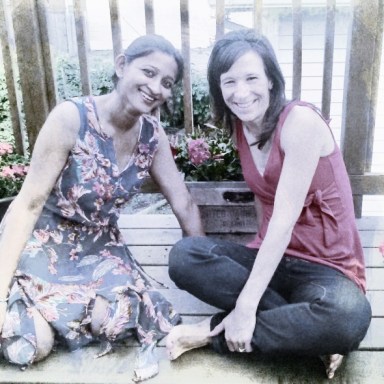
Pompa had been in this country for 9 years before she realized her husband had filed no immigration paperwork for her.  So, when he filed for a divorce, he figured she would have to disappear back into the bustle of Bangladesh.  With nothing.

He didn’t account for her courage, her fortitude.  Or for her faith in the God of the impossible.  He didn’t account for the kindness of others—both Muslim and Christian—who provided for her legal fees and her housing needs.  He didn’t imagine she had anything to offer that would inspire the faith and courage of others.  He was so wrong.
959F1B1A-6077-4517-A47A-E5F7DAED140A

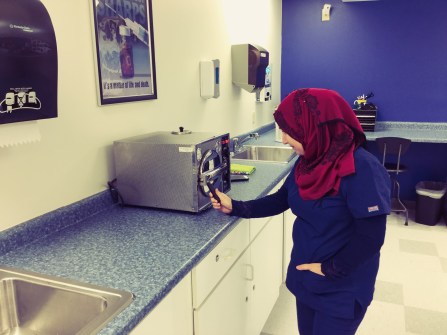
And Zuzu.  She has never let her refugee status conquer or even dampen her spirit.  Instead, she embraced the opportunity of a fresh start in a new country.  As a mother of 3, she also manages the family finances and cares for her aging in-laws while pursuing her education in her 4th language.  Her husband also works tirelessly so she can go to school and together they can achieve in this country what hasn’t been possible for them back in war-torn Syria.
Screen Shot 2020-01-20 at 11.41.38 AM

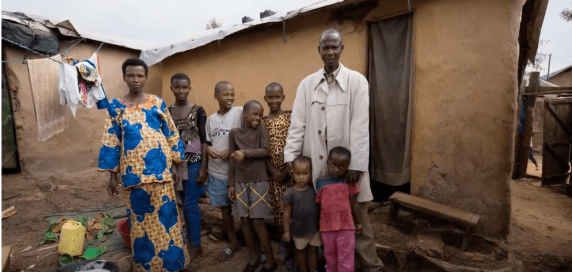
My newest neighbor is a Gentle Soul with the brightest smile I have ever seen.  She met and married her husband and gave birth to their 10 kids in a refugee camp in Rwanda.  Now, as a widow, she braves a strange new community as a single mom with NO English language.  She works nights at a meat packing plant and relies on the kindness of others, her deep faith, and the services our great country has to offer to help her kids thrive.

I feel so small. 

I have so little to offer.  But I also know that every little offering is something.  I have held hands in prayer with Pompa.  I have celebrated Zuzu’s achievements over little cups of tea.  And I have connected deeply—mother to mother, woman to woman, human to human—far beyond words with my Gentle-Souled neighbor.

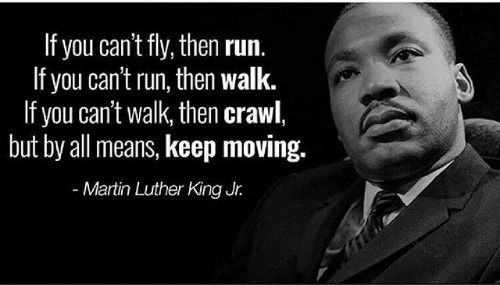
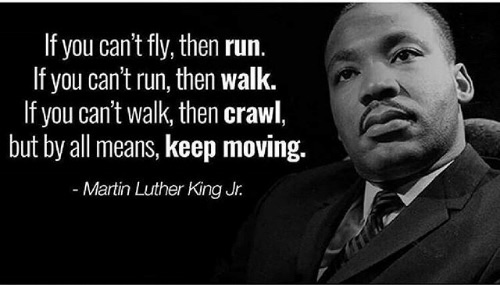
Dr. King, thank you for these words:

If you can’t fly then run, if you can’t run then walk, if you can’t walk then crawl, but whatever you do you have to keep moving forward.

I can’t tell you how relieved I am that you actually said this.  I have seen my three beautiful friends move forward and cross insurmountable barriers with hope and grit.  My friends have been incredibly patient and grateful and gracious.  They have taught me to never waste a moment—to live, to learn, to move forward, to love others, to dare greatly.  They have shown me equality in our pursuits of happiness.

I feel so small in a big, scary 2020 world.  But, I’m learning that I can do the small stuff.  I can move forward, even if my steps feel ever so insignificant.  I can scooch over.  I can give my neighbor’s kids a ride home from school.  I can help her understand the electric bill.

I can take on small… I could even be great at the small things.

If I cannot do great things, I can do small things in a great way.  -MLK, Jr.

Dr. King, did you really ever start out small?

CHRONIC HOPE #5: From Battling Fatigue to Balancing an Energy Budget

I knew the call would come, like the expectation of a winter storm.

My oncologist forecasted that my body would eventually build up a resistance to my medication for chronic myeloid leukemia (CML) after going off of it 3 times to have 3 miracle babies.

That dreaded call came the day after Christmas in the middle of a family movie.  The nurse dictated dates for blood tests and biopsies.  It was clear as I fumbled for a pen while running out of the darkened theatre that she didn’t care which dates worked for my grad school class schedule, my teaching hours, or my family life.

Bottom line, I needed to rewrite my priority list—ASAP!

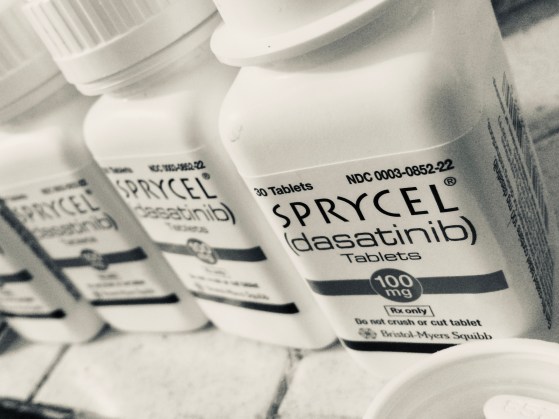
I was thankful for a short commute between hospital and university in the heart of Detroit.  I naively thought I could change medications and not skip a beat in class.  I didn’t account for the unexpected toxicities of Sprycel, my new miracle medication.  It was super effective in treating cancer.   But my fatigued body could barely make it through a day.IMG_5394.JPG

5 Steps of Energy Budgeting

I know what it’s like to live on a tight financial budget.  I’ve been stretching dollars for decades.  Taking Sprycel syphoned off a significant portion of my energy each day.  It was clear that I drastically needed to rebalance my energy budget to account for success within my new limitations of fatigue.

1. Set Goals

Set clear, attainable goals. Identify the most important places to spend limited resources of energy. For me it was: Finish grad school.  Aspire to excellence—as a mom, wife and student.  As I pushed forward with my Master’s degree, I became a goal-setting master.

2. Prioritize 

Show up wholeheartedly

Decide the most important ways to expend mental, emotional and spiritual energy, and then let go of the other stuff.

If I aspired to excellence as a mom, wife, and graduate student, I couldn’t also be an excellent teacher.  I quit my teaching job, and we creatively rebalanced an even tighter financial budget.IMG_4263

3. Eliminate Excess

Identify and get rid of unnecessary energy drains.  It’s like knowing you’re going to shipwreck if you don’t throw stuff overboard.  Learn to say “NO” to superfluous obligations and to excess noise in your head.

Nursing a grudge or second-guessing good decisions were luxuries I couldn’t afford.  Instead, I learned the energy-rejuvenating power of clear thinking cultivated by a rhythm of rest, walks, and intimate times in prayer.

4. Show Up Wholeheartedly

Once goals are set, priorities are clear, and junk has been eliminated, be present in your priorities. Embrace them fully and generously.

It was costly to be a mother of three and a non-traditional, cancer fighting grad student.  I wasn’t going to miss any of those prioritized moments. I studied hard. I also learned to set studies aside and wholeheartedly cherish puppy movies with my feverish 4th grader as the privileged place of being a mom.

fullsizeoutput_28cf

5. Celebrate Success

Find joy in the things that contribute to success.  Setbacks and shortcomings are ingredients for grit when it comes to celebrating achievement.

I regularly thanked my amazing professors.  When my worn out body ached, I thanked God for my cozy bed as I crawled into it.  I cried tears of gratefulness as my husband picked up my slack at home.

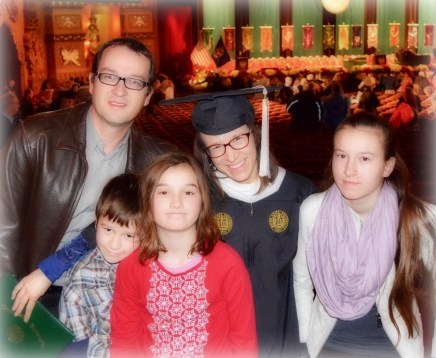
When I finally finished graduate school, debt free, after 5 ½ years, celebrations of success were the sweetest.IMG_5393

I learned to thank God for my miracle medication.

It keeps my body cancer-free.  It has afforded me peace of mind, power in weakness, freedom in limitations, and grace in weariness. I have learned to live more lightly and freely as I regularly surrender all my priorities to my highest priority of all—loving God with all my heart, soul, mind, and strength.

IMG_4447

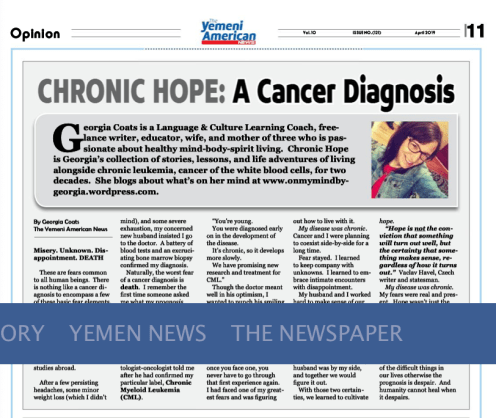
This article was published in a series of articles for the Yemeni American News, September, 2019, p. 10:

Georgia Coats is a Language & Culture Learning Coach, freelance writer, educator, wife, and mother of three who is passionate about healthy mind-body-spirit living.  Chronic Hope is Georgia’s collection of stories, lessons, and life adventures of living alongside chronic leukemia, cancer of the white blood cells, for two decades.  She often shares what’s on her mind at: www.onmymindbygeorgia.wordpress.com


CHRONIC HOPE #4: A Potential Risk of Fighting Cancer

“How dare you be so irresponsible with your wife’s health?  Don’t you understand the risks you’re putting her through by getting her pregnant in her condition?”

I watched my husband’s face change from shock to anger as the nurse unleashed her stern lecture on him.

Five years into marriage and four years into my cancer diagnosis, I was nearing my 30th birthday.  We had given up on making long-term life goals.  I let go of the dream of living abroad for language and cultural studies, and I quit graduate school.

But the dream of being a mom got stronger.

My super-effective miracle medication for chronic myeloid leukemia (CML) extended both my quality and quantity of life.  Aside from 3-month check ups, an annual bone marrow biopsy, and my daily meds, I lived a normal life.  But normal life made me hope for normal things, like a family of my own.

Truth: In this world we all face struggles.

My doctor was STUBBORNLY clear: pregnancy was out of the question.  It was too risky to subject a fetus to the potentially hazardous effects of my miracle meds. And it was too risky for me to go off my miracle meds for any reason.

After multiple heart-wrenching conversations, desperate prayers, and seeking counsel from others who had faced life’s storms and held on to hope, my husband and I felt like it was risky NOT to start a family.

Two significant things happened:

  1. We learned that we must calculate our risk and take the first step into the storm; and expect God’s reassuring presence to show up along the way.
  2. My stubborn doctor left. His replacement was willing to treat me as a whole person, instead of just treating my disease.  We needed someone to champion for the fullness of life.

Hope is a function of struggle. 

“Hope is a function of struggle,” affirms Brené Brown, author of Daring Greatly: How the Courage to be Vulnerable Transforms the Way We Live, Love, Parent & Lead.
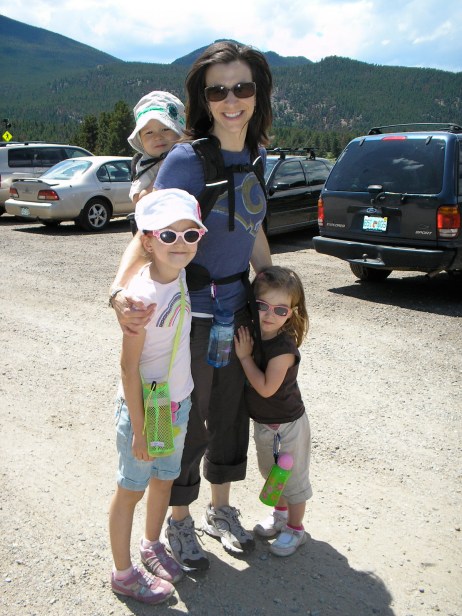
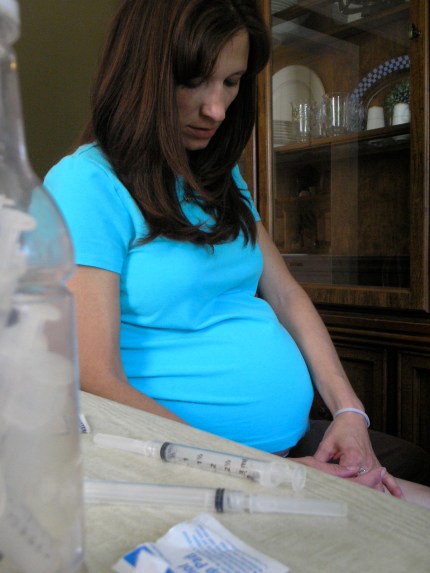
Eighteen months of chemotherapy injections were considered “safe” for growing three wondrous new lives, but they left me feverish and weak.  As I lay limp on the couch, I regularly recalculated our risk.

Giving up a safe miserable life without big dreams, for the opportunity to cultivate new life, changed something in me forever.  Ultimately, wherever beauty and life-giving possibilities exist, they are worth the pursuit.

Brené Brown reminds us that, “the willingness to show up changes us. It makes us a little braver each time.” 

My desire to be a mom dared me to set 9-month goals.  Three times. That led me to reconsider the daunting goal of graduate school to become a Language and Culture Learning Coach—this time as a non-traditional, cancer-fighting, mother of three.
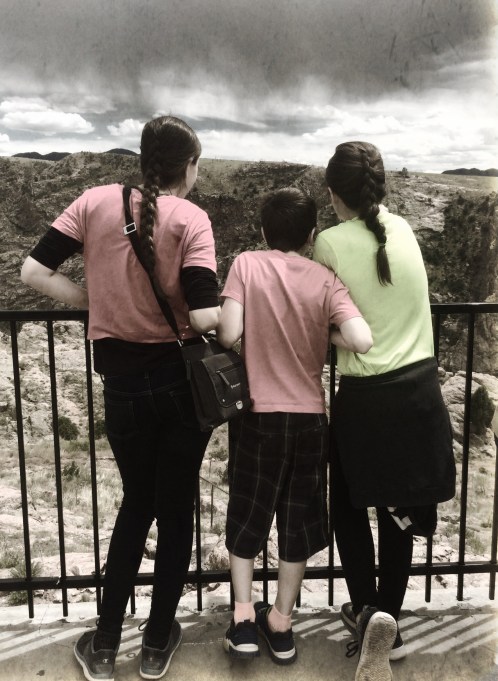
Chronic struggles forged profound hope that pushed me higher and deeper in mind, body, and spiritual potential. And, in setting an example for my miracle children to live courageous lives.

The ongoing challenge is to keep hands open while living courageously—to never close in on the great gifts of life we’ve been given. I’ve been given 20 years to cultivate chronic hope. IMG_4212I find myself in a privileged place to champion others.  My heart is for those who face war, leave home, and migrate across cultural and linguistic barriers in search of the fullness of what life can be.  To these souls I hold out small offerings with open hands.

What are your dreams, forged in struggle?

Who are your champions?

What are the little offerings in your hands?

IMG_0695

This article was published in a series of articles for the Yemeni American News, August, 2019:

Georgia Coats is a Language & Culture Learning Coach, freelance writer, educator, wife, and mother of three who is passionate about healthy mind-body-spirit living.  Chronic Hope is Georgia’s collection of stories, lessons, and life adventures of living alongside chronic leukemia, cancer of the white blood cells, for two decades.  She often shares what’s on her mind at: www.onmymindbygeorgia.wordpress.com


CHRONIC HOPE #3: Cancer Complicates My Identity Issues

The life of a creature is in their blood.  Blood is the essence of who a person is.

By blood I am Greek.  By nationality I am a U.S. citizen.  By education I am a Spanish speaker.  By cultural experiences I resonate with my Middle Eastern neighbors of Dearborn, MI.  By faith I am a follower of Jesus the Messiah.

fullsizeoutput_2ec4

My whole life I have dabbled in multiple worlds, cultures, languages, and social groupings.  I hover on borders, struggling to figure out where I fit in.  That’s why I became a Language and Culture Learning Coach.

That’s why I have identity issues.

Enter Cancer.

By blood I have a cancer diagnosis.  More specifically, chronic myeloid leukemia (CML) is cancer in my blood cells.  Ironically, the white blood cells that function to fight off disease have become diseased.

Someone advised early on,

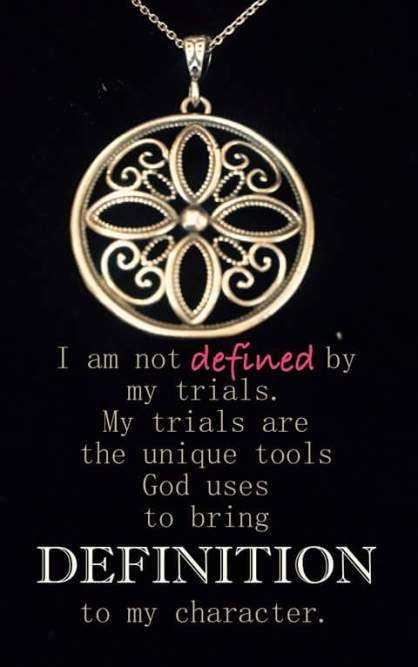
Don’t let your cancer diagnosis define who you are.

That piece of wisdom has both haunted and inspired me for that last 20 years.

When cancer runs in your blood, how do you not let it effect who you are?

To complicate things even more, I am on a cutting edge, super-effective, immunotherapy treatment. No complaints there.  When I tell people I have cancer, they want to know: Am I a survivor? Am I in remission? or Am I still battling the disease?  YES!  I dabble in all of those things.  My treatment keeps me in remission, as long as I keep taking it, daily.  Forever.

In my blood, disease moves slowly.  It’s a lifelong chronic disease, which makes me a peripheral member of another group.  The Chronic Illness Group.  People with chronic illness spend a lifetime on meds, and suffer from their diseases for decades.  There’s no glory in chronic illness.  To find support and strength in a chronic struggle, it helps to own it.  To identify with others who struggle in a similar way.

Blood-Related Issues

This summer I will travel to the Old Country, Greece, with my parents, siblings, and kids, to share with my kids a sliver of their heritage—of the identity that runs in their blood.  We will kiss my aunties and meet another generation of cousins.  We will eat great food and connect with the passion, grit, and generosity of our people.  I will admit my shortcoming to learn, and to teach my kids, the Greek language.  Relatives will look at me through the sympathetic cancer lens and say I look good, considering my health issues.

While I don’t want to be defined by the disease in my blood, I also cannot deny that it hasn’t had a significant impact on who I am.  Cancer brings definition to my character.  And for that, I am grateful.

FB_IMG_1496628639999

Thankfully, YOU don’t have to have my issues to embrace the wonderful beauty of your design.

And together let’s learn to share in the struggles of others.

Because, cancer or not, we all have issues.

fullsizeoutput_2eeb

This article was published in a series of articles for the Yemeni American News, July, 2019:

Georgia Coats is a Language & Culture Learning Coach, freelance writer, educator, wife, and mother of three who is passionate about healthy mind-body-spirit living.  Chronic Hope is Georgia’s collection of stories, lessons, and life adventures of living alongside chronic leukemia, cancer of the white blood cells, for two decades.  She often shares what’s on her mind at: www.onmymindbygeorgia.wordpress.com


CHRONIC HOPE #2: Learning to be healthy and have cancer

“Wow!  You look great. Did you lose weight?”

In my late 20s and newly married, I enjoyed the positive feedback on an otherwise bleak situation. I joked to myself, Yeah, it’s this great new plan… the CANCER DIET.  But in real life, I awkwardly responded, “Thanks,” with no explanation of the dark secret to my weight loss success.

Then there were the people who knew I had recently been diagnosed with chronic myeloid leukemia (CML). They said things differently.

“Awww, you look really good,” which was accompanied by a sympathetic head tilt and a hint of relief. They were glad I wasn’t bald, pale, and gaunt like the poster child for the Leukemia Society.

SteveandGeorgiaMountain(1)

I felt overwhelmed by these new life circumstances out of my control.  I needed to manage something.  This was stirring in me a passion for healthy living.

But, what is healthy?

Before my diagnosis, healthy meant the opposite sick.  After my diagnosis, healthy meant giving my body its best chance to thrive in the given circumstances.

Healthy meant being a wise manager of things I COULD control.

Healthy also meant not over-worrying about the things I couldn’t control.

I couldn’t control leukemia. And I didn’t know how to manage the overwhelming feelings of fear, loss, and dying dreams.

If chronic leukemia was my new normal, I needed effective survival skills.  I needed to nurture hope and figure out healthy ways to interact with chronically present negative emotions.

With cancer come toxicities.  

Toxicities that wear on the body accompany even the best cancer treatments.  Also in the shadows of effective cancer treatments looms the real threat of financial toxicity.

Healthy meant identifying and eliminating unnecessary toxicities while learning to live with the necessary ones.

fullsizeoutput_2ebf

I couldn’t control the toxicities of my treatments, but I could help my body be strong enough to handle them as best it could.  I rested more.  I ate less sugar.  I tried to stay active even when I felt fatigued or depressed.

I learned to sort my worries.

Author Amber Rae, in her book, Choose Wonder Over Worry: Move Beyond Fear and Doubt to Unlock your Full Potential, says that not all worry is bad.  We need to get rid of toxic worries so we can more clearly address healthy worries.

Devastating life challenges can be toxic on a marriage.  Or, they can make a marriage stronger.  The guilt of being a burden to my new husband was toxic.  But I couldn’t eliminate it on my own.

My husband chose to share my burden and join in my sorrow.  He waded through bills, unsolicited advice, and on hold with the doctor’s office.  He always referred to our diagnosis.  He took seriously his role of tenderly caring for his wife.

Together we learned to weed out toxic worry and trust God with each specific life challenge out of our control.

Rae describes healthy worry as a complement to wonder,  “If worry is the fear of what could go wrong, wonder is the curiosity of the unknown.”

I was far from nurturing curiosity.  But I could take baby steps towards healthy.  I felt empowered by healthy eating habits and an exercise routine.

For my husband and I, healthy meant being in the best spiritual, physical, and state of mind we could be to thrive through the toxicities we couldn’t control.  Healthy meant taking on our new life challenges… together.fullsizeoutput_2ec1This article was published as the second in a series of articles for the Yemeni American News, June, 2019:

Georgia Coats is a Language & Culture Learning Coach, freelance writer, educator, wife, and mother of three who is passionate about healthy mind-body-spirit living.  Chronic Hope is Georgia’s collection of stories, lessons, and life adventures of living alongside chronic leukemia, cancer of the white blood cells, for two decades.  She often shares what’s on her mind at: www.onmymindbygeorgia.wordpress.com


CHRONIC HOPE: A Cancer Diagnosis

Misery. Unknown. Disappointment. DEATH

These are fears common to all human beings.  There is nothing like a cancer diagnosis to encompass a few of these basic fear elements. I faced a dreaded diagnosis when I was 27 years old, newly married, and had many hopes and dreams of traveling the world and raising a family.  I was in graduate school and hoping to do some Middle Eastern studies abroad.

After a few persisting headaches, some minor weight loss (which I didn’t mind), and some severe exhaustion, my concerned new husband insisted I go to the doctor.  A battery of blood tests and an excruciating bone marrow biopsy confirmed my diagnosis.

Naturally, the worst fear of a cancer diagnosis is death. I remember the first time someone asked me what my prognosis was.  I didn’t even know that word.  I had to look it up, and let it sink in that people were actually asking me when the doctors think I might die.  That was crazy!  I was still in my twenties!

“Good news!” the hematologist-oncologist told me after he had confirmed my particular label, Chronic Myeloid Leukemia (CML).

“You’re young.

You were diagnosed early on in the development of the disease.

It’s chronic, so it develops more slowly.

We have promising new research and treatment for CML.”

Though the doctor meant well in his optimism, I wanted to punch his smiling face.  These factors were all in my favor to avoid death.  But what about living a miserable life?  What about dreams of starting a family?  So many unknowns.

The strange thing about a cancer diagnosis, is that once you face one, you never have to go through that first experience again.  I had faced one of my greatest fears and was figuring out how to live with it.

My disease was chronic.  Cancer and I were planning to coexist side-by-side for a long time.

Fear stayed.  I learned to keep company with unknowns.  I learned to embrace intimate encounters with disappointment.

My husband and I worked hard to make sense of our new circumstances.  I quit graduate school.  really hate quitting.  I gave up the dream of studying abroad.

Two things were certain amidst the unsettling unknowns: 

1. God is still God and He is good.

2. My husband was by my side, and together we would figure it out.

With those two certainties, we learned to cultivate hope.

“Hope is not the conviction that something will turn out well, but the certainty that something makes sense, regardless of how it turns out.”

Vaclav Havel, Czech writer and statesman.

My disease was chronic.  My fears were real and present.  Hope wasn’t just the optimism I needed to “fight this thing.”  We were clinging to the hope that this diagnosis would make sense in our lives—eventually.  Someday, our hope would be greater than our fear.

We have to make sense of the difficult things in our lives otherwise the prognosis is despair.  And humanity cannot heal when it despairs.

To ponder…

A friend of mine going through a difficult time compared her life to a garden in the winter. She said, “Hope is the promise that things will grow again.”  How do you make sense of the difficulties in life?  How would you describe hope?

IMG_2672

This article was published as the first in a series of articles for the Yemeni American News, May, 2019:
Georgia Coats is a Language & Culture Learning Coach, freelance writer, educator, wife, and mother of three who is passionate about healthy mind-body-spirit living.  Chronic Hope is Georgia’s collection of stories, lessons, and life adventures of living alongside chronic leukemia, cancer of the white blood cells, for two decades.  She often shares what’s on her mind at: www.onmymindbygeorgia.wordpress.com

Screen Shot 2019-05-04 at 12.17.00 PM

BEAUTY IN THE PATTERNS

IMG_6961

Tears streamed from the corners of my eyes and dripped boldly onto the sterile paper that covered the examination table.   As I lay in fetal position whispering a desperate prayer, I could feel the numbed pressure and intense inner pain of the thick metal needle probing deep into my hipbone.  I had stopped counting bone marrow biopsies after a dozen. They had become routine over the years of chronic leukemia treatments. With a thick layer of gauze under an over-sized Band-Aid, the doctor patched up my tiny yet deep bone wound and sent me on my way.

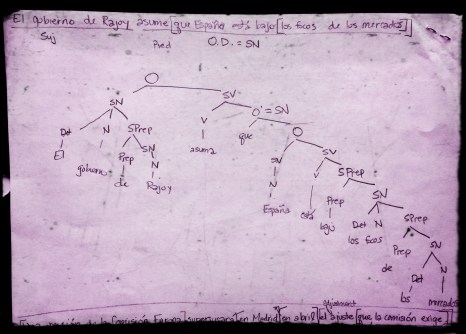
My husband hugged me tight, handed me my coat, and ushered me out the door.  I still had time to make it to my absolutely favorite graduate Spanish linguistics class.  Being an already awkward, over-achieving, non-traditional grad student, I decided limping in late with tearstains and a bandaged backside was still worth it.  I slipped into my front row seat and began to copiously copy the tree diagrams sprawled all over the whiteboards in the room. Syntax. I couldn’t decide if I loved syntax or morphology more.  Good thing I didn’t have to choose—I just love the one I’m with.

IMG_5419

My profesora gave me a sympathetic look and proceeded with her lecture. Compassionately, she had offered that I could take an Incomplete for her class if I needed to during this uncertain time of changing leukemia treatments.  That was unthinkable.  It wasn’t that I needed to “stay busy” during a difficult time, it’s that I needed to be part of something meaningful.

Who knew that la lingüística could provide such purpose?

Within the field of linguistics, the goal is to discover patterns in language.  Once the patterns are discovered, linguists search out evidence found in natural speech to describe the rules and identify the boundaries of such defined patterns.  I find comfort in the certainty of patterns that allow us to explore deep mysteries of minds and cultures.

fullsizeoutput_2b04.jpeg

Did you know that there are universal principles found in all the world’s languages that set human language apart from animal communication?  This is where geeky meets inspirational.

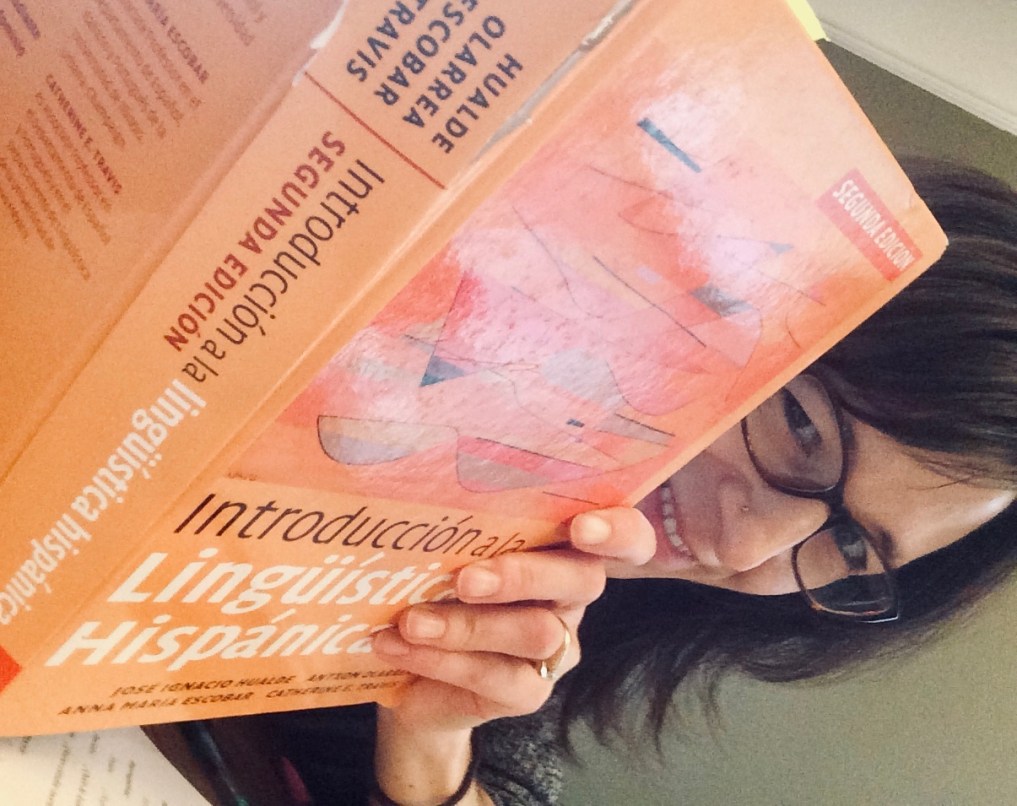
According to my favorite textbook, Introducción a la lingüística hispánica, creativity in a linguistic sense is the ability to take a finite number of items (a set of sounds, letters, morphemes, or words) and to produce an utterance that has never been said before.  We have the power to create.  This creativity allows us to make friend a verb, and to invent novel combinations like un-Google-able and stay-cation.

Prevarication reflects our human ability to fabricate, that is, both to deceive and imagine other possible worlds.

Recursion is how we use a finite number of language structures and patterns to produce infinite possibilities:

This is the house that Jack built.  This is the malt that lay in the house that Jack built.  This is the rat that ate the malt that lay in the house that Jack built.  This is the cat that killed the rat that…

Patterns help our finite human minds fathom infinity.  

We can ponder impossible things.  We can process the past and hope for the future.  Our language capacity allows us to imagine, to weave together a story—whether it is to fabricate a brilliant excuse or invent a fantastical new dimension.

Patterns are discernable and predictable structures that repeat and could potentially go on forever.  They are God’s eternal fingerprint on our temporal world. He set eternity in our hearts and gave us the tools to process and express His everlasting essence.  He has wired us to marvel at divine mystery and to comprehend great and unsearchable things.

In the midst of life’s unknowns, I have learned to cry out to the One who knows me.  To seek the One who penetrates marrow and searches souls. To search for His beauty in patterns.  And not just in language. God has scattered discernable patterns all over this world for us to discover and describe and fathom and imagine.

Meal:

Maybe you have Taco Tuesday.  We have omelets on Fridays.  Embrace the rhythm of routine, but pause to savor it.  Make your favorite omelet, but tweak the ingredients just enough to stir your culinary imagination.  Add smoked Gouda or sundried tomatoes. Top with sautéed mushrooms and onions. Try a side of roasted sweet potatoes drizzled with olive oil.

Song:

I love patterns in music—both the tune and the lyrics.  With hands opened towards heaven, listen, notice, and discover; surrender to His design.

NeedtoBreathe, Multiplied 

Prayer:

Lord, you are infinitely loving.  You set eternity in our hearts that we may comprehend unsearchable things.  I call out to you today. Reveal yourself to me through the patterns in this world.  Transform me out of the rut of life-depleting routine and into the unforced rhythm of your grace.  Thank you, Jesus.

Time:

Take time to play with words and play on words.  Marvel at the morphemes that make un-fathom-able possible.  Listen closely to the whispered words God has for you. Try to keep track of unsearchable things.  Get lost in a pattern and imagine new possible worlds. Share a good word from His Word with a friend. Screen Shot 2019-03-18 at 10.29.52 AMhttps://www.thecommonyear.com/blog/2019/3/16/beauty-in-the-patterns-georgia-coats


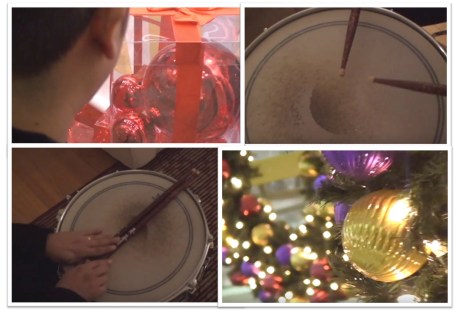
Responding to a Hurting World: Lessons from the Little Drummer Boy

There are so many ways to get involved in a hurting world.  Which is a good thing, because there is SO. MUCH. HURT. in our world.  My heart leans towards people in transition, humans who are suffering, those who are trying to make it out of messes.  Immigrants coming to a new land.  Refugees fleeing war and manmade disasters.  Those who have left home, and in humility come to a new place.  They just need a little help along the way.

IMG_2249

So, what to do about it?  Turn to the wisdom of some classic Christmas lyrics for inspiration… the little musician who gave his all, even though it felt like so little.

Come they told me, pa rum pum pum pum

COME.  The first step is to receive an invitation and just plain show up.  The invitation is there to join something bigger than ourselves.  To be a part of something we can’t fix or solve.  To make it personal.  To just come.

IMG_5884
A new born King to see, pa rum pum pum pum

SEE.  Come and see the things that are happening in the world around us.  Let need, curiosity, pain, and empathy compel us to observe and join the messiness of our world in new ways.  To walk alongside a stranger in a strange land. To enter someone’s story.

Our finest gifts we bring, pa rum pum pum pum

BRING.  Come, see, what’s happening.  Bring what you have.  It may feel small and insignificant, but it is your offering to bring anyways.  Sometimes all I have to offer is myself.  And in a big, scary, complex world what I have feels so insignificant.

Slide2.jpg

To lay before the King, pa rum pum pum pum

LAY IT DOWN.  Let’s lay down our gifts, time, talents, resources as an offering. To show honor.  It may feel insignificant, but showing up has value. Taking time for someone shows they’re worth it.  Honoring another through a life-changing transition, and laying before them what we have expresses incredible value.

…When we come.

IMG_1027

BUTwe all face very real and present excuses, fears, and limitations…

I am a poor boy, too

I’m just one person, with limited talents and resources.  Many say… I’m not a teacher like you.  I would say… I’m not a lawyer like so-and-so, or an activist, or an influencer.  I’m just a ………………. trying to make it in the world (you fill in the blank).

Even our best is so limited.

I have no gift to bring, that’s fit to give our King

I have nothing to give that would be of significance.  How can I help?  How can my small offerings possibly make a difference?

Start small.  If we all scooch over just a little in our row, we could make room for one more person to sit down.  What if everyone came, saw the need, and brought their little offerings?  That would be a significant number of insignificant offerings.  Maybe it would change the world.

What could those insignificant offerings look like?

Just come.  Show up for someone you know doing a work you admire in the world.

Just see… just listen.  Ask tough questions, hear difficult stories. Take time to process another perspective or another person’s journey.

Just bring yourself, your unique talents, your small offerings.

  • Maybe you have moments to read to a child.
  • Maybe you can pick up that book you know might challenge your thinking.
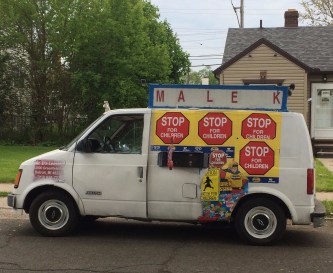
  • Maybe you can frequent a gas station or an ice cream truck where you can get to know a fellow sojourner just trying to make it in the world.
  • Maybe you invite someone new over.
  • Maybe you make that donation.
  • Maybe you share a perspective on social media that might make others think differently.
  • Maybe you start within–identifying a fear, letting go of bitterness, or choosing to forgive.

Who knows how scooching over might look for you.  Who knows what gift you bring, or how it might be fit to honor another?IMG_6942

I played my drum for Him, I played my best for Him,

pa rum pum pum pum, rum pum pum pum, rum pum, pum, pum

Whatever you do, do it wholeheartedly.  Even if it is small and insignificant.  Make it your best offering.IMG_5426

Then He smiled at me, pa rum pum pum pum
Me and my drum.

Relish in that smile.  The smile of helping someone out when they needed it most.  Showing up when it was difficult.  Offering when you felt like you had nothing.  Or maybe you are weary from many offerings that never feel like enough.  Pause.

Receive that joy.

Recently, I heard an Arabic version of The Little Drummer Boy.  It was my invitation to learn some new Arabic words and practice rudimentary reading skills.  What I found was a treasured perspective I wasn’t anticipating.

Drummer Boy Arabic

With the backdrop of endless unrest in Palestine–the homeland of the Messiah and the singer–Vivian Bishara‘s lyrics of worshiping the King but having no worthy gift to bring becomes so real.  Regardless of our politics, war, hunger, and poverty are very real aspects of the world the Messiah came into–and the reason for the season today.  Emmanuel–God with us–in our messy, complex, torn up places.  Let’s come, and see, and lay down our gifts, or our lives, or both. To honor life.

To honor a Life-giving King.

… When we come.IMG_0097


When Politics are Personal: Joining Strong Beautiful People through Challenging Life Transitions

I recently wrote a post about how politics scare me, but, as a language and culture teacher, a language and culture learner, a mom, a cross-cultural neighbor, and a daughter of immigrants, I mustered up a small amount of courage to share some of my perspective on immigrants and refugee issues.  I’m not trying to take a strong political stance, but I do love the people on my path and the relationships that have enriched my life.

IMG_0695

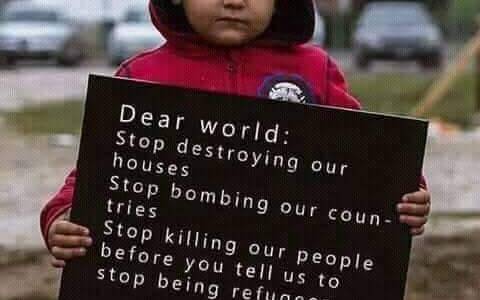
I’ve learned that issues become much less political as they become more personal–when issues have names, faces, stories, and favorite foods.

5 observations about strong people and challenging life transitions:

  1. Leaving home is just plain hard.  My little family of 5 recently relocated after 17 years in our beloved town of Dearborn, MI.  Same language.  Same country.  No emergency. But it was SOOO HARD. Even now my heart tears and my eyes tear up for what we left behind.  Whenever things get challenging in this transition, I think of my brave Syrian Kurdish refugee friend who has relocated with her family 3 times, navigating in 4 languages–Arabic, Kurdish, Turkish, and English, with at least 2 distinct scripts to learn.  Have you ever tried to read the electric bill in a new language–deciphering the issue date, the due date, and the past due date?  Would you be able to tell the difference between tricky junk mail and important official letters written in a script that is oriented in the opposite direction than you’re used to?fullsizeoutput_28cf.jpeg
  2. We all need a little help at times in order to succeed.  In our cross-country move there were countless people who came alongside us in different ways–with food, with gentle reminders about change-of-address forms, with time and muscle to help us carry stuff.  We put our all into our move.  We calculated it for years.  But regardless, it was just bigger than us.

I will never forget the faces of those who have shown up in my difficult times and transitions of life.  Those people have a special place in my life journey.  Have you ever had the privilege of walking alongside someone in their unique ICU experience?  My secret honors include explaining to my English Language class full of moms the important distinction between the Spanish word molestar, which means to bother, and the English word molest, a very different meaning than bother (especially when Google translate has led them astray).  And I’ll forever cherish the joy of being one Muslim friend’s first experience in an American woman’s home.

img_6575.jpg

3. It takes courage and intentionality to show up, everyday.  I have a rule that I have applied as a mom, teacher, and learning coach: when it comes to helping others learn something new, I will only work as hard as they do.  Granted, part of my job is to teach motivation, but if a toddler learning to clean up, puts away two toys, then so will I.  If she puts away 10, I’ll show up for 10.  Fifteen women who show up for my English Language class two mornings a week.  It’s free for them to attend.  Some show up with a baby or two in tow.  Some work 12-hour shifts at Walmart on the loading dock and show up to class sporadically. I have one student who shows up with a smile, a pencil, and a notebook–even though she doesn’t know how to read or write in any language.  They show up with gratitude and grit, ready to take on their new world.  It is my great privilege to show up with them in some small way.

IMG_0070

4. My refugee and immigrant friends want the same things I want.  Most of the beautiful people on my path are other women and moms like me.  They want good, safe, happy lives for their children.  They want to contribute to their community.  They want to pay their bills and take good care of their families.  They get emotional around special holidays away from special relatives.  There is always a little bit of grief in their joy when a baby is born who may never get to meet their grandparents or uncles or cousins.  I’m amazed at the simple yet heartfelt constructions my very beginning students communicate with their limited English.  I know that they have experienced loss, that they long for their mothers’ cooking, and that they struggle with their kids spending too much time on their devices.  I have so much respect for their courage and humility to succeed in a new and strange environment. They inspire me daily to dare greatly.

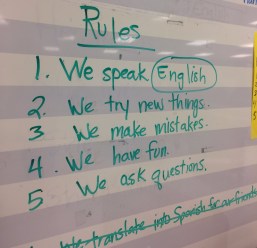
fullsizeoutput_9e05. Families strategize for success.  While I mostly spend time with women, I know that families are doing their best together.  I believe wholeheartedly that my husband deserves his own diploma when I graduated with my MA after 5 1/2 years of intensive studying and juggling.  He showed up with me and for me.  I am also keenly aware that for every married mom who shows up to learn English in my class, there are noble husbands who work tirelessly at blue collar jobs with limited English skills so that their wives can learn English, navigate the needs of their households, and maybe even plan for college.img_4690.jpgMy current adult ESL class is in an elementary school cafeteria.  It’s chaotic and interruptible.  Kids, teachers, administrators, and lunch room staff are always passing through. But we have rules–we ask great questions and we build community together.  We share music and we laugh hard–especially when Lulu is present, because every class needs a class clown.  My life is forever enriched.  I know what it is to sip yerba mate through a special straw, and savor Yemeni sabayah.  And though I have yet to try mofongo, I can’t wait to share my spanakopita recipe with my students.  I love being a part of their safe place–to learn, to take risks, to make mistakes and to grow.  They are courageous and beautiful women.  They show up.  And all our lives are richer for it.IMG_6318


Politics Scare Me: Perspective from an Intimidated Lover of Peace, Mom, & English Language Teacher

img_7266.jpgI love challenging questions within small, safe conversations.  But politics scare me. I’m horrible at citing policies, remembering dates, or interpreting statistics as fast as needed in a heated political discussion. The last thing I want to do is make a strong political stance.  But as a language and culture teacher, a language and culture learner, a mother of three, a cross-cultural neighbor, and a daughter of immigrants, people have been asking my perspective on our current political atmosphere around immigration and the refugee crisis.
These 4 political observations come from being a lover of peace and equality in my home and in diverse communities.  With an odd number of personalities in our family, peace talks are a daily drill at our house.

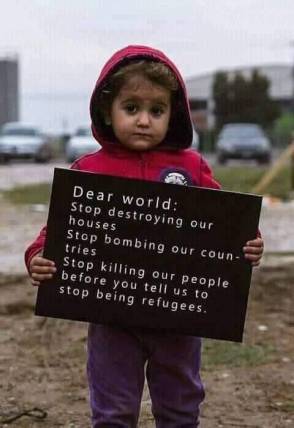
  1. War, and the displacement it causes, is a worldwide problem, not just a U.S. problem.  There are many countries, like Greece and Jordan, maxing out their infrastructures to accommodate the refugees who are pouring in with no other place to go.  Comparatively, it seems that the U.S. has more room, more infrastructure, and more capacity to share the worldwide burden than we are currently.  45404965_2374453955915468_8133840680419065856_n

2. Lately we have been cultivating a national bad attitude of “me first”.  In fear we tend to operate out of scarcity rather than generosity.  As a mom, I work on these issues with my kids EVERY. SINGLE. DAY.  I want my children to learn to get along with others, be kind, and share.  If our country were my kid, I would want to teach her baby steps towards kindness, not away from it. And maybe give her a timeout or two to think about her attitude and choices.

fullsizeoutput_2744

3. As a world leader, our country is positioned to be influential.  Rarely do leaders have a neutral, zero impact.  The U.S. has the power to do good in the world and influence others to follow our lead.  We are also responsible for our negative attitudes and actions.  They do not go without impact.  An insane number of children are dying in Yemen because of a civil war where both sides are receiving help from opposing world powers.  Our country has been contributing to this crisis financially.  After years of innocent people dying, we are just now making better choices about how to help the desperate rather than contribute to their dire circumstances.

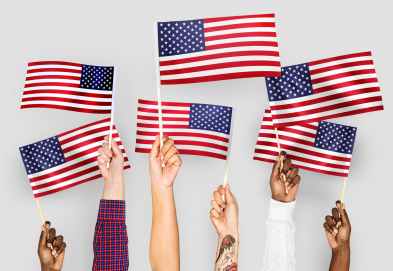
close up photo of people holding usa flaglets

4. The best problem-solving of difficult issues comes when people work together. The polar opposite political extremes in our country are intense right now.  Extremes point fingers at them–the other extreme.  But what about the radical, intentional middle places, where we don’t point blame, but rather focus on problem solving, compromise, and caring for others?

Recently, my oldest daughter was rewarded by her grandparents for her excellent academic achievement.  My other two kids were also recognized for their good grades, but her excellence was dually noted in the form of an extra $20 bill, handed to my middle daughter to pass along to her sister.  This could have incited an all-out war at our house.  What to do? 1) pray for discernment in navigating towards a peaceful resolution 2) recognize the complexities and potential hurt each might feel  3) guide each one to consider the other’s perspective 4) give them space and responsibility in arriving at creative solutions together.  Ultimately, my oldest daughter decided to treat the family to FroYo.  Not all family squabbles arrive at peaceful compromises, but we are always learning and striving towards a “we” solution.

IMG_7777.JPG

I realize the world is a messy and complex place, and the last thing I want to do is minimize the work of those who labor towards peace by oversimplifying things.  I would rather run away from politics, especially when things get tense and mean.  I’m not in it to win it.  But I am in it to understand someone else’s point of view.  Sometimes people just need to be heard and want to be understood.  Sometimes hurt people hurt people.  Sometimes they are scared too.  I’ve learned that whatever the issue is, things become much less political as they become more personal–that point where issues have names, faces, stories, and favorite foods.