It was midnight sometime B.C.E (Before Children Era) and I was walking the aisles of a nearly empty grocery store at Christmastime in east Dearborn. I had a breakdown in the canned food aisle as I became keenly aware of John Denver’s voice piping through the store…
And the Colorado Rocky Mountain high,
I’ve seen it raining fire in the sky,
You can talk to God and listen to the casual reply,
Rocky Mountain high, Colorado…
Home of 20+ years came rushing back as I imagined a Colorado sunset while selecting a can of beans. My husband and I were alone in a new city, and our budget allowed us to go home for Christmas only in our dreams.
I didn’t even like John Denver. But in that moment, the power of a song lyric perfectly positioned in time and context stirred something deep in my heart.
There were countless dark days when I wanted to go running back to familiar and safe foods, friendships, traditions, scenery…
Home Sweet Home
It was my chronic leukemia treatments that routed us to the heart of Motown. One by one, each of our miracle Michiganders grounded us here. Much of our tight budget was reserved for paying off three miracle pregnancies, treatments, and births—no regrets. It meant, though, that our young family of five embraced cozy Christmases in our little Dearborn home.
It was the adventure of diversity in east Dearborn that kept us persevering through grey skies and bone-chillingly cold winters. It was the landscape of learning to love our neighbors and learning to be loved by them that made home here real.


It was in Motown I had learned about motherhood. Priority, ingenuity, perseverance, gratitude. The power of compelling song lyrics to draw depths of strength from a human heart. GRIT. It was driving into Detroit, scrounging for parking money at Wayne State as I pushed through five years of grad school that I knew the shift of “home” was real.
I was working towards a Master’s Degree in Language Learning. My passion and research were in the heart of authentic song lyrics. Song lyrics are a great resource for gaining cultural perspectives and memorizing new language forms–the perfect blend of geeky and inspirational.
I was stuck in traffic heading east on the 94. Eminem came on the radio…
Maybe that’s why I can’t leave Detroit
It’s the motivation that keeps me going
This is the inspiration I need.
Eminem’s rapped intensity stirred something in me. I had joined a collective of people struggling to survive, to push through, to succeed when the odds are against them.

There’s No Place Like Home
Now, our sense of home is shaken. We will say good-bye to Motown and imagine a Rocky Mountain high. We will establish a new home. Home—where loved ones are waiting for us—exuberantly. There is nothing like having people you belong to… those who long for your homecoming.  In the craziness of moving, I crave the beauty of the Rockies—quiet solitude, the forest and the streams, seeking grace in every step (J.Denver). A place where we will continue to follow Jesus’ compelling example of loving God and loving our neighbors.
Maybe that’s why I feel so strange,
Got it all, but I still won’t change. (Eminem)
I do have it all. My heart is expanded across thousands of miles. Grief is real because love is abundant—17 years of cultivated relationships—birthdays, funerals, Thanksgivings, play dates, countless Eid celebrations.
 Home is Where the Heart Is
I could never turn my back on a city that made me.
And “life’s been good to me so far” (Eminem)
I don’t have to select an anthem. Instead I will make a crazy summer playlist—one where John Denver and Eminem are back to back. I’ll add a splash of Simon and Garfunkel, some Fiddler on the Roof, Kutless, Crowder, and probably Lady Gaga.
I will laugh, cry, dance, and stare off in the distance on that epic, one-way road trip at the end of July.
Home is the center of our hearts—the place where the presence of God is real. Even in the mess of my mixed emotions, chaotic packing, and our crazy summer playlist of 2018… He makes His home with us.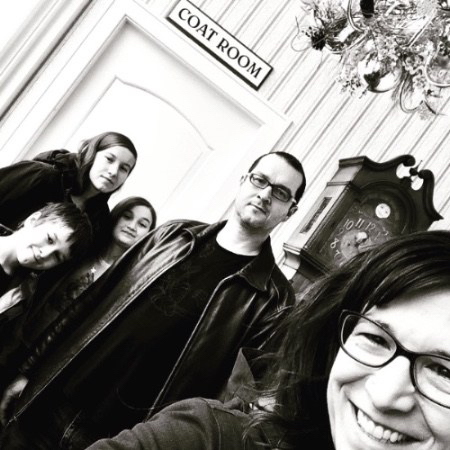
What’s on your summer playlist?
 For her 9th birthday, Ella received an incredible Inspiration Case. It has every color in various forms to create unlimited possibilities. It’s where the tools meet the paper to draw out anything her imagination can fathom. Language is my inspiration case. I get giddy over the possibilities of punctuation or the playing on of words. It’s the place where form and meaning come together to express profundity.
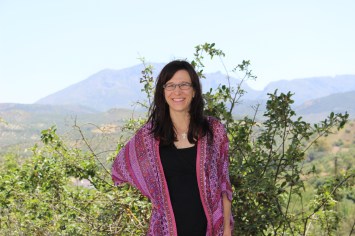 an amazingly successfully 2015-2106 academic year. She was awarded a Graduate Professional Scholarship to complete all but one course toward her degree. She developed a project that resulted in conference presentations at the Michigan World Languages Association and the Central States Conference on the Teaching of Foreign Languages (CSCTFL). Coats received funding for her conference travel through a WSU Humanities Center travel grant. And in an exciting culmination to that work,
  On My Mind